
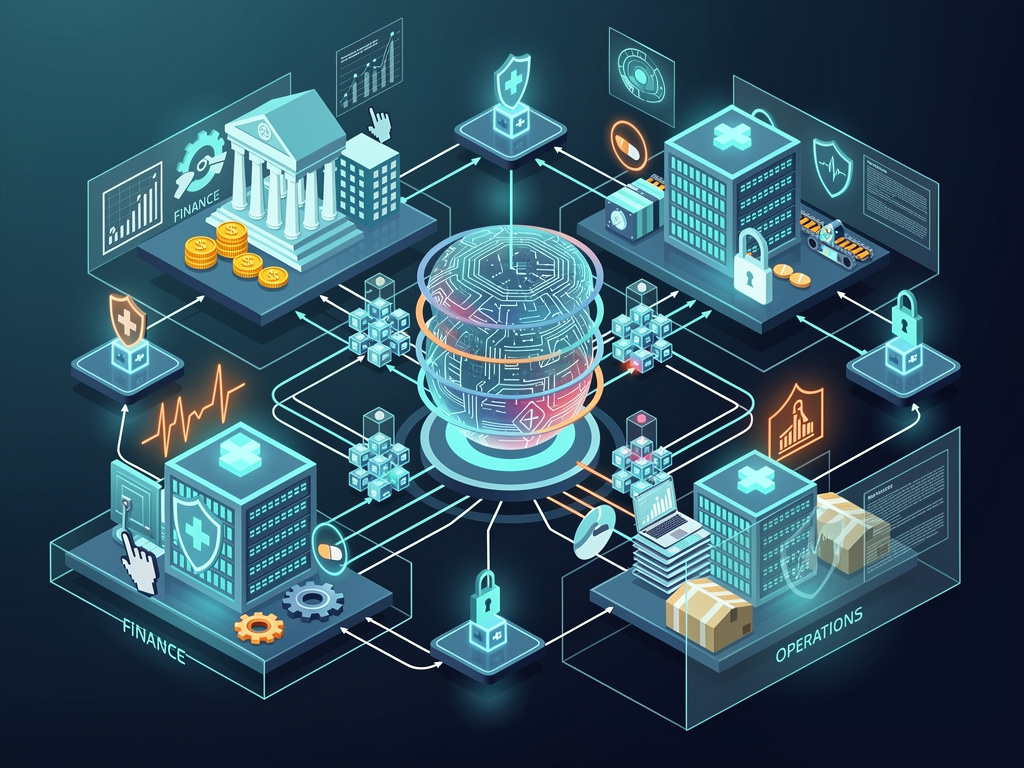
AI agents have moved past the hype. Enterprises now deploy them in production for complex workflows that once demanded teams of analysts and engineers. The shift marks a departure from chat-based tools that merely respond. These systems plan, act and adapt with limited oversight.
Rajit Khanna argues against building agents from the ground up. In a post on his site, he urges developers to host Hermes instead and supply it with tools, skills and a system prompt. The approach sidesteps months of work on memory management, tool loops and persistent storage. Khanna realized Hermes delivered session management, web search, browser control, file system navigation, self-learning and automations out of the box. His team at prismvideos.com focused solely on domain-specific prompts, media creation tools and ad platform connectors.
But. The real story in 2026 runs deeper than any single framework. Google Cloud’s fresh report outlines five trends reshaping business operations. Simple prompts have given way to agent-led digital assembly lines that handle end-to-end processes. Organizations no longer chase one-off tasks. They construct systems that orchestrate entire workflows.
Data from recent analyses back this up. A guide published in April shows agentic AI operating live across software engineering, finance, healthcare and operations. Repetitive multi-step processes yield to these systems. Customer support tickets close without human touch. Financial reports compile themselves. Medical scheduling adjusts in real time. The experimental phase has ended.
And analysts forecast rapid growth. IDC expects AI copilots embedded in nearly 80% of enterprise workplace applications this year. Gartner points to 40% of enterprise apps featuring task-specific agents. The agentic AI market heads toward $47 billion by 2030. Numbers like these signal more than adoption. They point to infrastructure-level integration.
Salesforce captures the executive mood. A study of CIOs found AI adoption jumped 282%. Trust in data remains the top barrier to full autonomy. Leaders hesitate even as rewards beckon. Sammy Spiegel and colleagues at Salesforce outline a future built on orchestrated workforces. Humans move from operators to supervisors.
“Companies will rapidly transition to an ‘orchestrated workforce’ model,” said Armita Peymandoust, SVP of Forward Deployed Engineering at Salesforce. “We are shifting from monolithic AI to a system where a primary ‘orchestrator’ agent directs smaller, expert agents. This model allows for greater specialization, efficiency, and scalability, much like a well-managed human team.”
Her colleague Muralidhar Krishnaprasad, President and CTO for C360 Platform, Apps, Industries and Agentforce, pushes further. Single agents create isolated value at best. Success demands multi-agent intelligence. Three foundations matter: open protocols for interoperability, unified context across agents, and strong governance for security and oversight.
“In 2026, single AI agents will become digital dead-end islands,” Krishnaprasad explained. “True enterprise success will demand a fully orchestrated digital workforce where agents collaborate… across departments, and outside the organization.”
Frameworks have proliferated. LangChain’s State of Agent Engineering survey shows companies now ask not whether to build agents but how to run them reliably at scale. Reliability questions dominate roadmaps. Error handling, observability and cost control determine winners.
Physical integration represents another frontier. Trends reports highlight agents linking digital decisions to real-world actions. Robots receive instructions. Drones adjust routes. Factory floors respond to predictive maintenance calls. The boundary between software and hardware blurs.
Yet risks linger. Overconfidence in early models led to brittle implementations. Enterprises learned the hard way that agents require guardrails. Verification matters when decisions touch finances, legal contracts or patient care. One X discussion raised a pointed question. If autonomous agents make high-stakes calls, how do organizations prove outputs without rerunning every step? Proofs and audit trails may soon match intelligence in importance.
Khanna’s pragmatic path addresses part of this complexity. By treating Hermes as a primitive, teams avoid reinventing core capabilities. They inherit memory compaction, skill management and automation hooks. Recent updates to such platforms add safety scans before skill installation. Catalogs let users preview code. Tiered trust levels separate official libraries from community contributions. Focus stays tight. Too many skills inflate costs and slow reasoning.
Start with two or three. Measure impact. Expand only where value accrues. This discipline separates production successes from pilot graveyards.
Microsoft, AWS and UiPath echo similar messages. Agents perceive, reason, act and learn. They differ from assistants that wait for commands and from bots that follow scripts. Autonomy sits at the core. Memory across sessions allows continuity. Tool use extends reach into databases, APIs and external services.
BCG describes agents that gather marketing data weekly, join datasets and surface insights without prompting. The loop runs continuously. Adaptation follows outcomes. McKinsey notes agents break down goals, allocate subtasks and execute with minimal input. The economic implications stretch far. NBER-linked research explores agents handling transactions, strategic interactions and digital commerce on behalf of humans.
Recent coverage reinforces momentum. A G2 analysis of 2026 buyer signals ranks Salesforce Agentforce at the top of agentic platforms based on user reviews. Implementation lessons emerge. Half of organizations now run agents on multi-stage workflows. Sixteen percent coordinate across functions. The jump from pilots to production defines this year.
Challenges persist. Governance. Data quality. Cost at scale. Skill discovery. Integration debt. Companies that solve these first gain lasting advantage. Others risk fragmented deployments that deliver isolated wins but fail to transform operations.
Executives who treat agents as simple upgrades miss the point. The technology redefines roles. Analysts become supervisors of research agents. Developers orchestrate coding agents. Marketers direct campaign agents that test, adjust and report. The human contribution rises to strategy, ethics and exception handling.
Google Cloud calls it the agent leap. Others label it the move from chat to action. Labels matter less than outcomes. Enterprises that master orchestration, memory, tool selection and governance will outpace competitors still stuck prompting large language models one query at a time.
Khanna’s advice rings especially practical for teams short on AI engineering talent. Host the primitive. Provide context. Let it handle the plumbing. The real engineering then centers on business logic, domain knowledge and performance tuning. That focus accelerates time to value.
Conversations on X today reveal the same pattern. Developers share skill hubs, safety checks and focused agent configurations. Founders discuss autonomous crypto browsers, manufacturing monitors and revenue governance agents. The grassroots energy matches enterprise momentum.
The technology has matured enough for serious deployment. Models improved. Frameworks stabilized. Enterprise platforms added observability. Data pipelines tightened. What once required a dedicated AI team now fits inside existing engineering groups.
Success still demands thoughtfulness. Clear goals. Strong evaluation metrics. Human oversight loops. Continuous refinement. Organizations that approach agents with the same rigor applied to ERP or CRM implementations stand to gain most.
The era of experimental agents fades. Production systems that compress weeks of work into minutes take their place. Teams sleep while agents run. Results arrive with explanations and audit trails. The question shifts from what agents can do to how organizations structure work around them.
Those structures will define competitive advantage through the rest of the decade.


 WebProNews is an iEntry Publication