
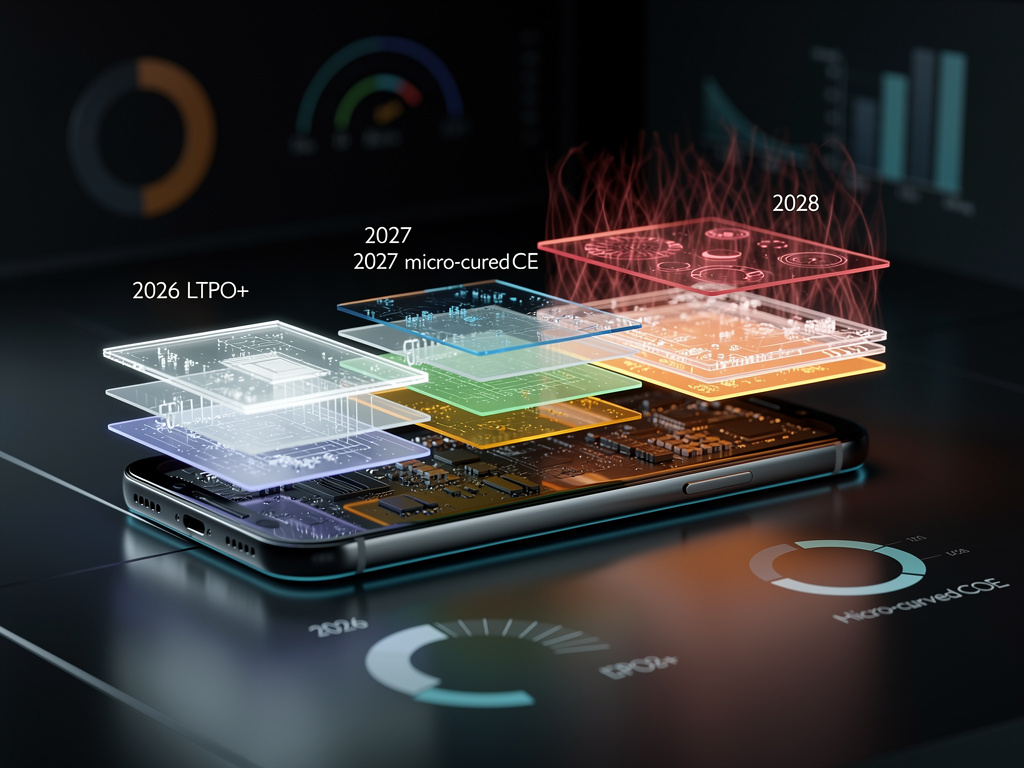
Apple has steadily raised the brightness of its iPhone displays over recent generations. Yet one prominent supply chain voice now cautions that meaningful gains in real-world outdoor performance still sit several product cycles away. The latest assessment comes from Chinese leaker Instant Digital, who stated plainly on Weibo that the iPhone 18 Pro will skip dual-layer OLED technology entirely.
“In any case, the 18 Pro definitely won’t have it,” the leaker wrote, according to a report Tuesday by MacRumors. The comment arrived in response to questions about when tandem-style OLED might reach smartphones. It underscores a stubborn technical hurdle. Current thermal management on Pro models throttles peak brightness too aggressively outdoors. Without a shift in that approach or a new display architecture, users see little difference.
The iPhone 17 Pro already delivered modest outdoor improvements, pushing peak brightness to 3,000 nits in some scenarios. Even so, sustained performance lagged. Instant Digital pointed to that gap. Dual-layer OLED, also known as tandem OLED, offers a direct fix. By stacking two emissive layers, each can run at lower intensity to reach the same overall luminance. Less heat builds up. Throttling eases. The iPad Pro with M4 chip proved the concept in 2024. Apple adapted a simplified version for tablets, doubling only the blue subpixel while leaving red and green single-layered.
But phones present tighter constraints. Production timelines stretch longer. MacRumors cited earlier coverage indicating a two-year plan before tandem OLED reaches iPhones. That points to 2028 models or later. Suppliers Samsung Display and LG Display remain under consideration. BOE, the Chinese panel maker, has struggled with yields and quality on recent iPhone orders. A January report from the same publication noted that Apple’s elevated brightness targets for the iPhone 18 left BOE with “little hope” of securing major panel business. MacRumors detailed how those demands already forced shifts in sourcing toward Samsung.
And the iPhone 18 Pro won’t stand still. It will adopt LTPO+ backplane technology. This refinement allows finer control over OLED emission. Battery life stands to gain. Peak brightness and thermal behavior do not. The upgrade builds on the low-temperature polycrystalline oxide already in Pro models since the iPhone 13 Pro. Yet it stops short of solving the heat equation that limits outdoor visibility.
So Apple pursues parallel paths. For the 2027 iPhone, expected to mark the product’s 20th anniversary, Samsung will fabricate a custom micro-curved OLED panel. Leaker Digital Chat Station described the design as both brighter and thinner than current offerings. It features shallow “micro-curves” on all four sides at equal depth. Aggressive waterfall edges stay off the table. The result feels more natural in the hand and reduces distortion during edge swipes.
The real advance lies beneath the surface. Apple wants a “pol-less” construction that eliminates the traditional polarizing film. Samsung’s COE process places the color filter directly on the encapsulation layer. Light passes more freely. Power draw drops. Overall stack thickness shrinks. An improved anti-reflective coating counters the extra reflections that come without the polarizer. A crater-shaped diffusion layer keeps brightness uniform across the panel. MacRumors broke down these details in April, citing supply chain information from China.
These 2027 changes will deliver noticeable if incremental gains. Users should see better efficiency and visibility under direct sun. The panel will weigh less inside the chassis. Battery endurance could stretch further. Still, the leap that tandem OLED promises remains distant.
Industry watchers have tracked Apple’s display ambitions for years. The company once eyed microLED as the ultimate successor. Those plans slipped repeatedly. Production costs and yields proved punishing. MicroLED watches and AR devices now carry their own delayed roadmaps. For flagship phones, OLED will dominate through the end of the decade.
Recent coverage reinforces the wait. No major supply chain updates since the May 12 MacRumors article have contradicted Instant Digital’s timeline. Analysts continue to forecast tandem OLED adoption no sooner than 2028. Suppliers need time to scale the simplified tandem structure for the smaller iPhone form factor. Yield rates must reach consumer-grade levels. Thermal designs inside the phone may require revision to fully exploit the technology.
Consumers notice brightness most on bright days. They expect screens to remain readable without squinting or seeking shade. Current iPhones already outperform many competitors in peak output. The gap between lab measurements and sustained field performance frustrates some owners. Forums and social posts regularly highlight the issue. One recent X discussion tied the problem directly to the new MacRumors report, noting that thermal throttling, not raw nits, defines the experience.
Apple rarely comments on future hardware. Its silence leaves analysts and leakers to fill the void. Their track records vary. Instant Digital has delivered accurate panel details before. Digital Chat Station maintains a strong reputation on display matters. Both draw from contacts inside Asian supply chains. Their comments align with known engineering trade-offs. Stacking emissive layers adds complexity and cost. Apple balances those factors against battery life, device thinness, and retail price.
Look further ahead and the picture clarifies. By 2028, tandem OLED could arrive in a form tailored for phones. Blue subpixel doubling would address the shortest-lived color. Heat reduction would let sustained brightness climb without draining the battery faster. Combined with the micro-curve and COE advances from 2027, the display could feel like a genuine step forward. Until then, incremental upgrades will have to suffice.
The pattern fits Apple’s historical approach. It perfects technologies in larger devices before squeezing them into pockets. The iPad Pro tested tandem OLED first. Future watches or AR headsets may prove microLED at smaller scales. Phones, with their volume demands and power limits, come last. Patience has served the company well in the past. Buyers chasing the brightest possible screen may need to exercise it once more.
That reality clashes with marketing that emphasizes ever-higher nit ratings. Peak brightness figures grab headlines. Real-world endurance tells a quieter story. Apple knows the difference. Its engineering teams continue to attack the thermal side of the equation even as display partners ready the next emissive stack. The two efforts must converge before the next big jump lands.
For now, the message from the supply chain stays consistent. A substantially brighter iPhone experience that holds its intensity under the midday sun still lies years ahead. The hardware path exists. The timelines have lengthened. Industry professionals tracking component sourcing and display fabrication will watch 2027 and 2028 models closely. Those devices will reveal whether the long-promised gains finally materialize or slip further.


 WebProNews is an iEntry Publication