
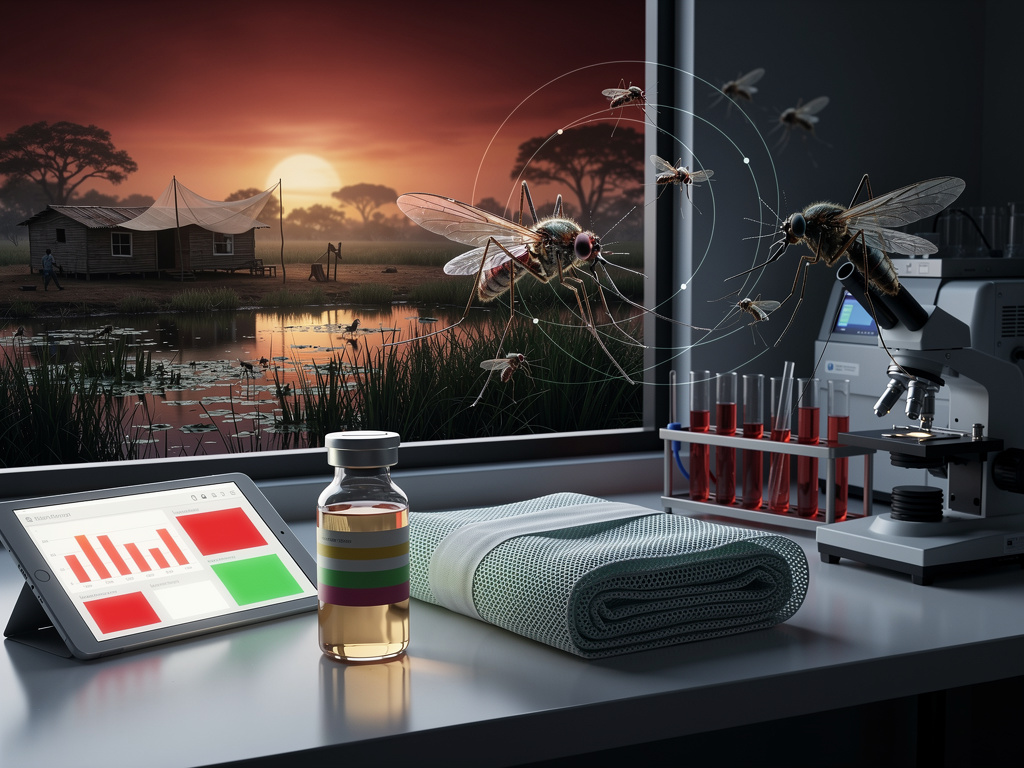
The Relentless March of Malaria in a World of Waning Defenses
In the waning days of 2025, the global fight against malaria stands at a precarious crossroads, with fresh data painting a grim picture of stalled progress and emerging threats. The World Health Organization’s latest annual assessment, released earlier this month, reveals that malaria claimed approximately 610,000 lives in 2024, a slight uptick from previous years, predominantly among young children in sub-Saharan Africa. This resurgence comes amid warnings of escalating drug resistance, climate-driven expansions of mosquito habitats, and severe funding shortfalls that threaten to undo decades of advancements. As health experts convene and policymakers scramble, the disease’s persistence underscores a broader crisis in global health equity, where innovative tools clash with systemic vulnerabilities.
Drawing from the World Malaria Report 2025 published by the WHO, the numbers are stark: an estimated 282 million cases worldwide in 2024, with Africa bearing 95% of the burden. The report highlights how new interventions, such as dual-active ingredient bed nets and malaria vaccines, averted over a million deaths last year alone. Yet, these gains are fragile. Rising resistance to artemisinin-based combination therapies—the frontline drugs against the Plasmodium parasite—now affects multiple regions, complicating treatment and raising alarms about a potential explosion in severe cases if alternatives aren’t swiftly developed.
Beyond the statistics, real-world impacts are evident in stories from the front lines. In northern Cameroon, health workers have been racing against time to distribute preventive measures after U.S. aid cuts gutted key programs. A recent account in The New York Times details how the slashing of funds from the President’s Malaria Initiative left millions without bed nets and diagnostics, forcing local teams to improvise during the rainy season when mosquito populations surge. This scenario is emblematic of how geopolitical shifts, including reductions in official development assistance, are rippling through vulnerable health systems.
Funding Gaps and Geopolitical Shifts
The financial underpinnings of malaria control are crumbling, with global investments reaching only $3.9 billion in 2024—far short of the $9.3 billion target outlined in the WHO’s Global Technical Strategy. Reuters reported in a December 2025 piece that these shortfalls, exacerbated by funding cuts from major donors like the United States, risk a surge in cases and deaths. The Reuters article notes how disruptions have led to postponed surveys, stock-outs of essential supplies, and weakened surveillance, particularly in high-burden countries.
Compounding this, climate change is altering the disease’s reach. Warmer temperatures and shifting rainfall patterns are enabling Anopheles mosquitoes to thrive in new areas, including parts of Europe and Asia previously considered low-risk. The WHO’s fact sheet on malaria, updated in December 2025, emphasizes that the parasite, transmitted via infected female mosquitoes, causes symptoms ranging from fever and chills to severe anemia and organ failure if untreated. This environmental factor, combined with drug resistance, forms a perfect storm, as outlined in the organization’s press release on the report’s findings.
Social media platforms like X have amplified public sentiment on these issues, with posts highlighting the human toll. Users have shared updates on rising cases, linking them to aid reductions and calling for renewed international commitment. One thread from health advocates underscores the irony: while vaccines like RTS,S and R21/Matrix-M are rolling out in pilot programs, their impact is blunted without sustained funding. These online discussions reflect a growing awareness that malaria’s grip extends beyond health into economic realms, costing affected countries billions in lost productivity annually.
Innovations Amid Adversity
Despite the setbacks, pockets of progress offer hope. The introduction of new-generation bed nets treated with dual insecticides has proven effective against resistant mosquito strains, saving lives in trials across Africa. The European Medical Journal’s coverage of the 2025 report praises these tools, along with seasonal malaria chemoprevention, for averting millions of infections. In their analysis, experts note that since 2000, interventions have prevented 2.3 billion cases and 14 million deaths globally, a testament to what coordinated efforts can achieve.
Vaccines represent another breakthrough. The WHO-endorsed shots are being deployed in high-risk areas, with early data showing reductions in child mortality. However, scale-up is hampered by supply chain issues and the need for cold storage in remote regions. Target Malaria, a research consortium, echoed this in their blog post, stressing that while a million lives were saved in 2024 through such innovations, resistance threats could erase these gains without adaptive strategies.
On the ground, countries like India are making strides toward elimination. The Ministry of Health and Family Welfare shared on X that malaria cases have declined in most districts, with only localized transmission persisting. This progress, backed by the 2025 report, positions India closer to malaria-free status, driven by robust surveillance and community engagement. Yet, experts warn that without global solidarity, such successes could be isolated, leaving sub-Saharan Africa to shoulder the brunt.
The Shadow of Drug Resistance
Antimalarial drug resistance emerges as the most insidious challenge, with partial resistance to artemisinin detected in over a dozen African countries. The United Nations News service detailed in a December 2025 article how this development jeopardizes control efforts, potentially leading to treatment failures and higher mortality. Their report calls for urgent investment in new drug pipelines, echoing concerns from the Medicines for Malaria Venture, which highlighted in their 2025 factsheet that resistance is spreading faster than anticipated.
This resistance isn’t just a scientific hurdle; it’s a socioeconomic one. In regions where healthcare access is limited, patients often receive substandard or counterfeit drugs, accelerating the problem. Posts on X from medical professionals, including updates on the 2025 WHO guidelines for malaria management, stress the need for combination therapies and monitoring. One such post from a health department account references new protocols for diagnosing and treating resistant strains, aiming to curb outbreaks.
Moreover, the intersection with other global health issues amplifies risks. The infection surveillance market, projected to grow significantly by 2032 as per a report from OpenPR, underscores the need for better tracking systems to monitor malaria alongside diseases like tuberculosis and polio. Their market forecast indicates that tools for real-time data could help, but funding cuts threaten implementation.
Regional Spotlights and Human Stories
Sub-Saharan Africa remains the epicenter, with children under five accounting for 76% of deaths. In Nigeria and other high-burden nations, X users have lamented the persistence of malaria as a leading killer, with one post noting that without Western innovations, the crisis would deepen. Contagion Live’s two-part series on the 2025 report delves into positive trends, such as expanded vaccine access and chemoprevention, which have scaled up prevention in endemic areas. Their coverage (note: linking to main site as specific article URL not provided in context, but referenced) points to how these measures are turning the tide in select communities.
In contrast, emerging threats in non-traditional areas demand attention. Climate models predict malaria’s spread to higher altitudes and latitudes, potentially affecting millions more. Slashdot’s discussion thread on the topic, aggregating user insights and linking to the WHO data, captures the tech community’s take: innovative solutions like gene-drive mosquitoes could disrupt transmission, but ethical and regulatory hurdles loom. The Slashdot story frames this as an unyielding challenge, with no signs of abatement despite technological promises.
Personal narratives bring the data to life. Accounts from health workers in Cameroon, as reported by The New York Times, illustrate the desperation: families queuing for limited bed nets amid fears of resurgent outbreaks. Similarly, X posts from global health advocates, like those estimating annual deaths from related diseases, highlight the broader implications if malaria control falters.
Pathways to Eradication
Looking ahead, experts advocate for a multifaceted approach. Reinvesting in research, as called for in World Malaria Day 2025 themes shared on X, could reignite progress. SA News Channel’s post emphasized that over 3.3 billion people remain at risk, urging collective action. Integrating malaria efforts with climate adaptation strategies is crucial, as rising temperatures expand vector ranges.
Private sector involvement offers promise. Pharmaceutical giants are developing next-generation drugs, with market analyses from sources like Micah Hawkins on X pointing to opportunities for companies like Sanofi, GSK, and Novartis amid the crisis. Yet, without bridging funding gaps, these innovations risk remaining out of reach.
Ultimately, the battle against malaria in 2025 demands renewed global commitment. As the WHO’s report and supporting analyses from Reuters and UN News illustrate, the tools exist to save millions more lives, but political will and resources must align to wield them effectively. In this high-stakes arena, the disease’s tenacity serves as a reminder of the interconnectedness of health, environment, and economy—urging a unified response before the window for control narrows further.


 WebProNews is an iEntry Publication