
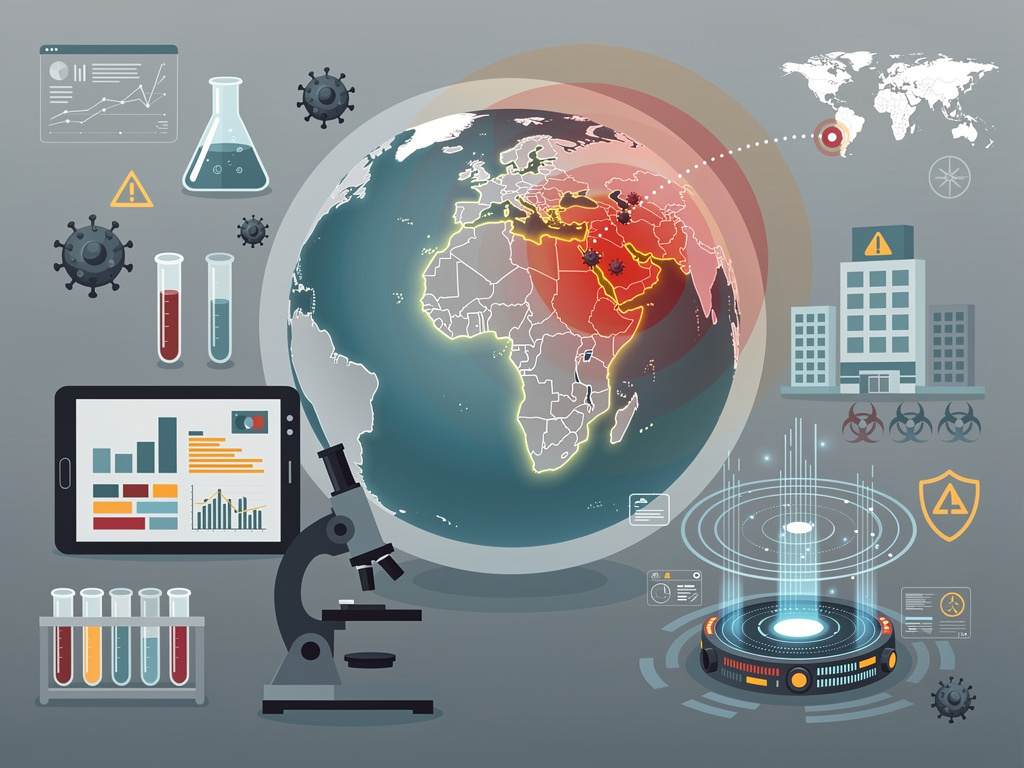
The World Health Organization moved swiftly Sunday. It labeled the Ebola outbreak ripping through eastern Democratic Republic of the Congo and spilling into Uganda a public health emergency of international concern. The declaration aims to jolt funding and coordination. Yet it stops short of pandemic status. Numbers tell a sobering story. Eight laboratory-confirmed cases. Some 246 suspected. Around 80 deaths suspected in Congo’s Ituri province alone.
The Strain That Changes the Response
This time the culprit is Bundibugyo virus. Not the Zaire strain that dominated past outbreaks and benefited from approved vaccines and treatments. No specific vaccine. No targeted therapy exists for this variant. Transmission happens through direct contact with bodily fluids of symptomatic people or the dead. Health workers have died. Clusters of unexplained community deaths have appeared across multiple health zones. Bunia, Rwampara, Mongbwalu. Suspected cases now reach into North Kivu. The high positivity rate from initial samples — eight of 13 — hints the true scale could run far larger. And it has already crossed borders.
Two confirmed cases surfaced in Uganda’s capital, Kampala. Both involved travelers from Congo. One died. The cases lacked apparent links to each other. A reported case heading to Kinshasa later tested negative on confirmatory checks. Still, the pattern alarms officials. Insecurity grips the region. Humanitarian needs run high. Population movement is constant. Urban and semi-urban hotspots mix with informal health facilities. These factors echo the 2018-19 epidemic that killed nearly 2,300 in the same provinces. This one could follow suit without rapid action.
WHO Director-General Tedros Adhanom Ghebreyesus called the event extraordinary. “The Director-General of WHO expresses his gratitude to the leadership of the Democratic Republic of the Congo and Uganda for their commitment to take necessary and vigorous actions to bring the event under control,” the agency stated in its formal declaration (WHO). The statement detailed risks of international spread through land borders with neighbors. It stressed the need for coordinated surveillance, prevention and response.
But the agency pushed back against panic measures. No border closures. Such steps lack scientific basis, drive people to unmonitored crossings and hurt economies. Contacts should avoid international travel for 21 days. Cases need isolation until two negative tests 48 hours apart. Exit screening at airports in affected areas continues. Neighboring countries must boost preparedness. Active surveillance. Rapid response teams. Lab access. The advice is clear. Act fast. But don’t overreact.
The U.S. Centers for Disease Control and Prevention had already begun to move. Officials learned of the Congo outbreak on May 14. Uganda followed the next day. By Sunday the agency had activated its emergency operations center. Satish Pillai, CDC’s Ebola response incident manager, outlined plans on a call with reporters. Additional staff would deploy early that week. They would join more than 30 CDC personnel already stationed in each country. Technical support would cover laboratory testing, contact tracing and enhanced surveillance. Travel health notices went out urging Americans to take extra precautions.
“The risk to the United States remains low,” Pillai said (Fortune). He declined to confirm reports that at least six Americans had been exposed in Congo, with some exposures rated high risk. Reuters noted the reports, citing international aid sources, but could not independently verify them. One person may have developed symptoms. Efforts were underway to move those exposed out of the country. The CDC also posted notices for enhanced precautions at U.S. ports of entry. Congo and Uganda maintain exit screening. The layered approach aims to catch symptomatic travelers.
Africa CDC sounded the alarm days earlier. It convened a high-level meeting with officials from Congo, Uganda and South Sudan plus partners from WHO, UNICEF and others. Director General Jean Kaseya emphasized speed and regional solidarity. The body continues to push for stronger cross-border coordination. Laboratory sequencing. Infection prevention in health facilities. Safe burials. Risk communication that respects local customs. All remain priorities as the response scales.
This marks the first such WHO emergency declaration since mpox in 2024. It comes as Congo faces its 17th recorded Ebola outbreak since the virus was identified there in 1976. Past successes relied on vaccines tailored to Zaire ebolavirus. Those tools don’t apply here. Clinical trials for new countermeasures must accelerate. Supportive care — fluids, symptom management, intensive monitoring — offers the best current option. Yet gaps in infection control have already cost health workers’ lives. Four such deaths reported in contexts suggesting health facility transmission.
Uncertainty clouds the picture. Epidemiological links between many cases remain unclear. Syndromic surveillance shows rising trends. Community deaths with compatible symptoms appear in clusters. The outbreak likely circulated undetected for weeks before confirmation. That delay magnifies the challenge in a region marked by conflict and weak infrastructure. Informal health providers complicate tracing. High mobility between Ituri and neighboring nations raises the odds of further export.
Yet the declaration also brings opportunity. It signals to donors and governments that resources must flow. Emergency operation centers need activation at the highest levels. Community leaders, religious figures and traditional healers must join education campaigns. Early treatment saves lives. Safe and dignified burials prevent additional cases. Specialized treatment centers near epicenters could limit spread while delivering care. Supply chains for personal protective equipment, diagnostics and basic medical commodities require urgent reinforcement.
WHO laid out detailed temporary recommendations. Affected countries should strengthen laboratory capacity with decentralized testing. Map all health facilities and enforce triage. Train workers on proper protective equipment use and provide hazard pay. For bordering nations, zero reporting from facilities and community death monitoring become essential. All states received advice against trade or travel restrictions. Accurate public information matters. So does preparation for medical evacuation of exposed nationals.
Recent coverage adds context to the strain on systems. Al Jazeera reported more than 300 suspected cases total with the bulk in Congo. It highlighted the two Uganda cases. Reuters noted the urban elements of the current hotspot and the absence of tools available for other strains. Global Biodefense detailed the emergency regional meeting that brought in pharmaceutical companies alongside public health agencies, underscoring the search for new medical countermeasures (Global Biodefense).
The CDC’s long presence in the region offers some foundation. It helped contain a previous outbreak in weeks earlier this year. Relationships built over decades with local health authorities matter. But this variant tests those systems differently. No off-the-shelf vaccine. Greater uncertainty. And the persistent insecurity that hampers access.
So far no cases have reached the United States. Monitoring continues. The agency tracks other threats too, including a hantavirus outbreak tied to a cruise ship. Yet eyes stay fixed on central Africa. The coming days will test whether the emergency declaration translates into effective action on the ground. Contact tracing must expand. Labs need to process samples faster. Communities require credible information to overcome fear and stigma. Health facilities must plug infection control gaps before they amplify the virus.
The Bundibugyo strain carries a high fatality rate in past outbreaks, historically between 25% and 80% depending on care quality. Supportive treatment can improve outcomes. But in a conflict zone with limited intensive care, the toll could mount. Africa CDC, WHO and national governments now coordinate under the PHEIC framework. Their success will hinge on speed, local buy-in and sustained resources. The virus doesn’t wait. Neither can the response.


 WebProNews is an iEntry Publication