
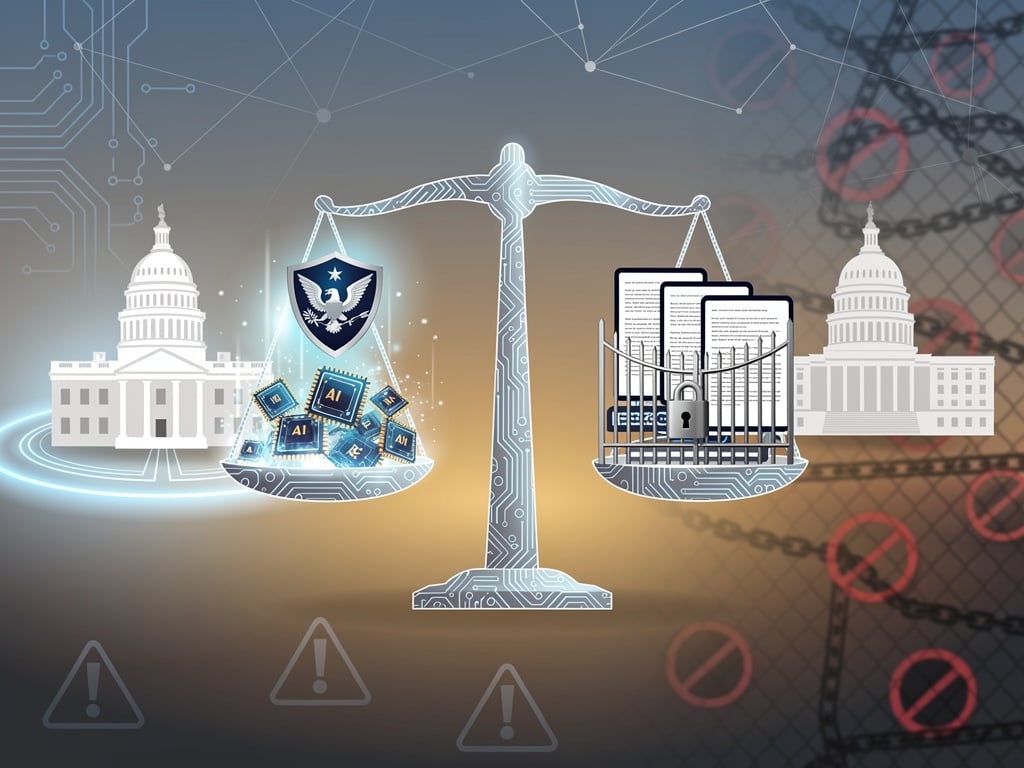
Senator Marsha Blackburn is hammering out the details with White House officials. The prize? A three-year federal override of many state rules on artificial intelligence. In return, Congress would advance long-stalled measures on child protection online, deepfake safeguards, and mandatory age checks across websites.
The arrangement surfaced in recent days. It links one of the technology sector’s biggest asks to bills that have divided lawmakers, privacy advocates, and free-speech groups for years. Axios first reported the talks. A Blackburn spokesperson confirmed the senator is spearheading negotiations to finalize legislative text that includes protections for kids, creators, and communities through the Senate version of the Kids Online Safety Act, the NO FAKES Act, and age verification requirements.
But the bargain carries risks. Critics warn it could hand Washington sweeping new authority over who sees what online. It might accelerate the spread of identity checks that function, in practice, like digital passports. And it risks locking in a single national approach before the full consequences of these policies become clear.
The idea builds on months of executive and legislative maneuvering. President Trump signed an executive order in December 2025 directing federal agencies to challenge state AI laws deemed inconsistent with national innovation goals. That order created an AI Litigation Task Force at the Justice Department and called for evaluations of burdensome state measures. It set the stage for Congress to codify a uniform federal standard.
By March 2026 the White House released its National Policy Framework for Artificial Intelligence. The document outlined seven priorities. Among them: protecting children, respecting intellectual property, preventing censorship, and establishing preemptive federal rules. It explicitly backed measures like the NO FAKES Act to shield individuals from unauthorized AI-generated replicas of their voice or likeness.
Blackburn released her own discussion draft of the TRUMP AMERICA AI Act around the same time. That sweeping proposal folded in KOSA, NO FAKES, and other bills. It aimed to create one rulebook while avoiding blanket preemption of all state authority. The framework preserved state powers over general consumer protection, child safety enforcement, and infrastructure zoning.
Now the focus has sharpened. Recent negotiations seek to trade temporary preemption of state AI laws for passage of the Senate KOSA, which would impose duties on platforms to mitigate harms to minors. The NO FAKES Act would create a federal right against nonconsensual digital replicas, complete with First Amendment carve-outs and preemption of conflicting state rules. And a federal age-verification mandate would require sites to confirm users are not minors before showing certain content.
Proponents argue the package delivers clarity. AI developers face a patchwork of state rules that could slow deployment or force contradictory compliance. A national standard, they say, lets the U.S. maintain its lead in the global race. Creators gain consistent tools to fight harmful fakes. Parents get stronger assurances that platforms will shield young users.
Yet the age-verification piece raises alarms that echo earlier warnings. Our previous coverage detailed how such laws are reshaping the open internet. States have rushed to require ID uploads or biometric scans for sites with material deemed harmful to minors. The result? Adults surrender personal data to access legal content. Privacy erodes. Anonymity fades. And the infrastructure built for these checks can evolve into broader digital-ID systems.
Free-speech organizations have voiced strong objections. They fear KOSA’s duty-of-care language could pressure platforms to over-censor to avoid liability. Age checks, meanwhile, create friction that discourages casual browsing and chills expression. One advocate called the emerging deal a Trojan horse for surveillance wrapped in the language of child protection.
The timing feels urgent. A deal could emerge in weeks. That haste leaves little room for thorough examination of side effects. Consider the NO FAKES Act. Revised versions introduced in May 2026 by Blackburn, Sen. Chris Coons, and others strengthened protections while adding safe harbors for platforms. They preempt future state digital-replica laws to avoid a regulatory thicket. SAG-AFTRA and entertainment unions back the measure. They see it as essential armor against AI-driven impersonation that threatens livelihoods.
But scholars and groups like Public Knowledge have urged changes. They worry the bill grants too much control to intermediaries such as studios or labels. Ordinary people could lose practical authority over their own likeness. First Amendment tensions remain real even with built-in exceptions.
On the AI preemption front, the administration has moved aggressively. The December 2025 executive order tasked the Commerce Department with cataloging problematic state laws. The FTC received instructions to issue guidance on how federal deception rules might override state mandates that force AI systems to alter truthful outputs. An FCC proceeding on reporting standards was also directed.
These steps followed failed attempts to slip preemption language into must-pass bills like the defense authorization and year-end spending packages. Resistance came from both parties wary of handing industry a blank check or undermining legitimate state experiments.
Recent analysis from the Information Technology and Innovation Foundation urges caution. It suggests Congress should tackle AI rules, deepfakes, and children’s safety separately rather than bundle them. Linking the issues, the group argues, could stall progress on all fronts. Yet political reality favors the package approach. Each element has passionate backers. None passes easily alone.
Age verification has spread rapidly. More than two dozen states now enforce or have passed laws targeting sites with substantial adult content or material harmful to minors. Louisiana led the way in 2022. Others followed with requirements for government ID, transactional data, or facial estimation. Enforcement has proven uneven. Some platforms block entire states. Others roll out clunky portals that annoy users and raise data-breach fears.
Internationally the trend is similar. The UK’s Online Safety Act, Australia’s social-media ban for under-16s, and proposals in France, Brazil, and elsewhere show governments converging on identity checks as the solution to online harms. The pattern is clear. Once the infrastructure exists, scope creep follows. What starts as protection for children can expand to verify age, citizenship, or compliance with speech rules.
Supporters of the current talks point to carve-outs. The White House framework says it will not preempt state traditional police powers, laws of general applicability, or rules on state procurement of AI. Child-safety enforcement stays intact. Yet the three-year moratorium on new state AI laws creates a window during which federal policy solidifies. After that, states might find it harder to act.
Industry sees upside. Uniform rules reduce compliance costs. They limit forum shopping by plaintiffs. They signal to global markets that the U.S. prioritizes innovation over fragmented regulation. Tech executives have lobbied quietly for exactly this trade-off.
Opponents counter that the bargain sells out long-term openness for short-term political wins. They note that KOSA’s original duty-of-care provision drew lawsuits from groups across the spectrum who argued it would force platforms to suppress controversial but legal speech. Revised language has tried to narrow that risk, but skepticism lingers.
Then there is the deeper structural shift. Age verification at scale demands reliable digital identity. Companies specializing in biometric scans, zero-knowledge proofs, and government-ID integration stand ready to supply the technology. Each implementation collects data, creates logs, and normalizes the idea that you must prove who you are to participate online.
The internet that emerges looks less like the borderless expanse of the 1990s and more like a licensed public square. Access becomes conditional. Behavior becomes observable. Innovation in anonymous or pseudonymous services faces new hurdles.
Negotiators face hard choices in coming days. They must balance genuine harms from deepfakes and exploitative content against the danger of overreach. They must weigh the benefits of national consistency against the value of state laboratories. And they must decide whether child safety justifies erecting gates that affect every user.
Blackburn has built a reputation for pushing these issues. Her staff describes the package as delivering protections without unnecessary burdens. The White House, fresh from its executive actions, sees legislation as the next logical step to lock in its vision.
Yet history shows such grand bargains often produce unintended consequences. Laws written in haste invite litigation. Technical mandates age poorly. And once surveillance tools exist, future administrations find new uses for them.
The talks continue behind closed doors. Lawmakers from both parties are engaged. Children’s safety organizations have met with White House staff. Tech groups monitor every development. Free-speech advocates prepare their objections.
What emerges could set the rules for AI development, online speech, and digital identity for the next decade. The stakes are high. The trade-offs are real. And the window for careful scrutiny is narrowing fast.


 WebProNews is an iEntry Publication