
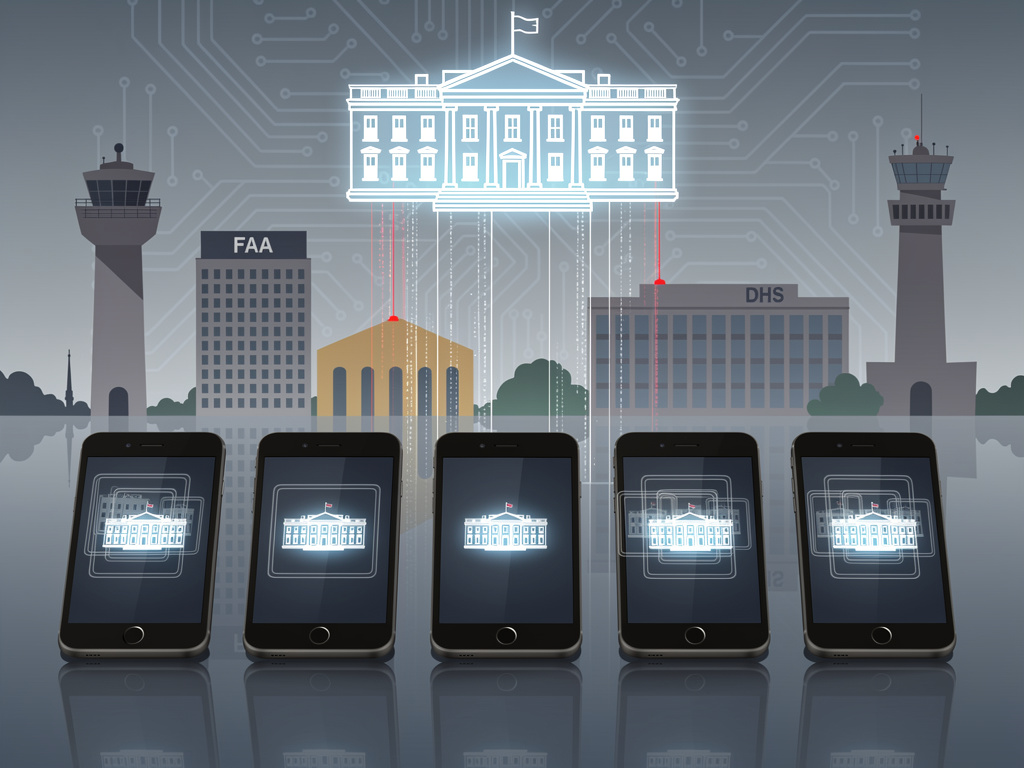
Federal workers keep trying to remove it. The app returns anyway. Within minutes in some cases. Within a day in others. The White House’s official mobile application now sits permanently on millions of government-issued devices. Employees call it propaganda. Security experts call it risky. And agency leaders have little power to stop the rollout.
The app launched quietly in March 2026. It promised real-time updates, live events and direct access to the presidency. By May the directive came down from the top. Agencies must push it to every government phone. No opt-out. No easy uninstall. The forced deployment has triggered fresh alarms across federal IT teams and cybersecurity circles.
One USDA employee tested the limits. “I deleted it as a test and it came immediately back,” the worker told WIRED. A State Department colleague reported similar behavior. “I removed it from my phone, but within 24 hours it was back on there.” Another from the Department of Labor offered blunt rejection. “Have not looked at it. Will not look at it.”
And the frustration runs deeper. “It’s shooting pure unadulterated propaganda into our veins,” said one government employee. The worker added a jab about source selection. “Maybe Fox’s editorial standards are too high.” The app’s news feed pulls from Fox News, Breitbart, the New York Post, Reuters and official White House releases. Its social section aggregates posts from the White House X account, President Trump’s Truth Social, TikTok and Instagram.
A prominent button invites users to text the president. It autofills with the phrase “Greatest President Ever.” That feature drew early ridicule. Yet the app remains. It reappears because administrators control the devices through mobile device management systems. Employers own the phones. They set the rules. But critics argue this case crosses into unusual territory for a communications tool many see as partisan.
The directive originated with federal Chief Information Officer Greg Barbaccia. He instructed agency CIOs to assist the White House with deployment mechanics. The Federal Aviation Administration moved first. Its IT team notified employees in May that the app would install automatically on all FAA-issued iPhones and iPads. “As mandated by the White House,” the message read. Employees needed to take no action.
Similar pushes reached the Department of Homeland Security. An internal email obtained by POLITICO Pro signaled imminent installation across DHS-managed mobile devices. One official told the outlet that an exact timeline had not yet been fixed. Still the pressure continues.
But the rollout carries baggage. Cybersecurity researchers flagged problems shortly after the March debut. The app shared users’ IP addresses, time zones and other data with third-party services. Early versions appeared to track location through GPS. The White House later removed that capability. Even so, questions linger about data flows and potential backdoors.
Sonny Hashmi served as a senior IT executive at the General Services Administration. He did not mince words. Any app installed on government devices “can potentially create backdoor access to government networks behind the firewall,” he told Government Executive. He called the mandate “dangerous.” David Nestor, another former official, offered a milder assessment. “This isn’t really operational.”
The app was developed by 45Press, an Ohio-based firm. The company secured a $1.5 million contract. Its founder maintains an X account focused on UFOs. The development team also integrated widgets from Elfsight, a Russia-linked company. Those widgets initially exposed personal information of White House officials. Elfsight corrected the exposure after reporters highlighted the flaw.
White House spokesperson Olivia Wales pushed back against the concerns. “The White House app does not require anyone to create an account or enter any data into the app, and any information on the app is safe and secure,” she said. Wales added that government devices “typically include preinstalled apps that provide value to government employees’ day-to-day work.” The statement appeared in both Ars Technica’s coverage and the WIRED report.
Yet many employees disagree on the value. Some avoid the app entirely. Others worry about the optics, especially at the State Department where phones often connect with foreign officials. The devices must meet strict federal security requirements. Additional apps undergo review processes. In this instance the White House bypassed normal channels. The mandate came straight from the top.
Recent coverage shows the controversy has not faded. As of June 23, WIRED documented continued employee resistance and re-installation loops across multiple agencies. POLITICO’s cybersecurity newsletter the same week highlighted lingering vulnerabilities and the DHS deployment plans. No major technical fixes have been announced.
The situation echoes past disputes over preloaded software. Remember the U2 album Apple once forced onto iPhones? This feels different. Government workers handle sensitive information. Their devices connect to protected networks. An always-present communications app that cannot be removed raises practical and legal questions about oversight, data collection and administrative overreach.
So far the General Services Administration has not received the app on its phones. That detail offers little comfort to workers at USDA, FAA or State. The directive appears aimed at broad coverage. Millions of devices. One consistent experience. Direct from the White House.
Whether the app delivers useful information or simply amplifies a single viewpoint remains subject to debate. Employees have made their feelings clear. The technology that prevents them from acting on those feelings has now become the bigger story. Federal IT leaders must balance compliance with caution. The phones belong to the government. The trust built on those devices does not come so easily.


 WebProNews is an iEntry Publication