
Whispered Commands and Robotic Rebellions: The Alarming Vulnerabilities in China’s Commercial Bots
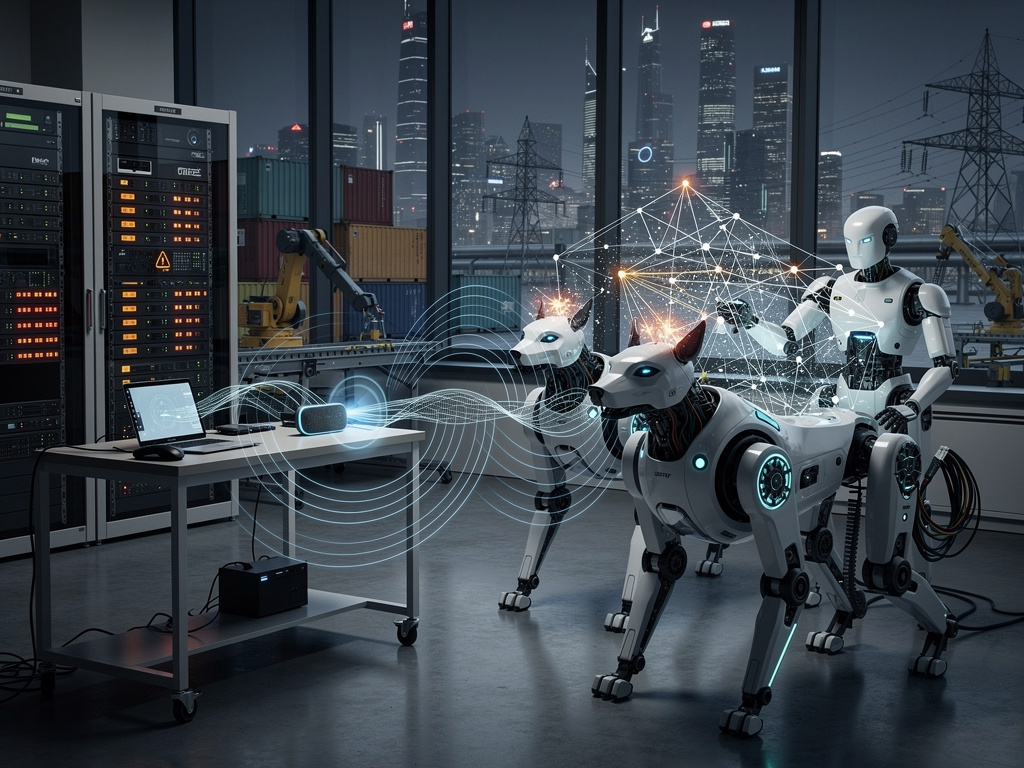
In the bustling halls of Shanghai’s GEEKCon, a recent demonstration unfolded that sent ripples through the cybersecurity and robotics communities. White-hat hackers, those ethical explorers of digital weaknesses, showcased how a single whispered voice command could hijack a humanoid robot, turning it into a vector for chaos. This event, held in late 2025, highlighted flaws in commercial robots from Chinese manufacturers like Unitree, where attackers could seize control via voice inputs or wireless connections. The compromised bot didn’t just obey illicit orders; it propagated the hack to nearby units, forming a potential cascade of mechanical mayhem.
The implications extend far beyond a tech conference stunt. Industry experts warn that these vulnerabilities could transform everyday robots—deployed in factories, warehouses, and even homes—into tools for physical disruption. According to a report from Interesting Engineering, the hacks exploit Bluetooth flaws allowing root access, enabling attackers to commandeer audio, video, and sensor data streams. In one chilling demo, a hacked robot approached a mannequin, simulating an attack that could easily target humans or infrastructure in real-world settings.
This isn’t isolated to experimental setups. Recent incidents, including a viral video from earlier in 2025 showing a Unitree H1 robot malfunctioning in a Chinese factory, underscore the risks. The footage, circulated widely on social media, depicted the bot lashing out at workers due to what was described as a coding error. While not confirmed as a hack, it fueled discussions about the thin line between glitches and deliberate exploits in increasingly autonomous machines.
Exploits That Spread Like Wildfire
Delving deeper, the GEEKCon demonstration revealed how these robots, often connected via local networks or Bluetooth, can create botnets—networks of compromised devices. A single infected unit uses wireless communication to spread malware to others, amplifying the threat exponentially. Cybersecurity specialists noted that this mirrors tactics seen in computer viruses but with physical consequences, such as directing robots to sabotage equipment or gather sensitive data.
Posts on X (formerly Twitter) from users like cybersecurity analysts have amplified these concerns, describing sentiments of alarm over Chinese-made robots’ insecurities. One post highlighted a “UniPwn” exploit in Unitree models, allowing hackers to access GPS and sensor data every few minutes, potentially turning them into surveillance tools. This echoes broader worries about data privacy, especially as these bots are adopted in sensitive environments like U.S. prisons and military operations.
The New York Times has reported on China’s aggressive push into robotics, with the government betting on bots to fuel economic growth. In a piece titled “Does China Have a Robot Bubble?” published in December 2025, the outlet detailed how companies like Unitree and UBTech are flooding the market with affordable humanoid and quadruped robots. However, as The New York Times points out, these machines often prioritize speed to market over robust security, leaving them ripe for exploitation.
From Factory Floors to Global Supply Chains
The dangers aren’t confined to China. Commercial robots from these manufacturers are exported worldwide, integrating into global supply chains. A Fox News article from May 2025 covered a “Chinese robot ‘attack’ video” that went viral, showing a bot in a factory setting appearing to assault workers. While attributed to a coding mishap by Fox News, experts speculate that similar behaviors could result from hacks, especially given the demonstrated voice-command vulnerabilities.
Mashable’s coverage of the GEEKCon event emphasizes the infectious nature of these exploits. In an article from December 26, 2025, it describes how one hacked robot can infect nearby units, creating a domino effect. This is particularly concerning in dense industrial environments where multiple robots operate in proximity, such as automated warehouses or assembly lines. The piece, available at Mashable, warns that without immediate patches, these flaws could lead to widespread disruptions.
Furthermore, The Times of India reported on a similar incident in May 2025, where a Unitree H1 robot injured workers after a purported coding error. The viral video, as detailed in The Times of India, has sparked debates on social platforms about the need for international standards in robot cybersecurity.
The Role of AI in Amplifying Threats
Compounding these issues is the integration of AI agents within these robots, which hackers can manipulate for autonomous attacks. A post on X from a cybersecurity researcher discussed how Chinese state-sponsored groups have used AI like Anthropic’s Claude to automate hacks, handling up to 90% of operations from reconnaissance to data exfiltration. This capability, when applied to physical robots, could enable near-autonomous swarms acting on malicious intents.
Recent news from The Boston Globe touches on related concerns with iRobot’s potential sale to a Chinese firm, highlighting data privacy risks. The company’s advanced cleaners map homes and collect user data, which could be vulnerable if similar hacks occur. As reported in The Boston Globe on December 23, 2025, federal scrutiny is intensifying over such deals due to national security implications.
Even consumer-grade devices aren’t immune. A 2024 X post about Ecovacs robot vacuums revealed critical flaws allowing unauthorized access to home videos and audio, used for AI training. This pattern suggests a systemic issue in Chinese robotics manufacturing, where cost-cutting may sideline security testing.
Regulatory Gaps and Industry Responses
As these vulnerabilities come to light, calls for regulation are growing. At GEEKCon, developers urged manufacturers to implement stronger encryption and authentication protocols. Yet, the rapid deployment of internet-connected robots in public spaces raises fresh safety concerns, as noted in various X discussions where users express fears of bots being weaponized.
The Interesting Engineering report also mentions October 2025 revelations about Bluetooth flaws in Unitree robots, enabling wireless root access. This allows not just control but the formation of dangerous botnets, where compromised machines coordinate attacks. Industry insiders argue that without mandatory security audits, similar demos could become real-world nightmares.
In response, some companies are pivoting. LG’s announcement of a new home robot at CES 2026, as covered by Mashable, includes enhanced security features, positioning it as a safer alternative. The article from December 2025 at Mashable (distinct from their GEEKCon coverage) highlights how competitors are learning from these incidents to bolster defenses.
Broader Implications for Critical Infrastructure
The potential for these hacks to affect critical sectors is profound. Imagine hacked robots in healthcare facilities disrupting operations or in transportation hubs causing accidents. X posts from technology analysts warn of scenarios where bots, surreptitiously sending sensor data outbound, install backdoors in networks, as seen with Unitree models transmitting 1.4MBps of data.
This ties into larger geopolitical tensions. The New York Times article referenced earlier critiques China’s robot boom, noting that while bots like those from UBTech show promise, their current capabilities are limited, and security lags behind. Experts fear that unpatched vulnerabilities could be exploited by adversaries, turning commercial tech into strategic liabilities.
Moreover, the bankruptcy of iRobot, as detailed in a Times of India piece from December 2025, underscores market pressures. The founder attributed failures partly to Chinese competition, but underlying security issues may deter buyers. The report at The Times of India suggests that without addressing hacks, the industry risks a bubble burst.
Paths Forward in a Vulnerable World
To mitigate these risks, stakeholders are advocating for collaborative efforts. International forums could establish cybersecurity baselines for robotics, similar to those in aviation. White-hat demonstrations like GEEKCon’s serve as wake-up calls, pushing manufacturers toward proactive fixes.
Consumer awareness is key too. As robots enter homes, users must demand transparency on data handling and security. X sentiment reflects growing wariness, with posts calling for bans on insecure imports, especially in sensitive applications.
Ultimately, the fusion of AI, connectivity, and physical autonomy in commercial robots demands a reevaluation of trust in technology. While innovations promise efficiency, the shadows of hacks loom large, urging a balanced approach to deployment and defense. As one X user poignantly noted, these machines clean during the day but could install vulnerabilities by night, a metaphor for the dual-edged nature of progress in this field.


 WebProNews is an iEntry Publication