
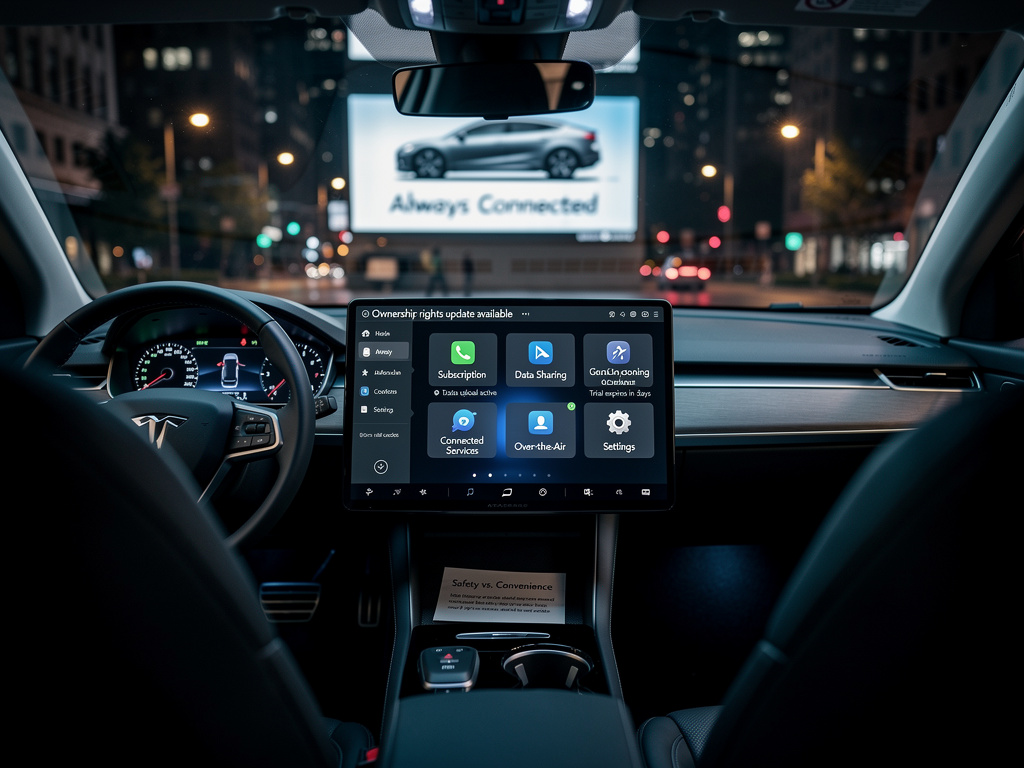
The modern electric vehicle promises a cleaner, quieter ride — but it also increasingly demands that drivers interact with glowing touchscreens, mandatory software updates, and subscription-based features that would have been unthinkable in the age of the mechanical automobile. A growing chorus of drivers, safety advocates, and even some automakers are now questioning whether the industry’s headlong rush toward digitization has gone too far.
The tension between technological ambition and practical usability has become one of the defining debates in the auto industry. As electric vehicles proliferate on American roads — with EV sales reaching record levels in recent years — the complaints about their digital interfaces have grown louder and more pointed. What was once a novelty has become, for many owners, a daily frustration.
The Touchscreen Takeover and Its Discontents
As reported by MSN, the question of whether electric cars have become “too digital” is no longer a fringe concern. The article highlights a fundamental shift in vehicle design philosophy: functions that were once controlled by dedicated physical buttons and knobs — climate control, windshield wipers, seat adjustments, even opening the glove box — are now buried within layers of touchscreen menus. Tesla pioneered this approach with its Model S, and nearly every major automaker has since followed suit to varying degrees.
The appeal to manufacturers is obvious. Touchscreens are cheaper to produce than arrays of physical switches. They can be updated remotely. They give interiors a sleek, minimalist look that photographs well in marketing materials. But the cost is borne by drivers who must take their eyes off the road and tap through digital menus to perform tasks that once required nothing more than reaching for a familiar dial. According to the MSN report, this design trend has prompted real safety concerns, with studies suggesting that touchscreen-dependent controls increase driver distraction significantly.
Safety Researchers Sound the Alarm
The Swedish automotive research organization Vi Bilägare conducted testing that found drivers using touchscreens to perform simple tasks — such as adjusting the radio or turning on the heated seats — were distracted for dangerously long periods. In some vehicles, completing a basic function took a driver’s eyes off the road for more than 20 seconds. At highway speeds, that translates to traveling the length of several football fields effectively blind. The European New Car Assessment Programme (Euro NCAP) has taken notice, announcing that vehicles will need to retain physical controls for key functions like turn signals, hazard lights, and windshield wipers to earn top safety ratings starting in 2026.
In the United States, the National Highway Traffic Safety Administration has been slower to act, though it has acknowledged the distraction risks posed by increasingly complex in-vehicle interfaces. The agency’s voluntary guidelines recommend that tasks requiring visual-manual interaction be designed so they can be completed in glances of two seconds or less, with a total task time of no more than 12 seconds. Many current touchscreen-heavy vehicles appear to violate these guidelines routinely.
Subscription Fatigue Meets the Garage
Beyond the touchscreen debate, the digitization of vehicles has introduced another source of consumer frustration: subscription-based features. BMW drew widespread ridicule when it attempted to charge owners a monthly fee for heated seats — hardware already installed in their vehicles. While the company eventually reversed course in some markets, the episode illustrated a broader industry impulse to treat cars as platforms for recurring revenue rather than finished products sold at a fixed price.
Tesla charges for its “Full Self-Driving” software package, which currently costs $8,000 or can be subscribed to monthly. General Motors has rolled out OnStar and connectivity subscriptions. Ford has introduced its own tiered digital services. For consumers already paying $40,000 to $100,000 for a vehicle, the expectation that they should continue paying monthly fees for features feels, to many, like an unwelcome import from the software industry. As the MSN article notes, this model risks alienating the very buyers the EV industry needs to win over during a period of critical market expansion.
The Right to Repair and the Question of Ownership
The digital architecture of modern EVs raises deeper questions about what it means to own a car. When a vehicle’s core functions depend on proprietary software, the manufacturer retains an unusual degree of control over the product long after the sale. Tesla has remotely disabled features on used vehicles that the original owner had paid for, arguing that the software license didn’t transfer with the hardware. This has alarmed right-to-repair advocates who see it as a fundamental challenge to consumer property rights.
Independent mechanics, meanwhile, find themselves increasingly locked out of repair work on digitized vehicles. Diagnostic systems require manufacturer-authorized software tools. Battery management systems are encrypted. Even routine maintenance can require dealer-level computer access. The result is a consolidation of repair work within manufacturer-authorized networks, driving up costs and reducing consumer choice. Several states have passed or are considering right-to-repair legislation aimed at addressing these issues, but the legal framework remains a patchwork.
Some Automakers Are Listening — and Pushing Back Against the Trend
Not every manufacturer has embraced the touchscreen-only philosophy. Porsche, in designing the electric Taycan and the latest Cayenne, deliberately retained physical buttons for frequently used controls alongside its digital displays. The company’s engineers argued that tactile feedback is not merely a preference but a safety requirement — a driver should be able to adjust climate settings without looking away from the road. Hyundai and its Genesis luxury brand have similarly maintained physical controls for key functions, earning praise from automotive journalists and consumer groups alike.
Mazda has been perhaps the most vocal critic of touchscreen overreach. The Japanese automaker removed touchscreen functionality while driving in several of its models, requiring drivers to use a rotary controller instead. Mazda’s rationale was explicitly safety-driven: the company cited internal research showing that touchscreens caused drivers to inadvertently steer the vehicle as they reached toward the display. This counter-trend suggests that the industry’s most digitally aggressive designs may not represent an inevitable future but rather a choice — and one that some companies are actively rejecting.
The Over-the-Air Update Dilemma
One of the most touted advantages of digitized vehicles is the ability to receive over-the-air (OTA) software updates, much like a smartphone. Tesla has used OTA updates to add features, improve range estimates, and even enhance braking performance after critical reviews. In theory, this means a car can improve over time without ever visiting a service center. In practice, the experience has been more complicated.
Owners have reported updates that changed familiar interface layouts without warning, removed features they relied on, or introduced new bugs. The lack of consumer control over these updates — many are mandatory or install automatically — has drawn comparisons to the frustrations PC users experienced during the era of forced Windows updates. When a laptop reboots at an inconvenient time, it’s annoying. When a vehicle’s systems behave unpredictably, the stakes are considerably higher. The MSN report underscores that this dynamic creates an asymmetry of power between manufacturer and owner that is historically unusual in the automotive context.
Data Collection: The Hidden Cost of a Connected Car
Modern connected vehicles collect staggering amounts of data. Location history, driving habits, braking patterns, voice commands, and even cabin camera footage flow back to manufacturers and, in some cases, to third-party partners. A 2023 report by the Mozilla Foundation labeled cars “the worst product category we have ever reviewed for privacy,” finding that 84% of the car brands examined collected more personal data than necessary and that 76% reserved the right to sell that data.
For EV owners, the data question is particularly acute because electric vehicles tend to be more connected than their internal combustion counterparts. The battery management systems, charging networks, and integrated navigation all generate data streams that manufacturers argue are necessary for optimizing performance. But consumers are rarely given meaningful control over what is collected or how it is used. Privacy legislation in the U.S. remains fragmented, and the auto industry has largely been left to self-regulate on data practices — an arrangement that consumer advocates consider inadequate.
Where the Industry Goes From Here
The backlash against over-digitized vehicles is unlikely to halt the broader trend toward software-defined cars. The economic incentives for manufacturers are too strong, and many consumers genuinely appreciate features like OTA updates, integrated navigation, and advanced driver-assistance systems. But the pushback is forcing a recalibration. Euro NCAP’s upcoming physical-controls requirement will have global ripple effects, as automakers designing for international markets will find it easier to standardize than to create region-specific interiors.
The question is not whether cars will be digital — they already are, and irreversibly so. The question is whether the industry can find a balance that respects driver safety, consumer autonomy, and the basic principle that buying a car should mean owning it fully. The current trajectory, in which vehicles increasingly resemble rolling subscription platforms controlled by distant servers, has generated enough resistance to suggest that a correction is coming. Whether it arrives through regulation, market pressure, or competitive differentiation by automakers willing to buck the trend, the era of uncritical enthusiasm for the all-digital car appears to be ending.


 WebProNews is an iEntry Publication