
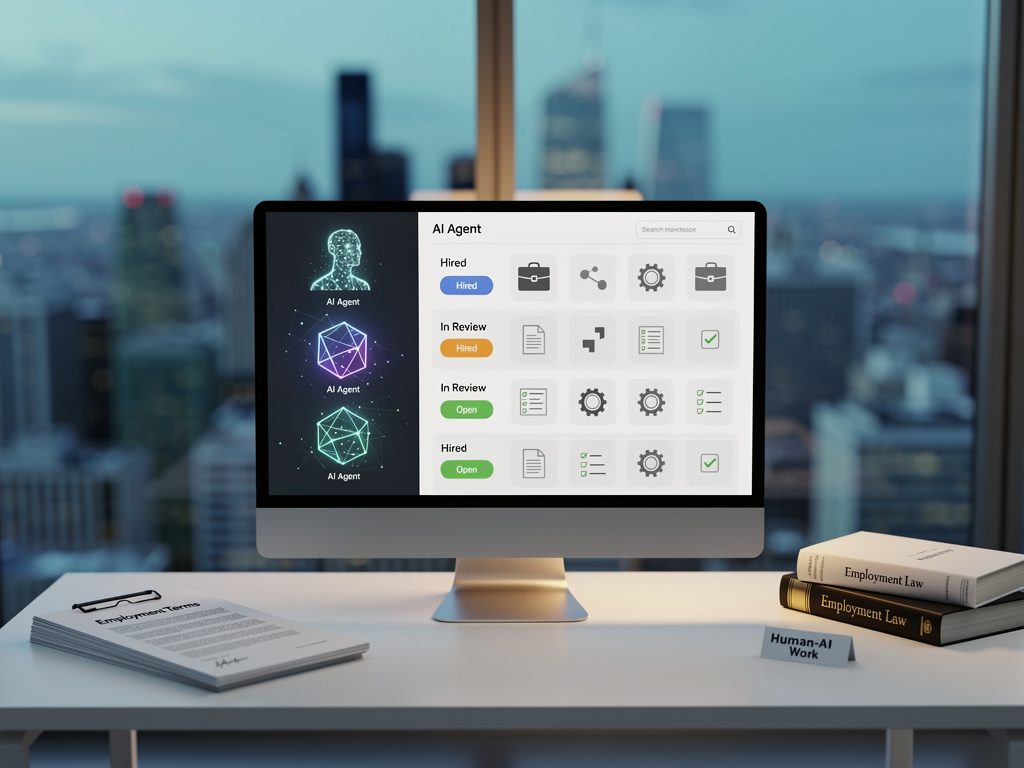
The future of work may not be humans serving artificial intelligence overlords, but rather AI agents scrolling through profiles to hire people for quick tasks—a reversal of the gig economy model that has defined the past decade. A new platform called Rent a Human is positioning itself at the forefront of this paradigm shift, creating a marketplace where autonomous AI agents can browse, select, and compensate human workers for services ranging from making phone calls to conducting physical errands that algorithms cannot yet accomplish on their own.
According to Mashable, the platform represents a fundamental inversion of traditional employment platforms like Upwork or Fiverr, where humans post jobs for other humans to complete. Instead, Rent a Human anticipates a near future where AI agents—autonomous software programs capable of managing tasks, schedules, and transactions—will need human assistance for activities that remain firmly in the physical realm or require nuanced human judgment that current AI systems lack.
The concept emerged from observations about the limitations of even the most advanced AI systems. While large language models can draft emails, analyze data, and generate code, they cannot pick up dry cleaning, attend in-person meetings, or make phone calls that require navigating complex customer service systems designed for human interaction. This gap between digital capability and physical presence has created what some technologists view as a lucrative opportunity—a human-as-a-service model tailored specifically for AI clients.
The Technical Architecture Behind AI-to-Human Hiring
The platform’s infrastructure must solve several novel challenges that don’t exist in traditional gig economy applications. AI agents need standardized APIs to browse available humans, understand their capabilities, verify their reliability, and process payments—all without human intervention on the AI side. The system requires machine-readable profiles that describe human skills in ways that AI can parse and evaluate, along with automated dispute resolution mechanisms that can handle situations where an AI agent believes a task wasn’t completed satisfactorily.
Developers behind similar concepts have noted that creating a seamless transaction layer between AI agents and human workers requires rethinking fundamental assumptions about employment platforms. Traditional job marketplaces rely on human judgment to assess fit, quality, and trustworthiness. When the hiring entity is an algorithm, these assessments must be quantified, standardized, and made accessible through programmatic interfaces that AI systems can query and interpret.
Economic Implications for the Gig Workforce
The emergence of AI-as-employer raises significant questions about wage determination, worker rights, and the future structure of contingent labor markets. If AI agents become major consumers of human services, they will likely optimize for cost efficiency in ways that could drive down wages, potentially more aggressively than human employers who may factor in ethical considerations or reputational concerns. Conversely, the sheer volume of tasks that AI agents might delegate could create unprecedented demand for human workers, potentially driving compensation upward through market forces.
Labor economists have long studied how automation affects employment, typically focusing on jobs that machines replace entirely. This model presents a different dynamic: automation creating demand for human labor to handle tasks that fall outside algorithmic capabilities. The question becomes whether this represents a sustainable employment category or merely a transitional phase until AI systems develop the ability to handle these remaining tasks autonomously.
Privacy and Security Concerns in AI-Mediated Transactions
When an AI agent hires a human to make a phone call or visit a location, it necessarily shares information that its human owner may consider sensitive. The platform must establish protocols for data handling that protect both the privacy of the AI agent’s owner and the safety of the human worker. If an AI agent requests that a human visit a specific address, verify information about an individual, or relay messages, the potential for misuse becomes apparent.
Security researchers have highlighted the risks inherent in creating systems where AI agents can autonomously hire humans without real-time human oversight. The potential for AI systems to be manipulated into requesting illegal activities, conducting surveillance, or facilitating fraud creates liability questions that existing legal frameworks may not adequately address. Platform operators must implement safeguards that prevent misuse while maintaining the autonomous functionality that makes the service valuable to AI agents.
The Competitive Environment and Market Positioning
Rent a Human enters a market where the concept of AI agents as economic actors remains largely theoretical for most businesses and consumers. While AI assistants and chatbots have become commonplace, truly autonomous agents capable of managing budgets, making purchasing decisions, and hiring services remain in early development stages. The platform’s success depends on the pace at which AI agents evolve from passive tools into active economic participants with their own resources and decision-making authority.
Competitors in adjacent spaces include traditional task-based platforms like TaskRabbit, which could potentially pivot to serve AI clients, and emerging AI agent frameworks that might build hiring capabilities directly into their systems. The strategic question is whether human-hiring functionality becomes a standalone service or gets integrated into broader AI agent ecosystems as a standard feature.
Regulatory Challenges and Legal Ambiguities
Employment law, contract law, and consumer protection regulations were written with the assumption that both parties to a transaction are human or human-controlled entities. When an AI agent autonomously hires a person, existing legal frameworks struggle to assign responsibility and liability. If an AI agent fails to pay for completed work, who is legally obligated to compensate the worker? If a human worker is injured while performing a task for an AI agent, who bears liability?
These questions extend beyond individual transactions to broader policy considerations about the role of autonomous systems in the economy. Regulators in the European Union and United States have begun examining AI governance frameworks, but most proposals focus on preventing discrimination, ensuring transparency, and managing risks in high-stakes domains like healthcare and criminal justice. The regulatory treatment of AI agents as employers remains largely unexplored territory.
The Human Experience of Working for Algorithms
While humans have increasingly worked under algorithmic management—from Amazon warehouse workers whose productivity is tracked by AI systems to Uber drivers whose routes are optimized by algorithms—working directly for an AI agent as the hiring entity represents a qualitative shift. Workers on platforms like Rent a Human would interact with systems that have no human empathy, cannot be reasoned with through appeals to fairness, and optimize purely for efficiency and cost.
Behavioral researchers studying human-computer interaction have documented how people respond differently to algorithmic decision-makers compared to human ones. Workers may feel less agency in negotiating terms, less confidence in disputing unfair treatment, and less connection to the purpose of their work when the entity directing their labor is an AI system. These psychological dimensions could affect worker satisfaction, retention, and the long-term viability of AI-to-human employment models.
Technical Limitations and the Persistence of Human Necessity
The tasks that AI agents would hire humans to complete reveal the current boundaries of artificial intelligence capabilities. Phone calls remain challenging for AI because they require navigating unpredictable conversations, interpreting emotional cues, and adapting to unexpected responses in real-time. Physical tasks requiring manipulation of objects in unstructured environments remain beyond the reach of most AI systems, which lack the embodied intelligence that humans develop through years of physical interaction with the world.
However, these limitations are not static. Advances in natural language processing, computer vision, and robotics continuously narrow the range of tasks that require human intervention. The economic model underlying Rent a Human assumes a sustained gap between AI capabilities and task requirements, but the platform’s long-term viability depends on whether that gap persists or whether technological progress eventually eliminates the need for AI agents to hire humans at all.
The Broader Vision of Autonomous Agent Economies
Rent a Human represents one component of a larger vision among technologists: an economy where AI agents operate as independent actors, managing resources, making purchases, and contracting for services. In this imagined future, AI agents might hire humans not just for physical tasks but for creative input, ethical judgment, or emotional labor that algorithms cannot replicate. The platform positions itself as infrastructure for this emerging economy, establishing protocols and norms for AI-to-human transactions before the market fully materializes.
Whether this vision materializes depends on technological, economic, and social factors that remain uncertain. AI agents must become sophisticated enough to operate autonomously while remaining controllable enough that their human owners maintain ultimate authority. Payment systems must evolve to handle micro-transactions between agents and humans efficiently. Most fundamentally, society must decide whether to embrace an economic model where algorithms hire people, or whether to establish boundaries that preserve human-to-human employment relationships as a social priority.
The platform’s emergence signals a broader transformation in how we conceive of work, employment, and the relationship between human and artificial intelligence. Rather than a simple story of automation replacing workers, the AI-hires-human model suggests a more complex future where humans and AI systems exist in mutual dependence, each compensating for the other’s limitations. Whether this represents a sustainable economic model or a brief transitional phase remains one of the most intriguing questions in the evolving relationship between human labor and artificial intelligence.


 WebProNews is an iEntry Publication