
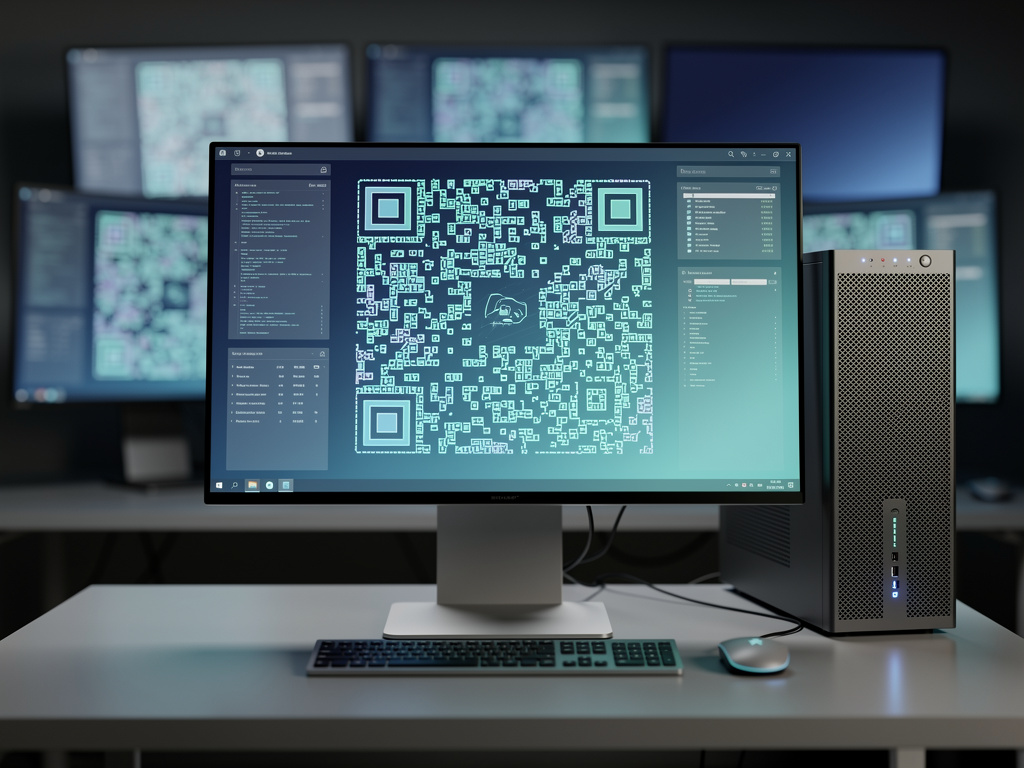
For decades, a Linux kernel crash meant staring at a wall of cryptic text scrolling across a black screen. Developers trained themselves to parse register dumps and stack traces in real time. Everyone else just rebooted and hoped for the best.
That’s about to change.
Fedora 45, the next major release of Red Hat’s community Linux distribution, is set to ship with a feature that transforms the dreaded kernel panic screen into something genuinely useful: a scannable QR code rendered directly in the framebuffer. The feature, known as DRM Panic, has been under development in the upstream Linux kernel for over a year. But Fedora’s decision to enable it by default marks the first time a major distribution will put it in front of a broad user base, according to a report from Phoronix.
The implications go beyond aesthetics. This is about making crash diagnostics accessible — not just to kernel engineers, but to system administrators, enterprise IT teams, and even desktop users who wouldn’t know what to do with a panic log if their life depended on it.
From Blue Screen Envy to QR Codes on Crash
The concept borrows liberally from what Microsoft has done with Windows. Since Windows 8, Microsoft’s Blue Screen of Death has included a QR code that links users to troubleshooting resources. It’s a simple idea, but an effective one: when a system fails catastrophically, give the user a machine-readable artifact they can capture with a phone camera before the moment is lost.
Linux’s DRM Panic feature takes this further. Rather than just linking to a generic support page, the QR code encodes actual crash data — the panic message, key register states, and a compressed version of the stack trace. Scan it, and you get the raw diagnostic payload that would otherwise vanish on reboot unless you had a serial console, kdump, or netconsole configured in advance.
The technical underpinning is the kernel’s Direct Rendering Manager subsystem, which manages GPU framebuffers. When a panic occurs, the DRM Panic handler takes over the display hardware directly, bypassing the normal graphics stack to render a panic screen with embedded QR code. It works even when the rest of the system is thoroughly dead. That’s the whole point.
Jocelyn Falempe, a Red Hat engineer, has been the primary driver of DRM Panic development upstream. The initial patches landed in Linux 6.10, with subsequent refinements in 6.11 and 6.12 adding QR code support and broader GPU driver compatibility. Intel i915 and xe drivers were among the first to gain support, with AMD’s amdgpu and the simpledrm fallback driver following. More recently, support has expanded to cover virtio-gpu and additional hardware, meaning the feature works in virtual machines too — a significant detail for cloud and datacenter deployments.
Fedora’s implementation will arrive as part of the Fedora 45 release cycle, currently expected in late 2025. The approved change proposal specifies that DRM Panic with QR code output will be enabled by default across Fedora Workstation, Server, and related spins. No user configuration required. Crash your kernel, get a QR code.
There’s an elegance to this that the Linux community has historically lacked. Kernel panics are terrifying precisely because they’re opaque. A novice user sees a screen full of hex addresses and function names and has no mechanism to communicate what happened to anyone who could help. Screenshots are impossible — the system is dead. Transcribing the output by hand is error-prone and tedious. And unless crash dump infrastructure was pre-configured, the data is gone once the machine reboots.
A QR code solves the capture problem instantly. Point a phone, scan, done. The data can then be pasted into a bug report, emailed to a sysadmin, or fed into automated analysis tools. It’s a low-tech bridge between a catastrophic failure and the diagnostic pipeline.
What This Means for Enterprise Linux and Beyond
Fedora has long served as a proving ground for technologies that eventually land in Red Hat Enterprise Linux. SELinux enforcement, PipeWire audio, Btrfs as the default filesystem for desktop — all debuted in Fedora before migrating to RHEL or influencing its direction. DRM Panic with QR codes is almost certainly on the same trajectory.
For enterprise environments, this matters enormously. Large-scale deployments already use kdump and crash dump analysis as standard practice. But kdump doesn’t always work. It requires a reserved memory region, a functioning secondary kernel, and enough system integrity to execute the dump. In cases of severe memory corruption or hardware failure, kdump can and does fail silently. When that happens, the panic screen is the only evidence of what went wrong.
Having that screen encode its contents into a QR code means that even a data center technician walking past a crashed server with a console display can capture the diagnostic data. No special tools. No training beyond “point your phone at the screen.” In remote or edge computing scenarios where physical access is limited and serial consoles may not be configured, this could save hours or days of troubleshooting.
The feature also has implications for the desktop Linux community, which has grown substantially in recent years. Steam Deck, which runs a modified Arch Linux, has introduced millions of users to Linux who have zero interest in kernel internals. Ubuntu, Fedora, and other distributions are actively courting these users. When something goes catastrophically wrong, a QR code is infinitely more actionable than a screenful of kernel addresses.
Not everyone is convinced the implementation is complete enough. Some kernel developers have raised questions about how much data can practically be encoded in a QR code rendered at typical screen resolutions. QR codes have version-dependent capacity limits — a Version 40 QR code can hold about 4,296 alphanumeric characters, which is substantial but not unlimited. Compressed panic data will generally fit, but extremely long stack traces might get truncated. The current implementation handles this by prioritizing the most critical information and compressing aggressively.
There’s also the question of security. Kernel panic data can contain sensitive information — memory addresses that reveal ASLR layouts, kernel module names that expose installed software, and occasionally fragments of data from memory. Encoding this into a QR code that anyone with a phone camera can read introduces a theoretical information disclosure vector. In practice, the threat model is limited: if an attacker has physical access to your crashed server’s console output, you already have bigger problems. But the discussion reflects the Linux security community’s thoroughness.
Other distributions are watching. Ubuntu has not yet announced plans to enable DRM Panic by default, but Canonical engineers have participated in upstream discussions. Arch Linux users can already enable it manually with kernel parameters. SUSE’s openSUSE Tumbleweed, which tracks upstream kernels aggressively, will likely pick it up organically.
And then there’s the aesthetic dimension. Falempe’s patches include support for custom panic screen graphics — distributions can brand their crash screens with logos and color schemes rather than displaying a bare black-and-white panic dump. Fedora’s implementation is expected to include the Fedora logo alongside the QR code. It’s a small touch, but it signals a shift in how the Linux community thinks about failure modes. Crashes aren’t just engineering events to be logged and analyzed. They’re user experiences to be designed.
The broader trend here is unmistakable. Linux has spent the last several years aggressively improving its user-facing polish — from the Wayland display protocol finally replacing X11 in major distributions, to HDR display support landing in the kernel, to hardware enablement for consumer laptops reaching near-parity with Windows. DRM Panic QR codes fit neatly into this trajectory. They don’t make the kernel more stable. They make instability more manageable.
So when Fedora 45 ships and your kernel panics — and eventually, every kernel panics — you won’t just stare at a wall of text wondering what happened. You’ll scan a code, capture the data, and file a bug report in minutes. A small thing, maybe. But after 30 years of Linux kernel panics being essentially unreadable to non-experts, it’s about time.


 WebProNews is an iEntry Publication