
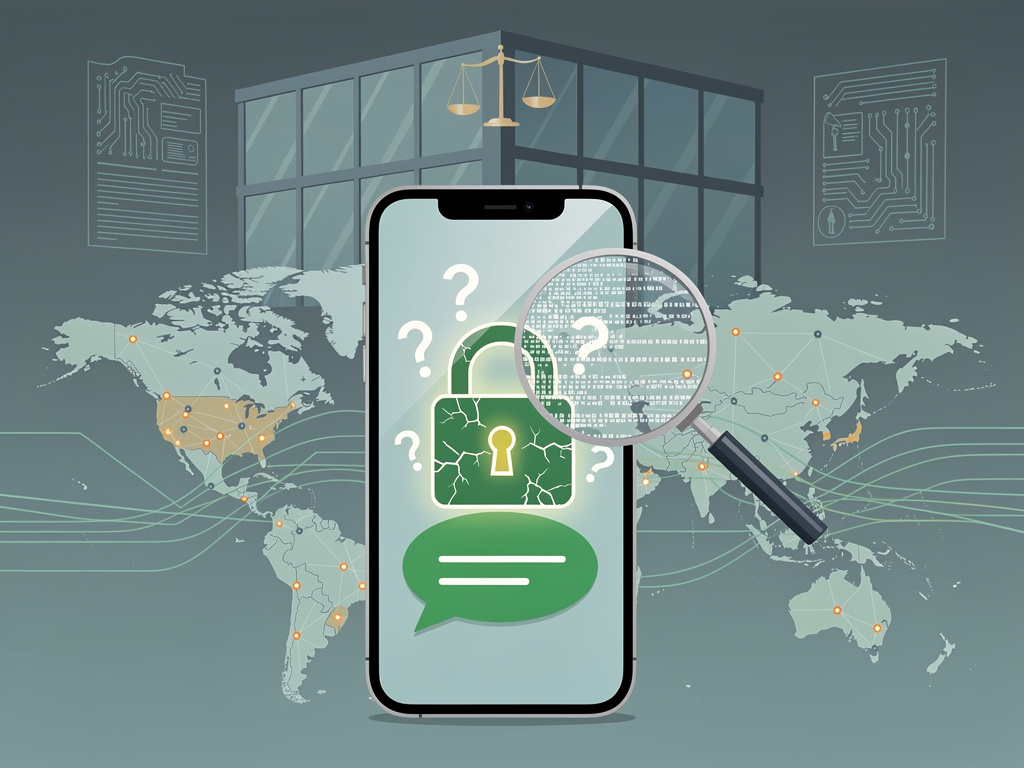
The encrypted messaging platform WhatsApp, owned by Meta Platforms Inc., faces mounting questions about its privacy protections after revelations that U.S. government agencies received whistleblower complaints alleging the service’s end-to-end encryption may not be as secure as advertised. The complaints, which mirror concerns raised in international jurisdictions, have thrust the popular messaging app into a regulatory spotlight at a time when digital privacy has become a cornerstone issue for both consumers and policymakers.
According to Slashdot, federal authorities have received formal whistleblower complaints questioning whether WhatsApp’s encryption infrastructure operates as the company publicly claims. The allegations center on whether Meta maintains capabilities to access user messages despite marketing the platform as featuring end-to-end encryption that prevents even the company itself from reading communications. These claims have emerged as WhatsApp serves more than two billion users globally, making it one of the world’s most widely adopted communication tools.
The timing of these revelations proves particularly sensitive for Meta, which has invested heavily in positioning WhatsApp as a privacy-first alternative to traditional SMS messaging and competing platforms. The company has repeatedly emphasized that its encryption protocols ensure only the sender and recipient can read messages, with no intermediary access possible. If substantiated, the whistleblower allegations could represent a significant breach of consumer trust and potentially expose the company to regulatory penalties under various data protection frameworks.
Technical Architecture Under Question
End-to-end encryption, as implemented by WhatsApp through the Signal Protocol, theoretically creates a cryptographic tunnel between communicating parties that no third party can penetrate. The system generates unique encryption keys for each conversation, stored only on users’ devices rather than on company servers. This architecture has made WhatsApp a preferred communication channel for journalists, activists, and business professionals who require confidential communications.
However, the whistleblower complaints reportedly suggest potential vulnerabilities in how this encryption is implemented or maintained. While specific technical details remain confidential due to the ongoing nature of the complaints, experts in cryptography and digital security have noted several theoretical attack vectors that could compromise encrypted communications. These include key management issues, metadata collection practices, and potential backdoors built into the software at the behest of government agencies or for content moderation purposes.
Regulatory Implications and Government Oversight
The involvement of U.S. government agencies in receiving these complaints signals a potentially serious investigation into WhatsApp’s privacy claims. Federal regulators, including the Federal Trade Commission, have previously taken action against technology companies for making misleading statements about their security and privacy practices. The FTC has authority to pursue enforcement actions when companies engage in deceptive advertising or fail to maintain reasonable data security measures.
The complaints arrive as lawmakers on both sides of the political aisle have expressed concern about big technology companies’ handling of user data. Privacy advocates argue that companies should face consequences when their actual practices diverge from their marketing promises, particularly when those promises influence users’ decisions to share sensitive information. The intersection of national security concerns and individual privacy rights has created a complex regulatory environment where companies must navigate competing demands from government agencies and privacy-conscious consumers.
Meta’s Response and Industry Reactions
Meta has historically defended its encryption practices vigorously, arguing that strong encryption serves as a fundamental protection for user privacy and security. The company has resisted calls from law enforcement agencies to create backdoors or weaken encryption, maintaining that any compromise to encryption infrastructure would create vulnerabilities that malicious actors could exploit. Company representatives have consistently stated that WhatsApp’s encryption prevents even Meta employees from accessing message content.
The technology industry more broadly has rallied around strong encryption as essential infrastructure for digital commerce, personal communications, and democratic discourse. Other encrypted messaging platforms, including Signal and Telegram, have positioned themselves as alternatives to mainstream options, emphasizing their commitment to privacy. The scrutiny facing WhatsApp could have ripple effects across the sector, potentially prompting increased regulatory oversight of encryption claims industry-wide.
International Precedents and Global Implications
The U.S. whistleblower complaints follow similar concerns raised in other jurisdictions. European regulators have questioned various aspects of WhatsApp’s data handling practices, particularly regarding how the platform shares information with other Meta properties like Facebook and Instagram. The European Union’s General Data Protection Regulation has provided regulators with powerful tools to investigate and penalize companies for privacy violations, with fines potentially reaching billions of dollars for serious infractions.
In developing markets where WhatsApp serves as primary communication infrastructure, questions about encryption integrity carry even greater significance. Millions of small businesses rely on WhatsApp Business for customer communications, while individuals in countries with restricted press freedom depend on the platform’s encryption to communicate safely. Any confirmation that encryption can be compromised could have serious implications for vulnerable users in authoritarian regimes.
Technical Verification Challenges
Verifying the integrity of encryption systems presents significant technical challenges, even for sophisticated analysts. While WhatsApp has made portions of its code available for security researchers to examine, the complete system involves multiple layers of software, server infrastructure, and key management systems. Independent security audits can provide some assurance, but they typically examine specific components rather than the entire operational system.
The cryptographic community has developed various methods for testing encryption implementations, including analyzing network traffic patterns, examining compiled application code, and conducting controlled experiments. However, sophisticated surveillance capabilities could potentially operate in ways that evade standard security audits. The challenge of proving a negative—that no backdoors or vulnerabilities exist—makes definitive verification extremely difficult.
Business Model Tensions
Meta’s business model, which relies heavily on targeted advertising driven by user data, creates inherent tensions with strong privacy protections. While WhatsApp itself does not display advertisements, the platform collects metadata about user behavior, including contact lists, message frequency, and usage patterns. This information, even without message content, provides valuable insights for Meta’s broader advertising ecosystem.
Critics argue that Meta faces structural incentives to maximize data collection, even as it publicly champions privacy. The company’s decision to integrate WhatsApp more closely with its other platforms has raised concerns about data sharing practices. Business analysts note that Meta must balance its commitment to user privacy against shareholder expectations for revenue growth and data-driven advertising effectiveness.
Path Forward for Digital Privacy
The whistleblower complaints against WhatsApp highlight broader questions about how society should verify corporate privacy claims in an increasingly digital world. Technology companies make numerous assertions about their security practices, but users typically lack the technical expertise to evaluate these claims independently. This information asymmetry creates opportunities for companies to market privacy features that may not function as advertised.
Some privacy advocates argue for mandatory third-party audits of encryption systems, with results published transparently for public review. Others suggest that privacy claims should be backed by technical specifications that independent researchers can verify. The challenge lies in creating verification mechanisms that provide meaningful assurance without compromising legitimate security measures or creating excessive regulatory burdens that stifle innovation.
As federal investigators examine the whistleblower complaints, the outcome could establish important precedents for how technology companies must substantiate their privacy and security claims. Whether these allegations prove substantiated or unfounded, they underscore the critical importance of maintaining public trust in digital communication infrastructure. For WhatsApp’s two billion users, the answer to whether their messages truly remain private carries implications far beyond technical specifications—it touches on fundamental questions of digital rights, corporate accountability, and the future of private communication in an interconnected world.


 WebProNews is an iEntry Publication