
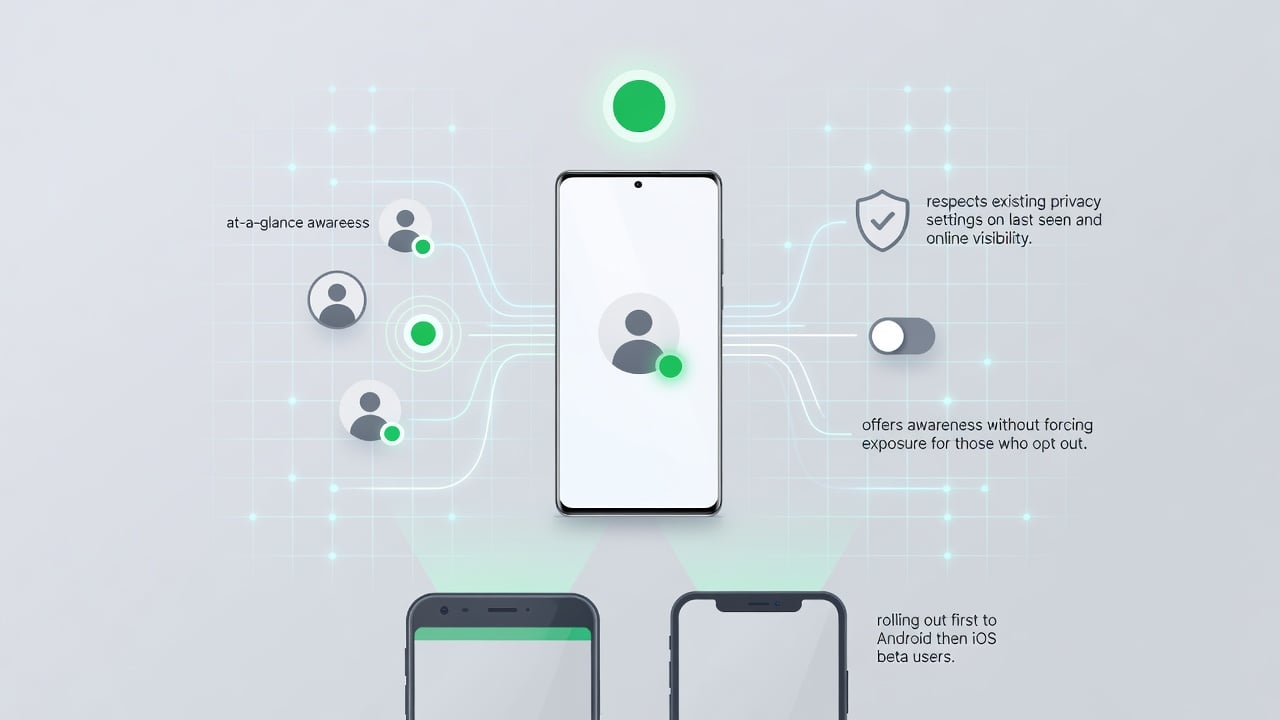
WhatsApp users have long relied on “last seen” timestamps and vague online indicators to gauge availability. But a new visual cue is changing that calculation. A small green dot now appears on a contact’s profile photo when they are actively using the app. It vanishes the instant they switch away. Real-time presence, at a glance.
The feature first surfaced in Android beta version 2.26.24.5 last month. WABetaInfo reported it appears exclusively in the chat info screen for now. Tap a contact’s name at the top of a conversation. There it is. No more hunting for text labels. The dot replaces them. Clean. Immediate.
But. This isn’t some unchecked broadcast of user activity. The indicator strictly follows existing privacy settings. If a person has hidden their last seen and online status, the green dot stays invisible. No exceptions. WhatsApp respects those boundaries even as it makes presence more obvious for everyone else.
Fast forward to this week. The same capability reached iOS beta testers. Version 26.26.10.72 on TestFlight shows the identical green circle in the bottom-right corner of profile photos. MacRumors covered the rollout, noting it updates in real time and remains limited to the contact info view. Wider beta availability should follow over coming weeks. Stable release timing stays unknown.
Privacy Holds Firm Amid Growing Transparency Demands
Industry watchers see this as part of a broader pattern. Messaging platforms face pressure to balance user control with modern expectations of immediacy. Signal offers similar indicators but with stricter default privacy. iMessage shows typing bubbles without always revealing full online status. WhatsApp, with its two billion users, sits in the middle. It gives options. Users can hide last seen from everyone, from all but contacts, or share with everyone.
The green dot doesn’t override those choices. It amplifies them for people who opt in. That’s deliberate. Meta, WhatsApp’s parent, learned hard lessons from past privacy missteps. Cambridge Analytica. Data leaks. Government demands for backdoors. Each controversy sharpened focus on consent. So this feature threads the needle. It offers convenience without forcing exposure.
And users notice. Recent posts on X highlight mixed reactions. Some welcome the ability to check availability without opening a chat. Others joke it will end “ghosting” excuses. “If she’s online but not replying she ain’t busy,” one user posted Monday. The green dot removes plausible deniability in personal conversations. Professional ones gain efficiency. Sales teams. Remote collaborators. Family checking on elderly relatives. All benefit from knowing when someone sits at their phone.
Yet rollout remains gradual. Only some beta testers see it on either platform. GSMArena noted the uncertainty around public availability. No official comment from WhatsApp confirms expansion plans beyond the chat info screen. Earlier WABetaInfo coverage hinted at future integration into a Contacts hub, where users could sort by availability. That would mark a bigger change. A dedicated space for presence awareness.
Compare this to competitors. Telegram displays online status prominently in chats and lists. Discord uses rich presence with game and music details. Slack shows green for active, yellow for away. WhatsApp stayed conservative for years. Text-based “online” labels felt dated. The green dot modernizes without overhauling the interface. Subtle evolution.
Why now? User feedback likely played a role. Billions rely on WhatsApp for everything from casual check-ins to critical business deals in regions with limited alternatives. In India, Brazil, Europe, the app functions as primary communication infrastructure. Knowing availability speeds responses. Reduces missed connections. In high-stakes environments, those seconds matter.
Still, risks exist. Stalking concerns. Workplace pressure to appear constantly available. The privacy settings mitigate much of that. But not all. A contact who shares online status with you might feel obligated to respond once the dot appears. Social dynamics shift. Apps rarely admit they influence behavior this directly. WhatsApp doesn’t either. It simply ships the feature.
Recent coverage reinforces the limited scope. Softonic reported Monday that the dot only activates for contacts sharing their status. No surprises there. The indicator builds on years of incremental presence improvements. Last seen toggles. Read receipts. Typing indicators. Each addition sparked debate before becoming standard.
Meta’s larger strategy comes into focus here. The company pushes WhatsApp toward payments, business tools, and AI features. Enhanced presence fits neatly. Businesses using WhatsApp for customer service gain clearer signals on agent availability. Users coordinating group plans see who can reply immediately. Small quality-of-life gains accumulate.
Technical implementation looks straightforward. The dot leverages existing online status data already sent to servers for delivery. No new infrastructure required. Real-time updates rely on WebSocket connections WhatsApp already maintains. Efficiency matters. The app consumes battery and data carefully, especially in emerging markets.
So what happens next? Expect the feature to exit beta by late summer or fall. Possible expansion to chat lists or main contact views would amplify impact. But WhatsApp moves cautiously on interface changes. Millions use the app daily. Disruptions invite backlash.
One thing feels certain. The green dot marks another step toward messaging that feels more alive. Less guesswork. More connection. Whether that improves relationships or adds pressure depends on the user. The technology simply reveals what was already happening in the background. Presence, once hidden, now sits in plain sight. A green circle. Two billion people watching. The conversation continues.


 WebProNews is an iEntry Publication