
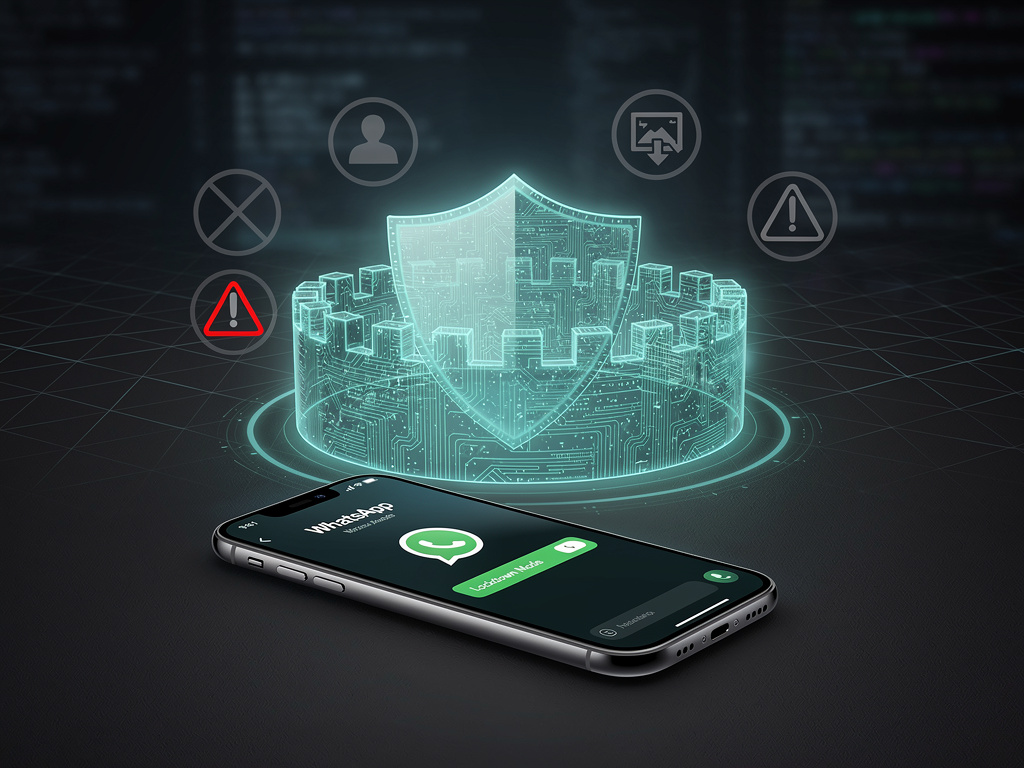
In an era where digital surveillance and cyberattacks have become increasingly sophisticated, WhatsApp has quietly rolled out a comprehensive security feature that transforms the world’s most popular messaging platform into a fortress for users facing elevated threats. The feature, known as Lockdown Mode, represents Meta’s most aggressive stance yet on protecting vulnerable users from state-sponsored attacks, sophisticated phishing attempts, and advanced malware designed to exploit messaging platforms.
According to Lifehacker, WhatsApp’s Lockdown Mode operates as a multi-layered defense mechanism that automatically restricts various features and functionalities that could potentially serve as attack vectors. Unlike standard privacy settings that users can toggle individually, Lockdown Mode implements a comprehensive security posture with a single activation, fundamentally altering how the application processes incoming messages, media files, and connection requests.
The timing of this enhanced security measure reflects growing concerns about messaging platform vulnerabilities. Meta’s implementation comes as governments, journalists, activists, and business executives increasingly find themselves targeted by sophisticated cyber-espionage campaigns. The feature builds upon Apple’s iOS Lockdown Mode, which the iPhone maker introduced in 2022, but tailors protections specifically to the unique threat vectors associated with messaging applications.
The Technical Architecture Behind Maximum Security
When activated, WhatsApp’s Lockdown Mode implements several critical restrictions that significantly reduce the application’s attack surface. The feature automatically blocks messages from unknown contacts, preventing potential attackers from initiating contact through compromised or spoofed accounts. This represents a fundamental shift from WhatsApp’s traditionally open communication model, where any user with a phone number could initiate a conversation.
The security enhancement extends to media handling, with the system automatically preventing the download and display of images, videos, and documents from unfamiliar senders. This protection addresses one of the most common attack vectors in mobile security: malicious files disguised as legitimate media that exploit vulnerabilities in file parsing and rendering systems. By requiring explicit user approval before processing any media from new contacts, WhatsApp creates an additional layer of human verification that can thwart automated attack chains.
Understanding the Target Audience and Threat Models
Meta has designed Lockdown Mode specifically for users who face what security professionals classify as “advanced persistent threats” – sustained, targeted campaigns typically associated with nation-state actors or well-resourced criminal organizations. This includes journalists covering sensitive topics in authoritarian regions, human rights activists documenting government abuses, political dissidents organizing opposition movements, and corporate executives handling confidential negotiations or proprietary information.
The feature acknowledges a reality that mainstream technology companies have been slow to address: not all users face the same level of digital risk. While the average WhatsApp user might worry about spam or casual privacy breaches, high-risk individuals confront sophisticated adversaries with substantial technical capabilities and legal immunity. These attackers often deploy zero-day exploits – previously unknown vulnerabilities that even the most diligent security teams cannot anticipate or patch immediately.
The Trade-offs Between Security and Usability
Implementing Lockdown Mode requires users to accept significant compromises in functionality and convenience. The feature fundamentally changes how WhatsApp operates, transforming it from a frictionless communication tool into a deliberately restrictive platform. Users cannot receive calls from unknown numbers, effectively creating a whitelist-only communication system. Link previews, which normally display website titles and images when URLs are shared, become disabled to prevent potential exploitation through malicious web content.
These restrictions reflect core principles of security engineering: every feature represents a potential vulnerability, and reducing functionality inherently reduces risk. However, this approach also raises questions about the practical usability of such locked-down systems. For journalists who need to communicate with new sources, activists coordinating with unfamiliar contacts, or business professionals networking in new markets, the restrictions could impede legitimate activities that the feature aims to protect.
Comparing WhatsApp’s Approach to Industry Standards
WhatsApp’s Lockdown Mode exists within a broader ecosystem of enhanced security features that major technology platforms have developed in recent years. Apple’s iOS Lockdown Mode, which inspired WhatsApp’s implementation, goes even further by restricting system-wide functionalities including web browsing capabilities, font rendering, and wireless connectivity options. The iOS feature represents Apple’s acknowledgment that certain users require security measures that exceed standard protections, even at the cost of significantly degraded user experience.
Signal, the privacy-focused messaging application often recommended by security experts, has long implemented many of these restrictions as default behaviors rather than optional modes. The application’s architecture emphasizes minimal data collection and maximal encryption, with features like disappearing messages and sealed sender technology that obscures metadata about communication patterns. However, Signal’s smaller user base and limited feature set have prevented it from achieving WhatsApp’s mainstream adoption, leaving billions of users on a platform that historically prioritized growth and engagement over maximum security.
The Technical Implementation and User Experience
Activating Lockdown Mode in WhatsApp requires users to navigate through the application’s privacy settings, where the feature appears alongside other security options like two-factor authentication and end-to-end encryption verification. Once enabled, the application displays persistent indicators that Lockdown Mode is active, ensuring users understand they are operating in a restricted environment. These visual cues help prevent confusion when certain features become unavailable or when incoming communications are automatically blocked.
The system maintains a dynamic allowlist of approved contacts, automatically including existing conversation partners while blocking all others. Users can manually add new contacts to this allowlist, creating a controlled expansion of their communication network. This approach balances security with practical necessity, acknowledging that even high-risk users need mechanisms for establishing new connections, albeit through more deliberate and conscious processes than standard messaging allows.
The Broader Implications for Digital Security
WhatsApp’s implementation of Lockdown Mode signals a maturation in how mainstream technology platforms approach security for vulnerable populations. For years, companies prioritized universal features designed for average users, leaving high-risk individuals to seek specialized tools or accept elevated dangers. By integrating advanced security directly into the world’s most popular messaging platform, Meta acknowledges that threat models vary dramatically across its user base and that one-size-fits-all security approaches inadequately serve those facing serious dangers.
This development also reflects the evolving nature of digital threats. The proliferation of commercial spyware, exemplified by products like NSO Group’s Pegasus, has demonstrated that sophisticated surveillance capabilities once limited to major intelligence agencies are now available to any government or organization willing to pay. These tools exploit vulnerabilities in popular applications, making mainstream platforms like WhatsApp prime targets for compromise. By offering enhanced protections, Meta attempts to raise the cost and complexity of such attacks, potentially deterring some adversaries or forcing them to expend more valuable zero-day exploits.
Implementation Challenges and User Education
Despite the technical sophistication of Lockdown Mode, its effectiveness depends entirely on user awareness and adoption. Many high-risk individuals lack the technical knowledge to assess their threat level or understand when enhanced security measures are necessary. This creates a significant challenge for Meta: how to identify and reach users who would benefit from Lockdown Mode without creating panic or suggesting that the standard platform is insecure for general use.
The company has approached this challenge through targeted outreach to organizations that serve vulnerable populations, including press freedom groups, human rights organizations, and digital security trainers. These intermediaries can assess individual risk profiles and recommend appropriate security measures, including Lockdown Mode activation, as part of comprehensive digital safety planning. However, this approach inherently limits adoption to users already connected with such organizations, potentially missing isolated individuals who face serious threats but lack access to security expertise.
The Future of Adaptive Security in Messaging Platforms
WhatsApp’s Lockdown Mode represents an intermediate step toward more sophisticated, adaptive security systems that could automatically adjust protections based on detected threat levels. Future iterations might employ machine learning algorithms to identify suspicious patterns in incoming messages or connection requests, dynamically escalating security measures when anomalies are detected. Such systems could provide enhanced protection without requiring users to make binary choices between full functionality and maximum security.
The feature also raises questions about the responsibility of technology platforms to protect vulnerable users. As messaging applications become essential infrastructure for global communication, their operators face increasing pressure to ensure that activists, journalists, and dissidents can safely use their services even when targeted by powerful adversaries. This responsibility extends beyond simply offering security features to actively educating users about threats and ensuring that protections are accessible and understandable to non-technical audiences. WhatsApp’s Lockdown Mode demonstrates that major platforms are beginning to accept this responsibility, though significant work remains to make advanced security truly accessible to all who need it.


 WebProNews is an iEntry Publication