
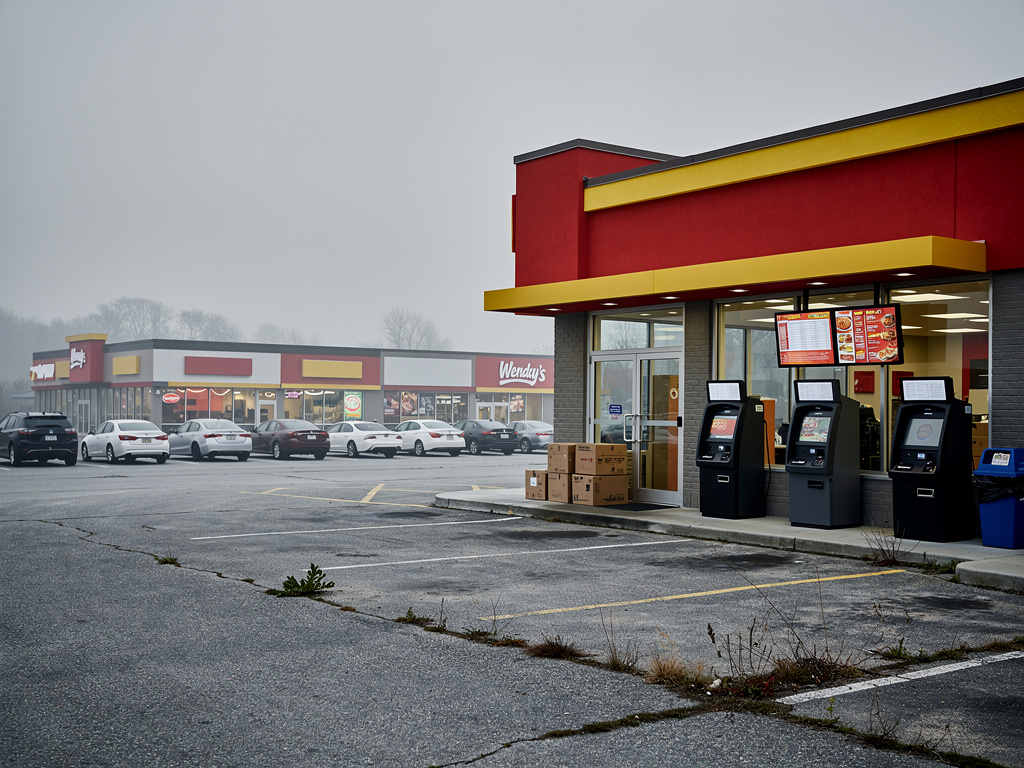
Wendy’s, the nation’s third-largest hamburger chain, is preparing to close as many as 140 underperforming U.S. restaurants by the end of 2026 — a sweeping contraction that underscores the mounting pressures facing legacy fast-food operators in an era of shifting consumer habits, rising costs, and intensifying competition for value-conscious diners.
The Dublin, Ohio-based company disclosed its closure plans during a recent earnings call, signaling that management views the pruning of its domestic footprint as essential to improving overall system health and profitability. According to Business Insider, the closures represent a significant acknowledgment that not every Wendy’s location can survive in the current economic environment, where consumers are pulling back on discretionary spending and operators face relentless cost inflation.
A Strategic Retreat, Not a Surrender
Wendy’s executives have been careful to frame the closures not as a sign of corporate distress, but as a disciplined portfolio optimization strategy. The company has emphasized that the restaurants slated for closure are among its weakest performers — locations that drag down system-wide averages and siphon resources that could be better deployed elsewhere. By removing these underperforming units, Wendy’s aims to boost its average unit volumes and present a healthier picture to franchisees and investors alike.
The chain ended 2024 with approximately 5,700 U.S. locations. Closing up to 140 of them would represent roughly a 2.5% reduction in the domestic footprint, a figure that, while notable, is not unprecedented in the quick-service restaurant sector. McDonald’s, Burger King, and other major chains have all undergone similar rounds of pruning in recent years as the industry grapples with oversaturation in certain markets. What makes Wendy’s situation particularly instructive, however, is the confluence of factors driving the decision — from labor costs and real estate expenses to the fundamental question of whether the American fast-food market has simply built too many restaurants.
The Economics Behind the Closures
The financial pressures bearing down on Wendy’s are hardly unique to the brand. Across the fast-food industry, operators are contending with food costs that remain elevated compared to pre-pandemic levels, minimum wage increases in key states like California (where the fast-food minimum wage rose to $20 per hour in 2024), and a consumer base that has grown increasingly price-sensitive. As Business Insider reported, these dynamics have created a challenging operating environment that has forced chains to rethink their growth assumptions.
For Wendy’s franchisees — who operate the vast majority of the chain’s locations — the math has become punishing at lower-volume stores. A restaurant that might have been marginally profitable five years ago can quickly become a cash drain when labor costs rise 15% to 20%, commodity prices remain sticky, and traffic counts soften. The company’s decision to accelerate closures suggests that corporate leadership has concluded that propping up these marginal units is no longer tenable, and that the capital and management attention they consume would be better redirected toward higher-potential locations and new builds in stronger trade areas.
Wendy’s Isn’t Alone: An Industry-Wide Reckoning
Wendy’s contraction is part of a broader pattern playing out across the American restaurant industry. Several major chains have announced significant closure programs in recent months. Dine Brands, the parent company of Applebee’s and IHOP, has been shrinking its footprint for years. TGI Fridays filed for bankruptcy in late 2024. Red Lobster has shuttered dozens of locations. Even in the quick-service segment, Subway — which once boasted the largest restaurant count in the United States — has been closing stores at a rapid clip since its acquisition by Roark Capital.
The common thread is a market that was arguably overbuilt during the low-interest-rate era, when cheap capital encouraged aggressive expansion. Now, with borrowing costs elevated and consumer spending under pressure from persistent inflation, the industry is undergoing a correction. Restaurant closures in the United States have been running at elevated levels, and industry analysts expect the trend to continue through at least 2026 as leases expire and operators decline to renew at locations that no longer pencil out.
The Value Wars and Traffic Challenges
One of the most significant headwinds facing Wendy’s and its competitors is the so-called “value war” that has erupted across the fast-food sector. With consumers — particularly lower-income households — cutting back on restaurant visits, chains have been forced to roll out aggressive promotional deals to drive traffic. McDonald’s launched its $5 Meal Deal in 2024, and competitors including Wendy’s, Burger King, and Taco Bell quickly followed with their own value offerings.
While these promotions can boost traffic in the short term, they come at a cost to margins. Franchisees have voiced concerns that deep discounting erodes profitability, particularly at locations where fixed costs are already high relative to sales. For Wendy’s, the closure of underperforming stores can be seen partly as an effort to reduce the number of locations where value-driven traffic simply doesn’t generate enough volume to offset the margin compression that comes with $5 combo meals.
International Ambitions Offset Domestic Pullback
Even as Wendy’s trims its U.S. presence, the company has signaled that it remains committed to growth — just not necessarily in the American market. The chain has been expanding internationally, with a particular focus on markets in Canada, the United Kingdom, and other regions where it sees white space for the brand. This dual strategy — contracting domestically while expanding abroad — mirrors the playbook employed by other mature American restaurant brands that have found their home market increasingly saturated.
Wendy’s has also invested heavily in digital ordering, loyalty programs, and drive-through innovation as part of its effort to modernize the customer experience and improve per-unit economics. The company’s digital sales mix has been rising steadily, and management has pointed to technology investments as a key lever for driving same-store sales growth at its remaining locations. The logic is straightforward: if you can’t grow by adding units, you need to extract more revenue and profit from the units you have.
What It Means for Franchisees and Communities
The human impact of the closures should not be overlooked. Each shuttered restaurant represents jobs lost — typically 25 to 35 positions per location — and a reduction in dining options for the communities those restaurants serve. Many of the stores being closed are likely in smaller markets or lower-income areas where traffic has been weakest, raising questions about food access in communities that may already have limited options.
For franchisees, the closures are a mixed bag. Operators who are exiting underperforming locations may see their overall portfolio economics improve, but those who are being forced to close stores they had hoped to turn around face real financial losses. Franchise agreements typically require significant upfront investment, and a premature closure can mean that a franchisee never recoups that capital. Wendy’s corporate team will need to manage these relationships carefully to avoid alienating the operator base that is essential to the brand’s long-term health.
The Road Ahead for America’s Third-Largest Burger Chain
Wendy’s closure program is ultimately a bet that a leaner, more focused domestic footprint will position the brand for stronger performance in the years ahead. By shedding its weakest stores, the company hopes to improve system-wide metrics, attract stronger franchisee candidates, and free up resources for reinvestment in its best locations and new markets.
Whether that bet pays off will depend on a range of factors largely outside Wendy’s control — including the trajectory of consumer spending, the competitive intensity of the value wars, and the broader macroeconomic environment. What is clear is that the era of relentless unit growth in American fast food is over, at least for now. The chains that thrive in the coming years will be those that prioritize profitability over scale, invest in technology and customer experience, and have the discipline to close the doors on locations that no longer serve the brand’s strategic interests. For Wendy’s, that painful process is already underway.


 WebProNews is an iEntry Publication