
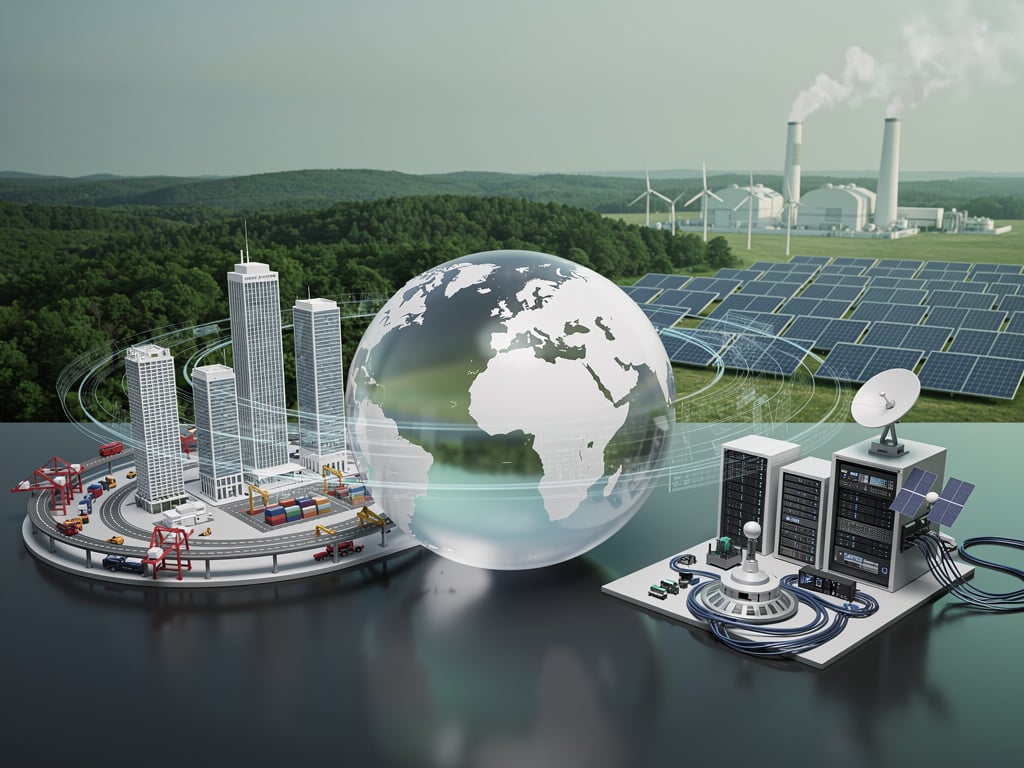
The intersection of economic expansion, national protection, and environmental care forms a complex challenge for global leaders. According to a recent analysis published by Fortune, experts at the World Economic Forum have outlined fresh strategies through their Buck Up initiative to balance these three priorities without sacrificing any one of them. This approach recognizes that decisions made in one area ripple across the others, demanding coordinated thinking from governments, businesses, and international organizations.
Economic growth remains essential for lifting populations out of poverty and funding public services. Yet traditional models often accelerate resource depletion and heighten vulnerability to supply disruptions. National security considerations now extend beyond military matters to include access to critical materials, stable energy supplies, and protection against climate-induced migration or conflict. Environmental sustainability adds another layer, requiring rapid reductions in greenhouse gas emissions while preserving biodiversity and natural systems that support human life.
The Fortune article highlights how the Buck Up program encourages policymakers to treat these elements as mutually reinforcing rather than competing goals. For instance, investments in renewable energy can simultaneously create jobs, reduce dependence on imported fossil fuels, and lower carbon outputs. Countries that integrate these factors early gain advantages in technology development, trade relationships, and diplomatic influence. Those that treat them separately risk falling behind as global standards evolve.
Historical patterns show the difficulty of maintaining balance. During the industrial era, many nations prioritized rapid expansion at the expense of environmental quality and long-term resource security. The oil crises of the 1970s demonstrated how energy dependence creates strategic weaknesses. More recently, extreme weather events linked to climate change have disrupted supply chains, damaged infrastructure, and forced governments to redirect funds from development projects to emergency response. These experiences underscore the need for policies that anticipate interconnections rather than react to crises.
Current data reveals uneven progress across regions. European nations have made advances in linking emissions targets with industrial strategy and defense planning. The European Green Deal attempts to align carbon reduction timelines with economic competitiveness and energy independence. In Asia, countries such as South Korea and Japan incorporate climate considerations into their national security assessments, viewing environmental stability as essential to supply chain resilience. The United States has passed legislation that ties infrastructure spending to both clean energy deployment and domestic manufacturing revival, though political divisions complicate consistent implementation.
Developing economies face particular pressures. Many rely on exporting raw materials or fossil fuels for revenue while needing to build resilient infrastructure against rising temperatures and unpredictable rainfall. The Fortune piece notes that the Buck Up framework suggests tailored approaches rather than one-size-fits-all solutions. Wealthier nations could support technology transfer and financial mechanisms that allow emerging markets to leapfrog outdated energy systems. In return, stable climate outcomes benefit everyone through reduced disaster costs and more predictable agricultural yields.
Innovation plays a central role in reconciling these objectives. Advances in battery storage, hydrogen production, and carbon capture offer pathways to maintain industrial output while cutting emissions. Precision agriculture and alternative proteins could reduce land use pressures and methane releases without compromising food security. Materials science breakthroughs may decrease reliance on rare earth elements, thereby easing geopolitical tensions over mineral resources. The World Economic Forum initiative stresses the value of public-private partnerships in accelerating these technologies from laboratory to commercial scale.
Financial systems must adapt to support integrated decision-making. Traditional economic models rarely account for environmental risks or security externalities in investment calculations. Central banks and regulators have begun incorporating climate stress tests and supply chain vulnerability assessments into their oversight frameworks. Investors increasingly demand transparency on how companies manage interconnected risks across growth, security, and sustainability dimensions. This shift in capital allocation creates powerful incentives for corporate leaders to align their strategies with broader policy objectives.
Trade agreements present another avenue for coordination. Future pacts could include provisions that reward participants for meeting combined standards on emissions, labor rights, and resource management. Border carbon adjustments, once controversial, gain acceptance as tools that prevent countries from gaining unfair advantages by ignoring environmental costs. When designed thoughtfully, such measures can encourage upgrading of production methods rather than simply penalizing imports. The Fortune analysis suggests that security considerations could further shape trade relationships, favoring partners with aligned approaches to critical supply chains and climate commitments.
Education and workforce development represent foundational elements often overlooked in high-level policy discussions. Preparing people for jobs that simultaneously advance economic, security, and environmental aims requires updating curricula at all levels. Technical training in renewable installation, sustainable manufacturing, and systems analysis must expand. Equally important is building public understanding of the connections between personal choices and global outcomes. Informed citizens provide the political support necessary for sustained policy implementation across electoral cycles.
Measurement and reporting standards need refinement to capture the full picture. Gross domestic product alone fails to reflect resource depletion, pollution costs, or security vulnerabilities. Complementary indicators that track natural capital, social cohesion, and resilience metrics offer decision-makers better guidance. International efforts to harmonize these measurements would enable meaningful comparisons and shared learning. The Buck Up program advocates for transparent dashboards that visualize trade-offs and synergies across the three domains, making complex relationships accessible to both specialists and general audiences.
Geopolitical dynamics add complexity to the equation. Competition between major powers influences how climate policy intersects with economic and security strategies. Some observers worry that green technology races could fragment global cooperation on emissions reduction. Others see potential for collaborative research on shared challenges such as ocean acidification or permafrost thaw. The Fortune article points out that middle powers and regional blocs may play decisive roles in bridging divides, demonstrating practical models of integrated policy that larger players could adapt.
Local and municipal governments often serve as testing grounds for innovative approaches. Cities control significant portions of infrastructure investment, zoning decisions, and public procurement. Many have established climate action plans that explicitly link emissions targets with economic development and community safety. Successful examples include district heating systems that reduce energy imports while creating local employment, or urban agriculture projects that enhance food security and reduce transport emissions. Scaling these initiatives requires better coordination with national policies and access to appropriate financing.
Corporate boards increasingly recognize their stake in coherent policy environments. Companies dependent on stable climate conditions, whether in agriculture, tourism, or insurance, advocate for ambitious yet practical regulatory frameworks. Technology firms see opportunities in providing solutions that address multiple objectives simultaneously. Extractive industries face the greatest transition pressures but also possess geological expertise that could support carbon storage or geothermal development. The most forward-looking enterprises engage with policymakers to design regulations that maintain competitiveness while driving necessary change.
International institutions face the task of updating their mandates to reflect these interconnections. The World Trade Organization, International Energy Agency, and United Nations Framework Convention on Climate Change operate with distinct focuses that sometimes create conflicting signals. Greater information sharing and joint scenario planning could help align their guidance. Development banks might restructure lending criteria to favor projects that demonstrate positive effects across growth, security, and sustainability criteria. Progress depends on member states granting these organizations appropriate flexibility and resources.
Public attitudes continue to evolve as climate impacts become more visible. Extreme heat, flooding events, and supply disruptions linked to environmental degradation heighten awareness of the stakes involved. Younger generations particularly emphasize the need for policies that safeguard future opportunities rather than merely maintaining current consumption patterns. Political leaders who articulate clear connections between economic vitality, national resilience, and environmental health tend to maintain broader support than those who frame the issues as zero-sum choices.
Challenges remain substantial. Short-term economic pressures can push governments toward decisions that undermine longer-term security and sustainability. Technological solutions sometimes carry their own environmental or social costs that require careful management. Equity concerns arise when transition costs fall disproportionately on certain communities or countries. Addressing these tensions demands transparent processes that incorporate diverse perspectives and adjust course based on evidence.
The Fortune report on the World Economic Forum’s Buck Up initiative offers a constructive framework for moving forward. By examining real-world examples where integrated thinking has produced positive outcomes, the analysis demonstrates that balancing growth, security, and sustainability is difficult but achievable. Success depends on sustained commitment across political transitions, willingness to share knowledge internationally, and continuous refinement of approaches based on results.
Looking ahead, the coming decade will test whether societies can translate awareness of these interconnections into effective governance. Countries that establish clear strategies, invest in enabling technologies, and build inclusive decision processes stand to gain significant advantages. Those that cling to outdated separations between economic, security, and environmental policy risk compounding vulnerabilities in an increasingly interconnected world. The path requires pragmatism, creativity, and cooperation at scales ranging from local communities to global forums. Early indications suggest that where leaders embrace this complexity rather than avoid it, tangible benefits emerge for economies, citizens, and natural systems alike.


 WebProNews is an iEntry Publication