
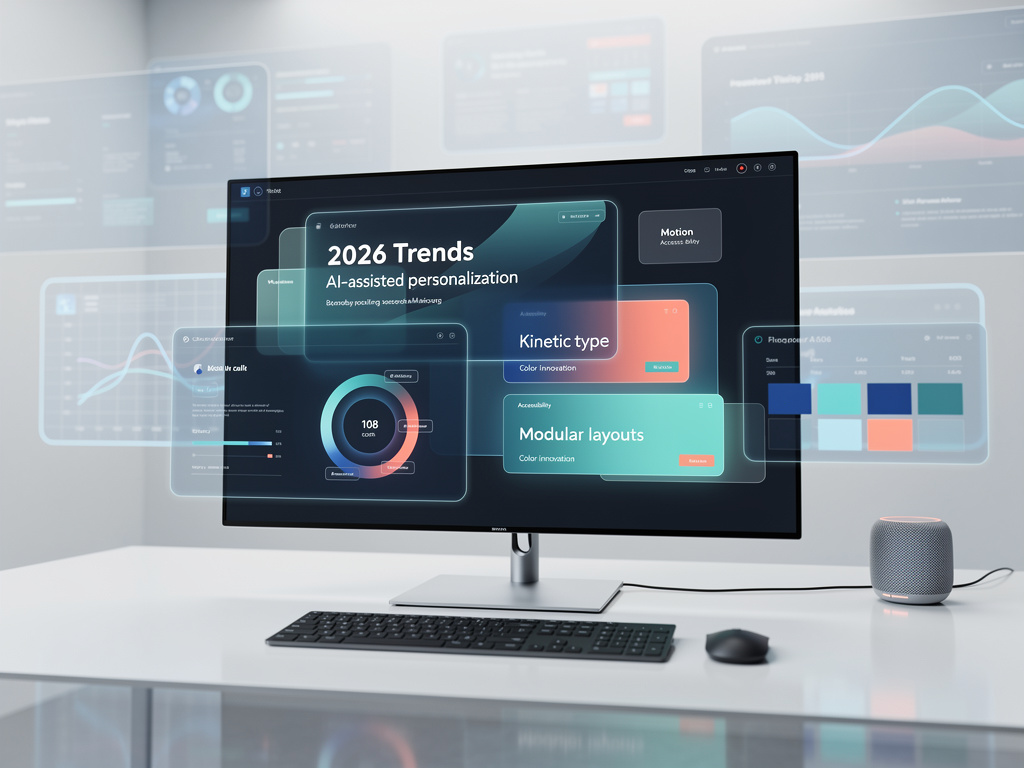
As digital agencies race to redefine online presence amid accelerating AI adoption, Lounge Lizard Worldwide Inc. has emerged as a vanguard with its January 7, 2026, report on 2026 web design trends, signaling a shift from static sites to dynamic, intelligent systems. Founded by Ken Braun and Sharon Sexton Braun, the Long Island-based firm, with over 25 years in business and offices spanning New York to Miami, emphasizes high-performance, AI-integrated environments that prioritize user experience.
“The web in 2026 is about intentionality,” says Ken Braun, Co-Owner of Lounge Lizard. “We are seeing a shift from AI as a gimmick to AI as a strategic partner. Our focus is on building modular, scalable systems that allow brands to react in real-time while maintaining a deeply emotional and human-led brand story.” This philosophy underpins their guide, Web Design Trends to Inspire You in 2026, which outlines eight core shifts dominating the year.
Brands succeeding in this era move from static pages to “living” digital systems, blending craft, speed and intelligence. Lounge Lizard’s Brandtenders craft sites that balance visual impact with technical rigor, ensuring 2026-readiness and conversion focus.
AI-Assisted Design Takes Center Stage
Leading the charge is AI-Assisted Design & Personalization, evolving beyond mockups to on-site optimization. Lounge Lizard’s detailed blog post explains: “AI in 2026 isn’t just producing drafts; it’s helping teams make better decisions faster. Think: layout recommendations based on engagement signals, automated accessibility suggestions, and rapid experimentation (A/B/n) without bloating dev cycles.” Brands generate multiple directions quickly, then curate human-led systems, personalizing elements like hero copy without alienating users.
Pro tip from the agency: Use AI to accelerate iteration, not replace strategy, ensuring sites feel intentional and branded. This aligns with broader industry moves, where AI-generated content is predicted to supersede human-originated output, as noted by AMST.
Complementing this, Modular, Composable Layouts enable reusable blocks and flexible templates, unlocking faster campaigns and consistent CRO testing. Patterns like “Bento box” grids and modular storytelling sections (problem → proof → payoff) are standard, per Lounge Lizard’s analysis.
Motion and Interaction Redefine Engagement
Kinetic Typography & Micro-Interactions inject life into text and UI. “Typography isn’t just readable, it’s performative,” Lounge Lizard states, using motion and variable fonts for hero reveals synced to scroll. Micro-interactions—hover states, real-time form validation—deliver “quiet wow” moments, boosting perceived quality. Guardrails include reduced-motion support and tight performance.
These trends echo X discussions, where designer @redStapler_twit highlights: “Kinetic Typography – Text are no longer static in 2026. They behave like living objects. Stretching, shrinking, and warping as your cursor moves.” Similarly, @boltdotnew notes “motion textures that breathe” and “kinetic type that moves with purpose.”
Practical 3D and WebXR follow, prioritizing utility over flash. Lightweight 3D aids product exploration, while WebXR enables browser-based virtual tours for hospitality and real estate. Lounge Lizard advises: “Offer a great default experience first, then enhance for XR-capable devices.” Graticle’s predictions reinforce this, forecasting immersive 3D and AR standards in retail via WebGL advancements.
Accessibility and Performance as Non-Negotiables
Accessibility as a Baseline integrates WCAG 2.2 from inception: keyboard navigation, contrast checks, clear error states. Lounge Lizard insists it’s quality assurance, not retrofitting. Performance-First Aesthetics demand fast loads despite rich visuals—minimal motion, intelligent compression.
Color systems amplify these, with Lounge Lizard’s 2026 color trends post naming Pantone’s Cloud Dancer (PANTONE 11-4201) as Color of the Year—a soft white evoking calm. Palettes like Cloud Base (#F0EEE9) with Mist Blue accents suit luxury sites, while Mood Mode Dark (#0B0D10 base) evolves dark themes. AI pushes iridescent combos, constrained by guardrails for accessibility (4.5:1 contrast minimum).
Neon micro-accents and cinematic gradients (Night Plum to Cloud Fade) add energy without chaos, per the agency. Eco-Digital teals signal resilience, aligning with sustainability pushes in TheeDigital’s trends.
Industry Echoes and Broader Shifts
AMST echoes micro-interactions and glassmorphism for depth, plus retro nostalgia for emotional relatability amid AI polish fatigue. Graticle predicts hyper-personalization, voice interfaces, biometric security and ethical design, with modular systems reducing dev time.
UI/UX forecasts from Lounge Lizard highlight predictive personalization, multi-sensory accessibility and immersive spatial interfaces, as in their December 2025 release. X users like @CyphersAgency note bold visuals with human touch, from expressive minimalism to immersive effects.
These convergences position 2026 as a maturation point: AI accelerates, but human intent crafts premium experiences. Agencies like Lounge Lizard, positioning clients ahead via balanced “wow factor” and clarity, exemplify the path forward in this high-stakes digital arena.


 WebProNews is an iEntry Publication