
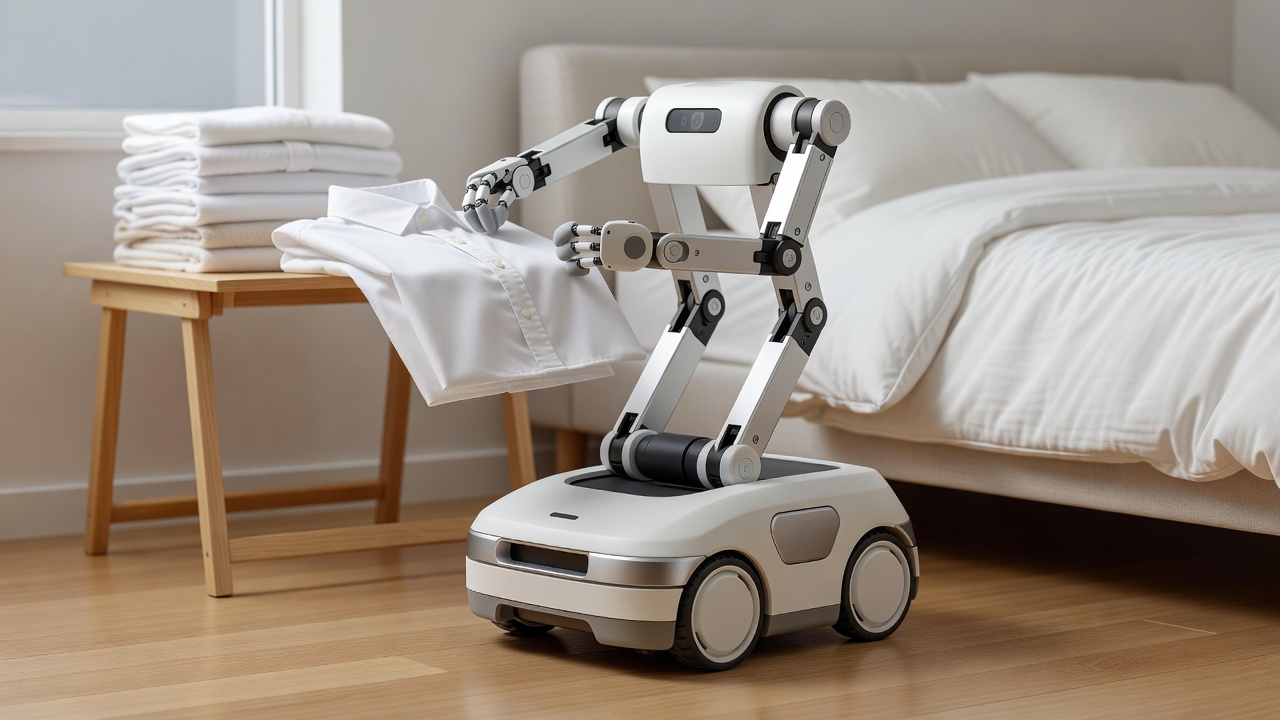
San Francisco has another robotics startup betting that consumers will pay thousands for a machine to handle the chores they hate most. Weave Robotics launched Isaac 1 on Wednesday. The mobile household assistant carries a $7,999 price tag or $449 monthly subscription. First deliveries target California residents this fall.
Isaac 1 stands apart from the rush of flashy humanoid demonstrators. It rolls on wheels. Its torso collapses when idle. Fabric panels soften its look. The company designed every component in-house. Custom actuators. Dedicated safety systems. A full software stack trained on real home data.
From Laundry Folder to Full Home Assistant
Weave started smaller. Its Isaac 0, a stationary laundry-folding robot, already ships to California customers. That product logged real operating hours. Lessons from those deployments shaped Isaac 1. Weave Robotics product page describes two core autonomous capabilities. Laundry Flow finds dirty clothes scattered around the house, manages full hampers, folds items and returns them to drawers or closets. Daily Reset straightens beds, adjusts pillows and blankets, and returns toys, shoes and clutter to their places.
Autonomy comes with a safety net. The robot handles routine tasks on its own. When it encounters problems, remote operators step in through teleoperation. This hybrid model guarantees completion. It also generates valuable training data. Evan Wineland, co-founder and CEO, previously served as lead AI product manager at Apple. His partner Kaan Dogrusoz acts as CTO. The pair met at Carnegie Mellon University in 2015. Both bring hardware and software expertise to the challenge of making robots practical inside real homes. (DROIDS! Substack)
Specs reflect deliberate trade-offs. The robot reaches 5 feet 9 inches when active yet shrinks to fit discreetly when not needed. Battery lasts eight hours. Recharge takes two. Vertical reach hits 80 inches. Horizontal span measures 33 inches. Degrees of freedom break down as two in the neck, six per arm, one per hand, two in the torso and three in the wheeled base. Sensors and cameras stay off by default. A physical shutter and status lights signal activity. Privacy sits at the center of the design.
But. The price raises eyebrows. Eight thousand dollars buys a high-end appliance. Many households already outsource laundry and cleaning. Will they prefer a robot that lives in the corner? Early reaction on Hacker News mixed skepticism with curiosity. Commenters questioned exactly how often teleoperation becomes necessary. (Hacker News discussion)
Still, momentum builds. Weave controls its entire pipeline. Data collection through teleoperation. Model training. Deployment. This vertical integration echoes approaches taken by bigger players yet targets a narrower problem set. No warehouse navigation. No dangerous factory tasks. Just homes. Messy, unpredictable, full of soft objects and irregular schedules.
Isaac 1 looks friendly on purpose. Five color options. Soft fabric shells that swap out. It stows neatly. When idle its cameras fold away and the body lowers. The machine aims to feel like furniture rather than equipment. Designers sought something that could sit quietly in a living room without dominating the space. Recent coverage highlights this furniture-like aesthetic. (India Today)
Orders opened immediately. A $250 fully refundable deposit secures a spot. Broader U.S. availability rolls out through 2027. Commercial inquiries go to the company directly. The strategy feels measured. Ship to one state first. Gather feedback. Iterate. Improve models over time through over-the-air updates and accumulated home experience.
Competitors chase general-purpose humanoids. They promise robots that can do anything. Weave chose focus. Start with laundry and tidying. Solve those well. Expand later. The approach reduces technical risk. It also matches what many consumers say they want. Time back. Less drudgery. A helper that works while they sleep or leave for the day.
Challenges remain. Homes vary wildly. Lighting changes. Kids and pets create chaos. Fabrics wrinkle differently. Drawers stick. Success will depend on robustness in those messy conditions. The hybrid autonomy model buys time. Teleoperation covers edge cases while the system learns. Yet scaling remote assistance carries its own costs and limits.
Wineland and Dogrusoz positioned their company through Y Combinator. The startup counts roughly 10 employees. Small team. Big ambition. They built Isaac 1 for their own homes first. That personal stake shows in the details. Eight hours of runtime covers a full workday or overnight operation. Quick recharge fits domestic routines. Physical privacy cues address a real consumer fear.
Industry watchers note the timing. Interest in home robotics has surged. Videos of Isaac 1 performing tasks spread quickly across X after the launch. One clip showed the robot navigating a sunlit living room, picking items and returning them neatly. Reactions ranged from excitement to questions about long-term reliability. (Weave Robotics announcement on X)
Whether Isaac 1 becomes a common sight in American homes remains uncertain. The product marks a concrete step. Real hardware. Real price. Real delivery window. Not a concept video. Not a prototype shown at a conference. A machine you can reserve today.
Its success will hinge on execution. Can it fold a family’s laundry without constant intervention? Does it truly disappear into the background when not working? Will owners trust it enough to let it roam while they are away? Answers will come in the months after first units arrive in California garages and living rooms.
For now, Weave has moved the conversation forward. Home robots that ship. Not someday. This year. The bar sits higher than ever. Consumers expect results, not promises. Privacy, safety and delight matter as much as capability. Isaac 1 attempts to hit all those marks at once.


 WebProNews is an iEntry Publication