
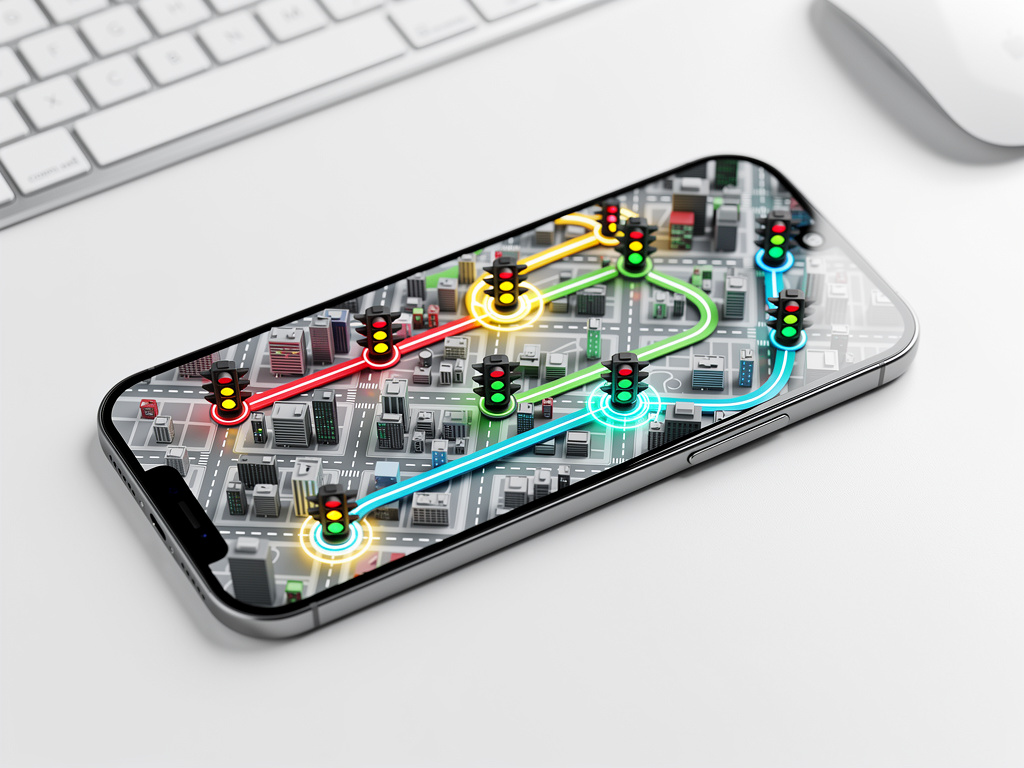
Waze’s Illuminating Leap: Traffic Lights Finally Join the Navigation Fray
In the ever-evolving world of mobile navigation, Waze has long distinguished itself with its community-driven approach to real-time traffic updates, hazard reports, and route optimizations. But for years, one glaring omission has frustrated users: the lack of traffic light indicators on its maps. That appears to be changing, as recent reports indicate Waze is testing the addition of traffic light icons, a feature that rival Google Maps has offered since 2022. This development, spotted in limited beta testing, could mark a significant enhancement for the app, potentially bridging a key gap in its functionality and appealing to drivers who rely on precise visual cues during commutes.
The push for traffic lights in Waze isn’t new. User forums and social media have buzzed with requests for this feature for over a decade, with drivers arguing that knowing the location of stoplights could improve route planning, especially in dense urban areas where intersections can dictate travel times. According to a post on the Waze discussion forum, one user emphasized how traffic lights serve as crucial landmarks for identifying turns amid clusters of cross streets. This sentiment echoes across platforms, highlighting a user base eager for more detailed map overlays.
Waze, acquired by Google in 2013, has traditionally focused on crowdsourced data to provide dynamic routing, avoiding the static elements that Google Maps integrates more readily. Yet, the introduction of traffic lights suggests a shift, possibly influenced by user feedback and competitive pressures. Early glimpses of the feature show simple icons appearing at intersections, but details on how comprehensively it’s implemented remain sparse, limited to select users in beta versions.
From User Demands to Beta Realities
The testing phase was first reported by Android Authority, which noted that Waze confirmed plans for this feature back in May, responding to years of persistent requests. In their coverage, the outlet described the update as a “small but meaningful” addition, particularly for an app that prides itself on real-time conditions. However, the implementation seems restrained initially, with icons not yet providing advanced details like light timings or synchronization data.
Comparisons to Google Maps are inevitable. Google’s navigation service rolled out traffic light indicators in 2020 amid the pandemic, aiming to reduce driver confusion in unfamiliar areas. By 2022, it had expanded globally, offering a seamless integration that Waze users envied. Posts on X (formerly Twitter) from users like those sharing navigation tips underscore this envy, with one account praising Waze for police alerts but lamenting the absence of basic intersection visuals.
Beyond the core feature, Waze’s beta testing aligns with broader updates. For instance, a Reddit thread on r/waze from March 2024 discussed community desires for adding traffic lights manually, though official support was lacking at the time. This grassroots interest underscores Waze’s strength: its reliance on user contributions, which could extend to verifying or reporting light placements in the future.
Technical Underpinnings and Challenges Ahead
Delving deeper, implementing traffic lights in a navigation app involves more than just plotting icons on a map. It requires accurate data sourcing, possibly from municipal databases or partnerships with traffic management systems. In regions like Flanders, Belgium, intelligent traffic lights that respond to app signals have been deployed, as detailed in a July 2025 report from VRT NWS. There, over 200,000 drivers use apps to influence light changes, but popular platforms like Waze and Google Maps have been slow to integrate, potentially hindering widespread adoption.
Waze’s approach might leverage its parent company’s resources, drawing from Google Maps’ established infrastructure. Yet, challenges persist, such as ensuring real-time accuracy in areas with variable light patterns or construction-related changes. A feature request on the Waze Discuss forum from August 2025 proposed optional display of lights to avoid cluttering the interface for users who prefer a minimalist view.
Moreover, privacy and data concerns loom. As Waze collects location data to fuel its crowdsourced model, adding traffic light tracking could intensify scrutiny over how this information is used. Industry insiders note that while Google has faced regulatory hurdles in Europe over data practices, Waze’s community focus might position it as a more transparent alternative, provided it communicates updates clearly.
Impact on Urban Mobility and Competition
The potential benefits for urban drivers are substantial. In congested cities, knowing traffic light locations could refine estimated arrival times, factoring in average wait periods at signals. This is particularly relevant for electric vehicle owners or those using navigation in autonomous modes, where precise intersection data enhances safety algorithms. A recent X post from a technology news account highlighted Waze’s catch-up to Google Maps, sparking discussions on how this could reshape user preferences in the navigation arena.
Competitively, Waze’s update comes amid a flurry of enhancements across apps. Apple Maps has introduced detailed city views with traffic signals, while newcomers like Mappls in India boast live signal timers, as announced in an October 2025 X post by the company. These innovations pressure Waze to innovate beyond its core strengths, perhaps integrating AI-driven predictions for light cycles, similar to Gemini capabilities mentioned in Google’s October 2024 X update for Waze incident reporting.
User adoption will be key. Historical data from Waze’s feature updates, like the 2022 version 5.13 notes on Waze Help, show that new tools often gain traction through community buzz. If traffic lights prove reliable, they could attract users frustrated with Google Maps’ sometimes overwhelming interface, positioning Waze as the go-to for streamlined, community-enhanced driving.
Global Rollout and Future Integrations
Looking ahead, a full rollout could vary by region, starting with high-density areas where data is abundant. In the U.S., partnerships with departments of transportation might accelerate this, building on existing collaborations for real-time traffic feeds. A December 2025 article from FindArticles described the limited test as fulfilling a top user request, with icons appearing during navigation to aid in orientation.
Integration with emerging technologies offers exciting prospects. Imagine Waze syncing with smart city infrastructure, providing alerts for malfunctioning lights or adaptive signals that prioritize public transit. This aligns with trends in connected vehicles, where apps like Waze could interface with car systems for heads-up displays showing upcoming lights.
However, not all feedback is unanimously positive. Some users on platforms like Reddit express concern that additional map elements might distract drivers, advocating for customizable settings. Balancing innovation with usability will be crucial as Waze navigates this update.
Beyond Lights: Waze’s Broader Evolution
This traffic light feature is part of a larger pattern of maturation for Waze. Recent additions, such as school zone alerts and improved incident reporting via AI, as noted in Google’s X post from October 2024, demonstrate a commitment to safety and relevance. These build on Waze’s foundation, established since its 2008 launch, of turning everyday drivers into data contributors.
Economically, the update could boost Waze’s appeal to advertisers, who target location-based promotions. With traffic lights providing more granular route data, sponsored detours or nearby business suggestions might become more precise, enhancing monetization without compromising user trust.
Critics, however, point to Waze’s occasional routing quirks, like suggesting residential shortcuts that disrupt neighborhoods. Adding traffic lights might mitigate some issues by offering more informed paths, but it won’t solve all. As one X user reflected in a 2024 post, Waze excels in community alerts but lags in basic map features compared to rivals.
User Stories and Real-World Applications
Anecdotes from beta testers, shared informally on forums, paint a picture of enhanced navigation confidence. One driver in a bustling metropolis reported that seeing light icons helped anticipate slowdowns, reducing the anxiety of last-minute lane changes. This personal touch resonates with Waze’s ethos, where user experiences drive improvements.
In international contexts, the feature could address unique challenges. In countries with erratic traffic enforcement, like parts of Latin America, where a 2024 X post from a Tesla enthusiast mentioned expanded map regions including accident markers, traffic lights might provide an extra layer of predictability.
Ultimately, as Waze refines this feature, it could redefine expectations for navigation apps, blending static infrastructure data with dynamic user inputs. Industry observers will watch closely to see if this illuminates a path to greater market dominance or merely levels the playing field.
Strategic Implications for Google and Beyond
For Google, Waze’s advancements reinforce its ecosystem dominance in mapping. By cross-pollinating features between Waze and Google Maps—such as the latter’s incident reporting that Waze pioneered—the company maintains a competitive edge. A December 2025 piece from autoevolution explored exclusive features, noting how Waze’s community focus differentiates it, even as it adopts elements like traffic lights.
Looking to the horizon, integrations with augmented reality or vehicle-to-infrastructure communication could elevate the feature. Imagine AR overlays in compatible cars showing light statuses in real-time, a step beyond current capabilities.
As Waze continues testing, the navigation sector watches. This update, while overdue, signals a responsive evolution, potentially setting new standards for how apps illuminate the road ahead. With user feedback guiding the way, Waze’s journey from niche app to essential tool gains another vital marker.


 WebProNews is an iEntry Publication