
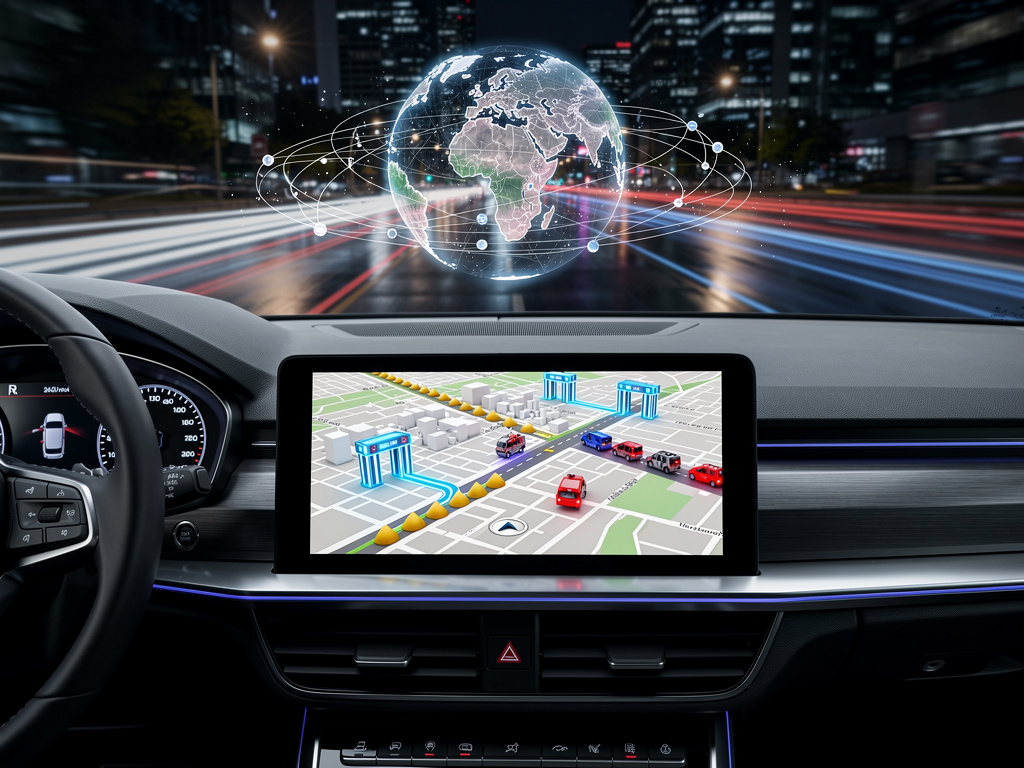
Waze’s Global Alert Revolution: Navigating the Future of Road Safety
In the ever-evolving world of navigation apps, Waze has long stood out for its community-driven approach to real-time traffic updates. Now, the Google-owned platform is making headlines with a significant expansion of its alert features, rolling out speed bump, toll, and emergency vehicle notifications to users worldwide. This move comes after years of anticipation and delays, marking a pivotal shift in how drivers interact with road hazards and infrastructure. According to recent reports, the update enhances driver awareness by integrating these alerts into the app’s core functionality, potentially reducing accidents and improving travel efficiency.
The origins of this expansion trace back to announcements made in 2024, when Waze first teased new hazard alerts including speed bumps, sharp curves, and stopped emergency vehicles. However, implementation faced hurdles, with users waiting through multiple delays. As detailed in a recent article from Digital Trends, the wider rollout began in early 2026, bringing these features to a global audience. This includes notifications for toll booths, which help drivers prepare for payments, and alerts for emergency vehicles, allowing for safer yielding on the road.
Industry experts view this as Waze’s response to growing competition from rivals like Google Maps and Apple Maps, which have already incorporated similar safety features. By leveraging its crowd-sourced data model, Waze aims to provide more accurate and timely information than its competitors. Posts on X, formerly known as Twitter, reflect user excitement, with many praising the app’s ability to warn about speed traps and now speed bumps, enhancing everyday driving experiences.
Enhancing Safety Through Community Power
At the heart of Waze’s update is an emphasis on permanent road features, such as speed bumps and toll plazas, which are now flagged in advance to prevent sudden surprises. The app’s help section, as noted in resources from Google’s support pages, explains how these alerts integrate with navigation routes. Users receive audio and visual cues, ensuring they can adjust speed or prepare for tolls without diverting attention from the road. This is particularly beneficial in urban areas where such features are common but often overlooked in standard mapping services.
Emergency vehicle alerts represent another layer of innovation, notifying drivers of nearby ambulances, fire trucks, or police cars. A news piece from WSMV highlights how similar technology is being adopted in regions like White County, Tennessee, marking it as the first in the state to use such alerts for improved response times. Waze’s version builds on this by using geolocation and user reports to provide real-time warnings, potentially saving lives by clearing paths for first responders.
For industry insiders, this expansion underscores Waze’s reliance on artificial intelligence combined with human input. AI algorithms process vast amounts of data from millions of users to verify and predict hazards, while community reports add a layer of immediacy. This hybrid model has been lauded in analyses from tech publications, positioning Waze as a leader in proactive safety measures amid rising global traffic volumes.
The rollout isn’t without its challenges. Some users have reported inconsistencies in alert accuracy, particularly in less-traveled rural areas where crowd-sourced data is sparse. Nevertheless, Waze’s commitment to iterative improvements is evident, with emails to users promising further refinements in the coming weeks, as covered in a story from Android Authority. These communications emphasize personalized routing, where alerts are tailored to individual driving habits and preferences.
Beyond safety, the economic implications are noteworthy. Toll alerts, for instance, could integrate with electronic payment systems, streamlining transactions and reducing congestion at booths. In countries with extensive toll networks, like those in Europe and Asia, this feature addresses a common pain point, potentially boosting user retention for Waze.
Competitive pressures have accelerated these developments. A 2024 update announcement, detailed in The Verge, introduced initial hazard alerts, but global expansion was postponed due to technical integrations and regulatory approvals in various markets. Now, with the 2026 rollout, Waze is catching up and aiming to surpass competitors by offering a more comprehensive suite of notifications.
Global Reach and User Adoption Trends
Worldwide adoption of these features is gaining momentum, with reports indicating swift integration into both iOS and Android versions of the app. The App Store listing for Waze, available since its early days, now highlights these updates in user reviews, where drivers commend the added layers of information. In regions like South America and Africa, where road conditions vary widely, speed bump alerts are particularly valuable, helping to mitigate vehicle damage and enhance comfort.
Posts found on X reveal a mix of enthusiasm and constructive feedback. Users have shared experiences of how these alerts have prevented mishaps, such as sudden braking at unmarked speed bumps. One common sentiment is the desire for even more granular controls, like customizable alert volumes or integration with vehicle infotainment systems, reflecting ongoing user demands.
From a business perspective, this expansion aligns with Google’s broader strategy for its mapping ecosystem. By enhancing Waze, Google differentiates it from its own Maps app, targeting users who prefer community-driven insights over algorithmic predictions. Industry analyses suggest this could lead to increased ad revenue, as more engaged users mean better-targeted location-based promotions.
Technological underpinnings of these alerts involve sophisticated mapping data. Waze uses a combination of satellite imagery, government databases, and user submissions to map permanent features like tolls and speed bumps. Emergency vehicle detection often relies on partnerships with local authorities, similar to the initiative in White County as reported by WSMV, ensuring alerts are both accurate and compliant with privacy standards.
Privacy concerns, however, loom large in discussions about such features. While Waze anonymizes user data, the constant tracking required for real-time alerts raises questions about data security. Experts recommend users review app permissions, especially in light of global data protection regulations like GDPR in Europe.
Looking ahead, Waze’s roadmap includes further enhancements, such as integrating with smart city infrastructure for even more precise alerts. A piece from Autoevolution points out that despite these additions, the app could benefit from features like better night mode or augmented reality overlays, areas where competitors are advancing.
Innovation Amidst Market Dynamics
The timing of this global expansion coincides with a surge in electric vehicle adoption, where smooth navigation is crucial to preserve battery life and avoid abrupt stops. Speed bump alerts, for example, allow EV drivers to maintain optimal speeds, reducing energy waste. This synergy with emerging automotive trends positions Waze as an essential tool in the shift toward sustainable transportation.
Collaborations with automakers are another avenue for growth. Integrations with in-car systems, as seen in Tesla’s updates mentioned in X posts, could embed Waze’s alerts directly into vehicle dashboards, enhancing usability without relying on mobile devices. Such partnerships could redefine how navigation apps influence vehicle design and safety standards.
Regulatory environments play a critical role in this expansion. In the U.S., features like emergency vehicle alerts must comply with federal guidelines on distracted driving, ensuring notifications are non-intrusive. Internationally, variations in road laws necessitate localized adaptations, a challenge Waze has addressed through phased rollouts.
User education is key to maximizing these features’ benefits. Waze’s in-app tutorials and community forums encourage reporting of new hazards, fostering a virtuous cycle of data improvement. As more users contribute, the accuracy of alerts increases, creating a network effect that strengthens the app’s value proposition.
Critics argue that while these updates are welcome, they don’t address core issues like app reliability during network outages. In areas with poor connectivity, reliance on real-time alerts could falter, prompting calls for offline capabilities. Nonetheless, Waze’s track record of rapid updates suggests these concerns will be tackled in future iterations.
The broader impact on public safety cannot be overstated. By alerting drivers to potential dangers, Waze contributes to reducing road accidents, a global issue claiming millions of lives annually. Studies referenced in Google’s own announcements, such as those on crash history alerts, demonstrate how informed driving leads to fewer incidents.
Strategic Implications for the Navigation Sector
For investors and tech executives, Waze’s moves signal a maturing market where safety features drive user loyalty. With over 140 million monthly active users, as per various reports, the app’s enhancements could solidify its position against giants like Apple and emerging players in autonomous navigation.
Economic analyses indicate that improved routing and alerts could save billions in fuel costs and time lost to congestion. Toll notifications, in particular, facilitate better trip planning, avoiding unexpected expenses and optimizing routes for cost efficiency.
As Waze continues to evolve, its focus on user-centric innovations sets a benchmark for the industry. The 2026 updates, building on foundations laid in prior years, exemplify how delayed promises can lead to refined products that truly meet user needs.
In regions with high traffic density, like Asia’s megacities, these alerts address unique challenges such as dense toll networks and frequent emergency responses. Adaptations for local languages and customs further enhance accessibility, broadening Waze’s appeal.
Ultimately, this expansion reflects a commitment to safer, smarter driving. By empowering users with comprehensive information, Waze not only navigates roads but also charts the course for future mobility solutions.
The journey ahead for Waze involves balancing innovation with user trust, ensuring that each update builds on the last. As the app integrates more deeply into daily life, its role in shaping transportation norms will only grow, promising a horizon where alerts preempt problems before they arise.


 WebProNews is an iEntry Publication