
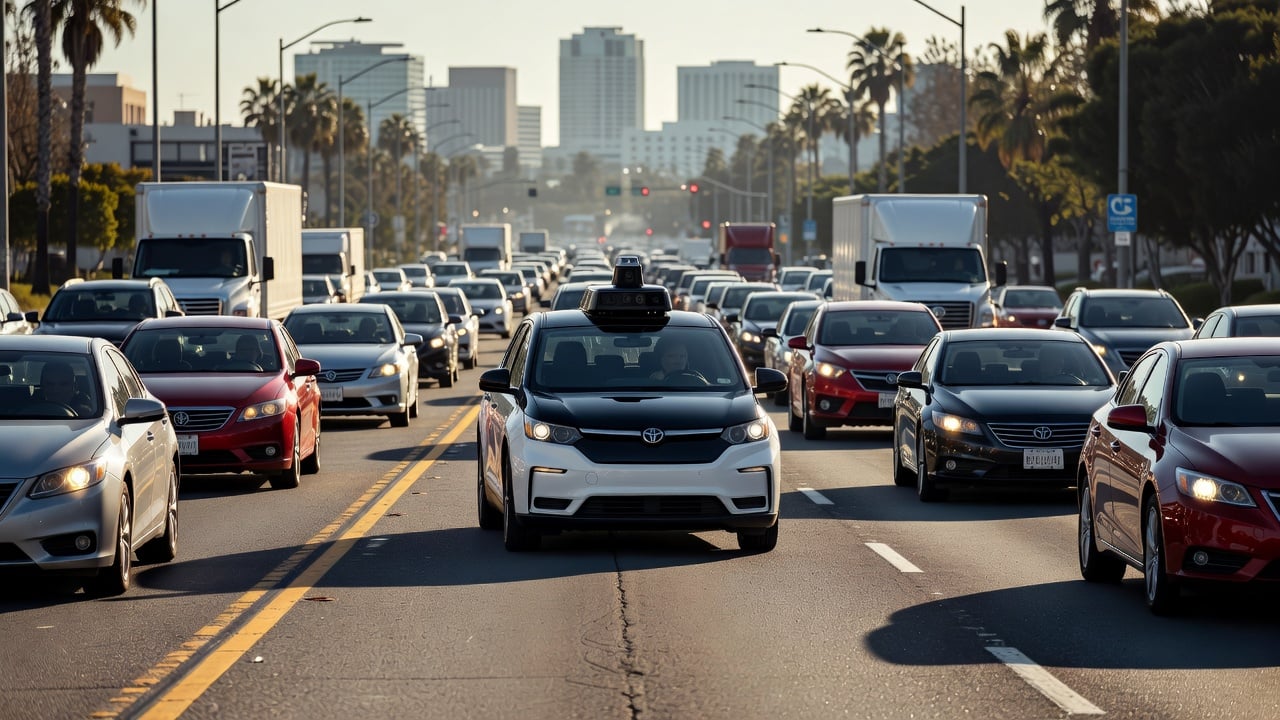
A red Waymo robotaxi sat stopped on the wrong side of a double yellow line. Oncoming cars squeezed past it. Then it began to roll forward. Straight toward traffic. The moment, captured on video in Inglewood, California, during heavy congestion tied to World Cup events, spread quickly across social media and local news.
“Uhh, why is this Waymo on the wrong side the road?” asked Kimoon Kim, the driver filming from his vehicle. “It’s supposed to be in the left turn lane.” Futurism reported the details. The car eventually cut Kim off to merge back and complete its turn. He told ABC7 News he feared a serious crash could occur. Short sentences tell the story. Longer ones reveal the stakes.
But this wasn’t isolated. CNN documented multiple cases where Waymo vehicles ran red lights, entered active crime scenes, ignored emergency road closures, and came within inches of pedestrians. In one Austin incident an officer watched a Waymo turn left directly toward an oncoming 18-wheeler. “This was a very significant failure… that could have resulted in someone getting hurt,” the officer said. “That Waymo had no business turning in front of oncoming traffic like that.”
And. Similar patterns appear elsewhere. A Phoenix police report described a Waymo crossing into oncoming traffic. Another case in Scottsdale saw a vehicle strike a car after entering the wrong lane. These reports, drawn from public records and local authorities, paint a picture of occasional but troubling misjudgments in complex traffic.
California regulators have taken notice. Starting July 1, police can issue noncompliance notices directly to autonomous vehicle operators for traffic violations. The Los Angeles Times explained how the process works. Officers document the incident. The notice goes to the manufacturer, which must respond within 72 hours. The DMV then reviews and can require fixes or limit operations. The change closes a gap exposed months earlier when San Bruno police pulled over a Waymo for an illegal U-turn. No driver sat behind the wheel. No ticket could be issued on the spot.
Waymo has faced other scrutiny. Its vehicles failed to stop for school buses in Atlanta. One struck a child near a Santa Monica elementary school. In each case the company pointed to sudden movements by others or complex conditions. Yet the cumulative effect raises questions about edge cases. Heavy traffic. Construction. Unusual events like World Cup crowds or blackouts.
The Inglewood video arrived at a time of expansion for Waymo. The Alphabet subsidiary operates thousands of rides weekly across multiple cities. It reports lower crash rates than human drivers in comparable conditions. Safety data shows most incidents involve other vehicles rear-ending its cars at stops. But videos of wrong-lane driving or hesitation in intersections fuel public doubt. Passengers sometimes record their own close calls. Bystanders share clips online.
So what happens next? Regulators demand better transparency. California now requires detailed reporting of disengagements and collisions. Federal investigators examine patterns. Cities weigh permits for wider deployment. Waymo, for its part, issues software updates after notable events. It recalled software fleet-wide following a San Antonio incident where a vehicle entered a flooded lane during severe weather.
The technology clearly improves on some human errors. No fatigue. Consistent sensor use. Rapid reaction times in many scenarios. But real-world chaos tests its limits. Double yellow lines should signal a hard boundary. Oncoming traffic demands immediate recognition and halt. When those rules bend even briefly, trust erodes. Drivers in Inglewood that day saw the gap firsthand.
Industry insiders watch closely. Competitors like Cruise have scaled back after their own high-profile setbacks. Tesla pushes vision-only systems amid regulatory probes. Waymo’s lidar-heavy approach once seemed safer. Recent clips challenge that perception. Not every incident ends in collision. Many resolve without harm. The concern lies in repetition and the potential for worse outcomes as fleets grow.
Kim’s video ends with the Waymo clearing the intersection. Traffic flows again. Yet the questions linger. How often do these systems misread lanes under pressure? What safeguards activate when confidence drops? California’s new ticketing rules offer one accountability tool. Data transparency offers another. Both matter as autonomous vehicles move from test tracks to daily commutes.
Short answer. The Inglewood event wasn’t catastrophic. No one was hurt. But it highlights unfinished work. Longer view. Companies must address these edge failures before scaling further. Public roads carry real people. Real consequences. The path forward requires tighter engineering, stricter oversight, and honest assessment of current performance. Anything less invites more videos like this one.


 WebProNews is an iEntry Publication