
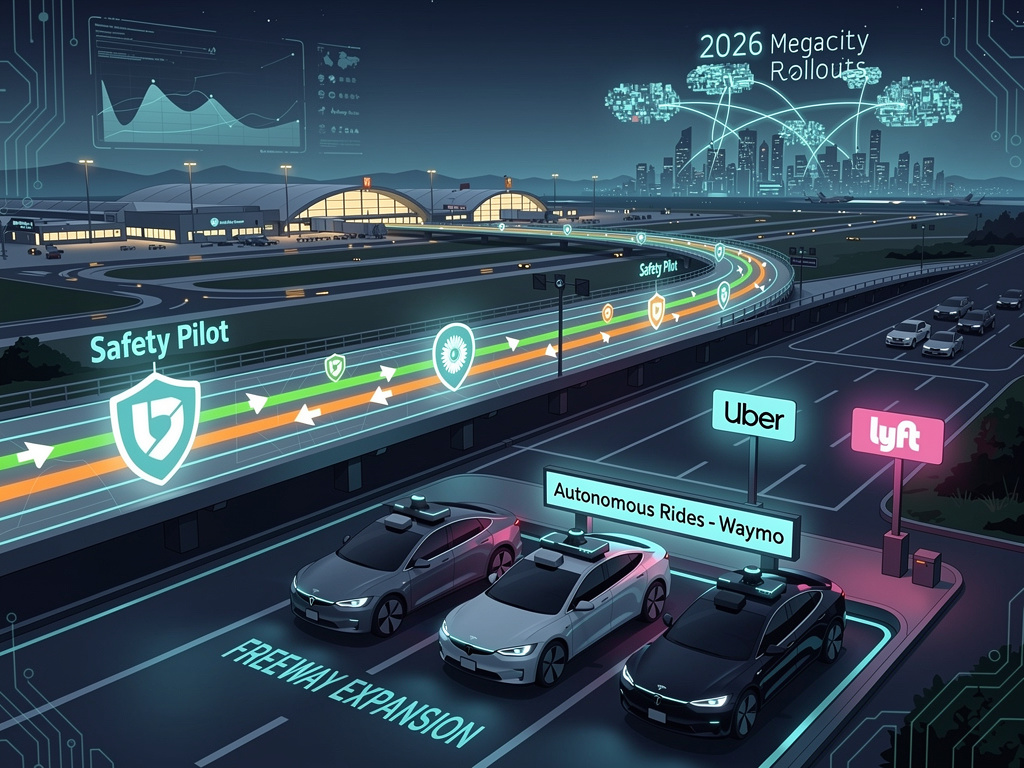
Alphabet Inc.’s Waymo unit launched fully autonomous rides to and from San Francisco International Airport on January 29, 2026, marking a pivotal advance in its Bay Area dominance. Initially available to select riders, the service begins at the airport’s Rental Car Center, with pickups and drop-offs at Level 1 curbside on North McDonnell Road, Island 3. Travelers access it via the AirTrain Blue Line, which runs 24/7 from all terminals, as detailed on SFO’s official site.
This rollout caps a multi-phase safety pilot that started in September 2025, progressing from human-driven mapping and employee rides to full commercial operations. Waymo co-CEO Tekedra Mawakana hailed it in a company blog post as “one of the most requested features for our riders,” promising to meet demand amid millions arriving for 2026 events like Super Bowl LX and the World Cup. SFO Director Mike Nakornkhet echoed the excitement, calling it a commitment to “safe, sustainable, and reliable” options at the global gateway to innovation.
Phased Path to Airport Access
Waymo’s journey to SFO built on freeway approvals late 2025, enabling trips across its 260-square-mile Bay Area zone from San Francisco to San Jose. Prior phases included autonomous testing with safety drivers and rides for staff, satisfying airport concerns over congestion and recoverability, per ABC7 News. San Francisco Mayor Daniel Lurie praised the move, stating it adds a “safe, reliable, and convenient way to get to and from San Francisco” while aiding economic recovery.
The service positions SFO as Waymo’s third major airport hub, after Phoenix Sky Harbor and San Jose Mineta International, where it launched commercial pickups in November 2025. CNBC reported the gradual expansion to all riders and eventual terminal access, intensifying pressure on Uber and Lyft, who handled over 750,000 monthly SFO trips in late 2023 per SFGate.
Rival Turf Under Siege
Airport runs represent high-value trips, often 2-3 times regular fares, fueling Waymo’s revenue push toward $1 billion in 2026 amid a $350 million annualized run rate. In San Francisco’s core zone, Waymo matched Lyft’s market share by late 2024 at around 22-25%, eroding Uber’s from 66% to 55%, according to YipitData analyses cited in The Driverless Digest. Drivers report fleeing to East Bay routes, with Waymo rides averaging $20.43 versus $14-15 for competitors.
San Francisco Business Times noted the final pilot phase approval, while Engadget highlighted timing ahead of Super Bowl crowds. X users buzzed, with Waymo’s post garnering 521 likes: “SFO let’s go! ✈️As of today, we’re serving SFO Airport.”
Safety Scrutiny Amid Scaling
Waymo touts superior safety, with NHTSA data showing 1,429 incidents from 2021-2025 mostly faulting others, and no fatalities. Yet a January 23, 2026, Santa Monica incident where a robotaxi “made contact” with a child drew criticism on X, as noted by user @RakeshSFNYC. Engadget covered the minor injury case coinciding with the SFO news.
California DMV reports underscore Waymo’s edge: over 100 million driverless miles with fewer crashes per mile than humans. Expansion to 12+ U.S. cities and London in 2026, per Yahoo Finance, hinges on this record, alongside a potential $15 billion raise at $110 billion valuation.
Broadening Horizons Beyond Bay Area
SFO fits Waymo’s aggressive 2026 blueprint, including Miami launch on January 22 covering 60 square miles with airport plans, per WebProNews. Testing advances in Dallas, Houston, and Austin airports signal national airport dominance. Partnerships like Lyft in Nashville bolster scale.
Financials show momentum: 14 million 2025 trips, 450,000 weekly paid rides, targeting 1 million weekly by year-end. Alphabet CFO eyes meaningful 2027 contributions, with CNBC reporting funding talks. X reactions mix hype—”babe wake up Waymo’s go to SFO now” from @soarapp—with Uber loyalists noting Reserve’s flight-tracking edge.
Event Windfall and Economic Ripples
Super Bowl LX and World Cup influxes amplify SFO’s stakes, with Waymo eyeing reduced rentals and traffic. San Jose Mayor Matt Mahan lauded similar SJC service as ideal for events. Revenue potential surges as Waymo’s premium pricing—30%+ above Uber/Lyft—holds amid comfort demand.
Challenges persist: Teamsters ethics complaints over lobbying, per SF Chronicle, and scaling fleet amid $1.43 billion Q3 2025 losses. Yet infrastructure like Phoenix factories for 10,000+ units yearly supports profitability bets by 2030 at $2.5 billion revenue.
Transforming Urban Mobility


 WebProNews is an iEntry Publication