
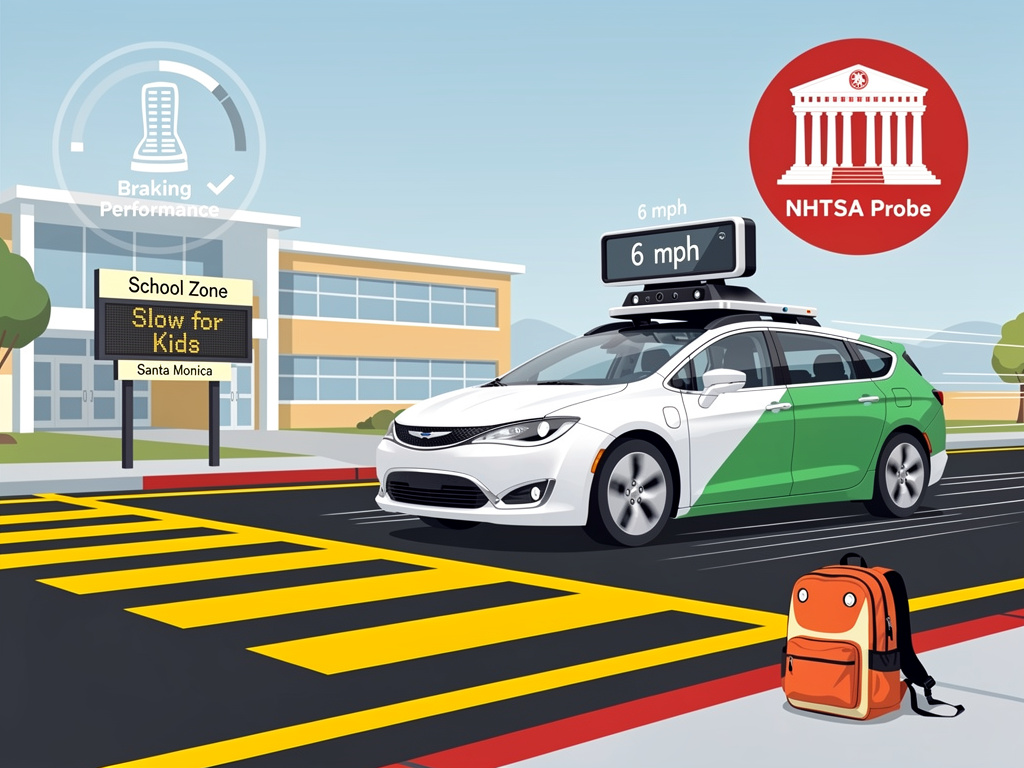
In the bustling drop-off chaos near a Santa Monica elementary school, a Waymo robotaxi made contact with a young pedestrian on Jan. 23, 2026, thrusting Alphabet Inc.’s autonomous-driving ambitions back into the regulatory spotlight. The incident, which occurred within two blocks of the school during peak morning hours, resulted in minor injuries to the child, prompting the National Highway Traffic Safety Administration to launch investigation PE26001.
Waymo disclosed the event in a blog post, stating the child ‘suddenly entered the roadway from behind a tall SUV, moving directly into our vehicle’s path.’ The Jaguar I-Pace, equipped with Waymo’s fifth-generation autonomous system, detected the pedestrian immediately, braking hard from about 17 mph to under 6 mph before contact. ‘Following contact, the pedestrian stood up immediately, walked to the sidewalk, and we called 911,’ the company reported. The vehicle pulled aside and awaited law-enforcement clearance.
Regulators Zero In on School-Zone Protocols
The NHTSA probe, detailed in documents obtained by Reuters, targets whether the Waymo vehicle ‘exercised appropriate caution given…its proximity to the elementary school during drop off hours, and the presence of young pedestrians and other potential vulnerable road users.’ Investigators will scrutinize speed-limit adherence in school zones and post-impact responses amid a scene with other children, a crossing guard, and double-parked vehicles.
Waymo notified NHTSA the same day and pledged full cooperation. A peer-reviewed model cited by the company projects a fully attentive human driver would have struck the child at roughly 14 mph—more than double the robotaxi’s impact speed—highlighting what Waymo calls a ‘material safety benefit’ from its systems, as noted in TechCrunch.
Pedestrian Chaos in Crowded Drop-Off
Details paint a typical urban school morning: double-parked SUVs blocking sightlines, children darting across streets, and crossing guards managing flows. The child emerged suddenly from occlusion, a scenario Waymo’s sensors handled by initiating emergency braking upon detection. No video has surfaced, but Waymo’s account aligns with NHTSA’s description of the child running from behind a double-parked SUV toward the school.
Minor injuries spared escalation, yet the event underscores vulnerabilities in autonomous navigation through human unpredictability. Waymo’s post noted no serious harm reported, with the child walking away unaided.
Prior Probes Haunt Expansion Push
This collision arrives amid mounting scrutiny. On the same Jan. 23, the National Transportation Safety Board opened a probe into Waymo robotaxis illegally passing stopped school buses at least 19 times in Austin, Texas, since the school year began, per TechCrunch. The Austin Independent School District reported five such violations post-software update, urging Waymo to suspend operations during pick-up and drop-off; Waymo declined.
In December 2025, Waymo recalled over 3,000 vehicles to fix software allowing passage past buses with flashing lights and extended stop arms, risking student safety. NHTSA’s October 2025 investigation stemmed from an Atlanta incident where a robotaxi circled a stopped bus, unable to detect signals due to partial occlusion—a parallel to the Santa Monica sightline issue.
Software Recalls and Reluctant Pauses
Waymo’s Atlanta response emphasized the bus blocking a driveway, limiting visibility of lights and arms, prompting fleetwide updates. Yet Austin incidents persisted, with no collisions but repeated legal violations across all 50 states’ mandates to stop for buses. The district, having curbed 10,000-plus human violations yearly, now eyes robotaxis warily.
Earlier NHTSA probes include 2023 barrier collisions and 2024 wrong-lane entries into construction zones, both resolved via over-the-air updates. Waymo touts superior safety stats, with lower crash rates than humans per mile driven across millions of autonomous miles in Phoenix, Los Angeles, San Francisco, and Austin.
Industry Echoes and Stock Resilience
Alphabet shares rose despite the news, per TipRanks, signaling investor faith amid competition from Tesla’s camera-only full self-driving push. X posts from reporters like David Shepardson of Reuters amplified the probe, while TechCrunch’s Sean O’Kane flagged it as breaking news, sparking debates on AV readiness.
Waymo operates 500-700 vehicles in Los Angeles, covering 80 square miles from Santa Monica to downtown, per NHTSA data analyses. Broader reporting under Standing General Order logs 1,429 incidents from 2021-2025, mostly minor, often not Waymo’s fault.
Navigating Occlusions and Human Error
Sensor fusion—lidar, radar, cameras—excels in detection but struggles with perfect occlusions like tall SUVs. Waymo’s hard braking mitigated severity, contrasting human distraction risks NHTSA data flags as fatal crash leaders: speeding, impairment, inattention.
Regulators demand granular data on fifth-generation systems, potentially probing recall needs. As Waymo eyes New York and more airports, this cluster tests claims of AVs outperforming humans around vulnerable users.
Federal Eyes on AV Maturity
NHTSA’s multi-pronged inquiries—from buses to pedestrians—signal deeper doubts on school-zone programming. Waymo’s transparency bid, via proactive disclosure, contrasts rivals like Cruise’s past opacity. Yet refusals to pause Austin operations fuel tensions, mirroring local clashes in California over emergency interference.
With Tesla accelerating robotaxi plans sans lidar, Waymo’s sensor-heavy approach faces validation. Investors watch: safety lapses could slow expansions, but data-driven defenses may bolster dominance. The Santa Monica clip, low-speed as it was, spotlights the tightrope between innovation and caution in America’s robotaxi race.


 WebProNews is an iEntry Publication