
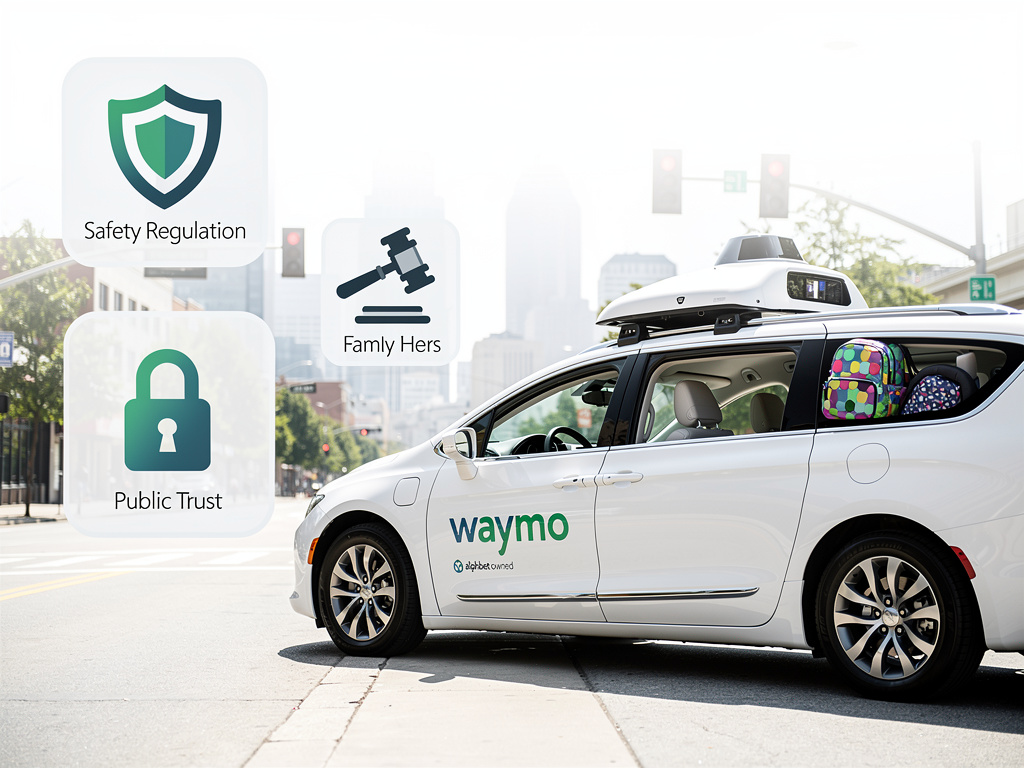
In the bustling suburbs of Phoenix and the tech-centric corridors of Silicon Valley, a quiet revolution is underway. For a select group of families, the daily grind of school runs, soccer practice drop-offs, and trips to a friend’s house is being handled not by a parent, but by an all-electric Jaguar I-PACE with no one in the driver’s seat. This is the testing ground for Waymo’s most ambitious and potentially lucrative venture yet: becoming the personal chauffeur for the next generation.
The Alphabet-owned company is methodically laying the groundwork to transport unaccompanied minors, a move that aims to solve one of modern parenting’s most persistent logistical headaches. Waymo CEO Tekedra Mawakana has framed this not merely as a new feature, but as a “generational opportunity” to embed autonomous vehicle technology into the very fabric of family life. In a recent interview with Business Insider, she articulated a vision where parents could reclaim hours of their day, entrusting the routine transportation of their children to Waymo’s sophisticated fleet of robotaxis. The goal is to move beyond the early-adopter phase and create a service so indispensable it becomes as common as a smartphone.
A High-Stakes Bet on Building the Digital Chauffeur
The business case is compelling. Success would unlock a massive and consistent revenue stream, transforming Waymo’s vehicles from on-demand taxis for adults into a subscription-like utility for families. This strategy targets a key period of underutilization for ride-hailing services: the afternoon hours. While adult ride demand peaks during morning and evening commutes and on weekend nights, the 2 p.m. to 5 p.m. window is dominated by the school run. Capturing this market would dramatically improve fleet efficiency and profitability, a critical metric for a capital-intensive business that has been in development for over a decade.
To achieve this, Waymo is building a suite of features designed to win the trust of the world’s most demanding customers: parents. The system, currently available to a vetted group in its “Trusted Tester” program, allows a parent to create a separate profile for their child within the Waymo One app. From there, they can request a ride for the minor, lock the vehicle’s doors and windows remotely, and monitor the entire journey in real-time. Crucially, the child has access to a dedicated button inside the vehicle that instantly connects them with a human Rider Support agent, providing a layer of reassurance for both passenger and parent.
Navigating an Unwritten Regulatory Rulebook
While the technology is advancing, the regulatory path forward is far from clear. Currently, major ride-hailing companies like Uber and Lyft explicitly prohibit unaccompanied minors due to complex liability and safety concerns. Waymo is venturing into a legal gray area where formal rules have yet to be written. State and federal regulators, including the National Highway Traffic Safety Administration (NHTSA) and powerful state-level bodies like the California Public Utilities Commission (CPUC), are still grappling with the broader framework for autonomous vehicle deployment, let alone the specific protocols for transporting children.
The CPUC, which authorized the expansion of robotaxi services in San Francisco, has established incident reporting requirements but has not yet issued specific regulations governing the transport of minors. According to a report from TechCrunch, regulators are taking an increasingly cautious approach following high-profile incidents, underscoring the intense scrutiny Waymo will face. Any incident involving a child, no matter how minor, could trigger a significant public and regulatory backlash, jeopardizing the entire program. The company’s ability to demonstrate unimpeachable safety and reliability will be paramount to convincing lawmakers to create a new category of regulated transport for children.
The Trust Deficit and the Shadow of Competition
Beyond regulatory approval lies the even greater challenge of public acceptance. The concept of placing a child alone in a vehicle operated by artificial intelligence is a profound leap of faith for many parents. Surveys have consistently shown public skepticism toward self-driving technology. A 2023 study from the American Automobile Association (AAA) found that 68% of drivers are afraid of riding in a self-driving vehicle, a figure that has risen in recent years. As noted by AAA, building consumer trust is a fundamental prerequisite for widespread adoption. Waymo’s strategy appears to be a gradual one, using its trusted tester program to create a cohort of advocates who can share positive experiences and normalize the concept within their communities.
This push comes as the competitive environment intensifies. While its chief rival, GM’s Cruise, has been sidelined by a significant safety incident and is slowly working to rebuild its operations and public trust, other players are not standing still. Amazon’s Zoox is testing its purpose-built vehicles, and Motional, a joint venture between Hyundai and Aptiv, is also expanding its services. By targeting the family demographic, Waymo is attempting to build a loyal customer base and a defensible market niche before its competitors can establish a foothold, leveraging its current operational lead to create a first-mover advantage in a highly sensitive but potentially rewarding sector.
The Road Ahead is Paved with Parental Anxiety
The technological and logistical hurdles are significant. The Waymo system must be prepared to handle a range of child-specific scenarios: a child who feels ill, a forgotten backpack, or a simple case of anxiety. The in-cabin monitoring and two-way communication with support agents are designed to address these issues, but their effectiveness at scale remains to be proven. The company must ensure its remote support staff are trained not just as technical operators but as calm and reassuring presences for children in unfamiliar situations. Every interaction will be a test of the system’s robustness and its capacity for a human touch, delivered remotely.
Ultimately, Waymo’s success will hinge on its ability to answer one simple question for millions of parents: Is this safer than the alternative? The company argues that its technology, which eliminates human error, distraction, and impairment, represents a step-change in road safety. As detailed on the official Waymo safety website, its vehicles have driven millions of autonomous miles with a safety record it claims is superior to that of human drivers. The challenge is translating these statistics into the emotional currency of trust. For Waymo, the journey to becoming the family chauffeur is not just a technical race, but a campaign for the hearts and minds of parents across the country.


 WebProNews is an iEntry Publication