
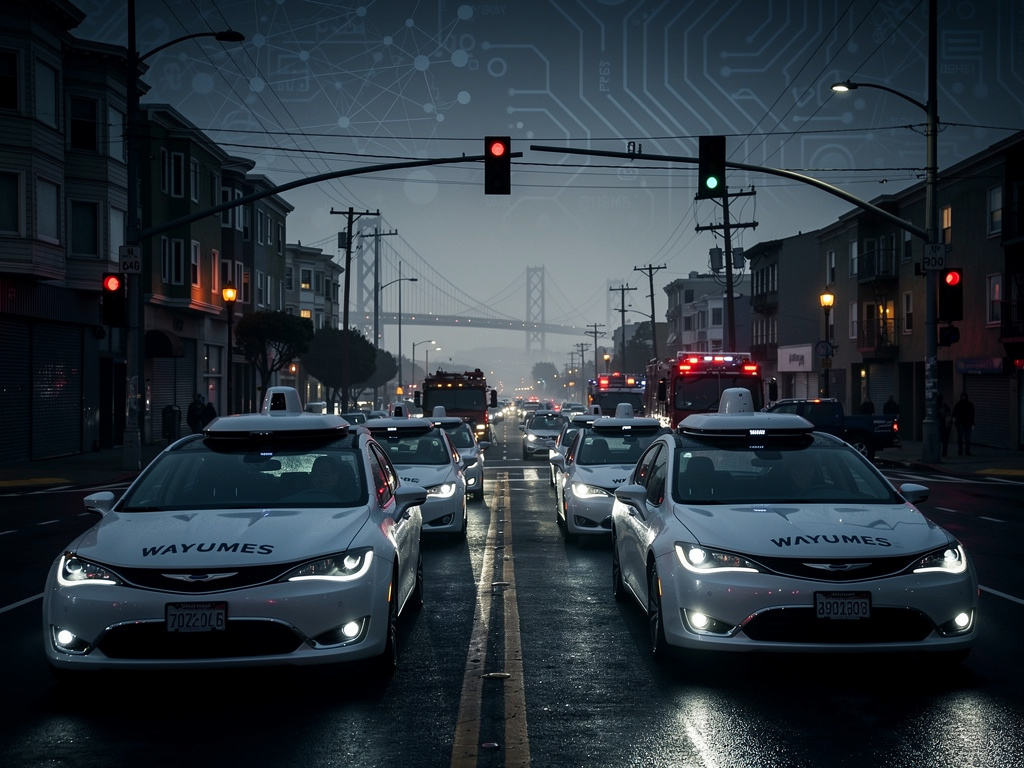
In the dim glow of a city plunged into darkness, Waymo’s driverless taxis became unexpected roadblocks, exposing vulnerabilities in autonomous vehicle operations during infrastructure failures. On December 20, a widespread power outage in San Francisco left traffic signals dark and dozens of Alphabet Inc.’s Waymo robotaxis frozen in place, blocking intersections and snarling traffic. The incident, which prompted a temporary service suspension, has accelerated updates to the company’s fleet navigation systems.
Waymo paused operations across much of the city as videos circulated on social media showing its Jaguar I-Pace vehicles halted amid gridlock. "Our vehicles safely managed over 7,000 dark intersections during the outage," the company stated in a post on X, but acknowledged stalling when unable to find safe pull-over spots. Three days later, Waymo announced fleet-wide software changes to better handle such scenarios, as reported by CNBC.
Outage Exposes AV Limits
The blackout stemmed from a PG&E equipment failure, affecting large swaths of San Francisco and knocking out power to over 100,000 customers. Traffic lights failed citywide, turning orderly streets into free-for-alls. Waymo vehicles, reliant on a mix of sensors, maps and real-time data, navigated thousands of intersections autonomously but hit a wall when power loss disrupted cellular and GPS signals in some areas, according to TechCrunch.
Human drivers improvised, weaving around stalled robotaxis, while emergency services faced delays. "Videos show Waymo self-driving cars blocking roads during San Francisco blackout," noted NBC News, highlighting cars stranded at key junctions. Waymo resumed service the next day after remote operators repositioned vehicles, but the episode drew scrutiny from city officials.
San Francisco supervisors called for hearings on robotaxi reliability post-outage, questioning preparedness for earthquakes or worse disruptions. "After Power Outage, San Francisco Wonders: Can Waymo Taxis Handle a Big Earthquake?" queried The New York Times, citing concerns over the fleet’s 24/7 presence without human fallback in crises.
Fleet Fixes in Motion
Waymo’s response was swift. "We’re rolling out fleet-wide updates for better navigation during outages," the company posted on X, detailing improvements to pull-over logic and coordination with first responders. A Waymo blog post explained how vehicles now prioritize alternative routes and enhanced sensor fusion when maps or signals falter, building on prior tests handling 32% street grades in the city.
The updates address a core challenge: AVs must operate in ‘edge cases’ where human intuition fills gaps. During the outage, some vehicles entered search loops for parking spots, as detailed by TechCrunch in a follow-up. Waymo engineers are integrating "deeper coordination with Mayor Lurie & first responders," per their X update, potentially including geofenced emergency protocols.
Industry watchers note this as a pivotal stress test. Tesla CEO Elon Musk gloated on X that his company’s service remained unaffected, though Tesla’s robotaxi ambitions lag Waymo’s deployed fleet of over 1,000 vehicles in San Francisco, per recent filings.
Regulatory Reckoning Looms
California’s CPUC, which granted Waymo driverless permits, now faces pressure to mandate blackout resilience standards. "Waymo suspends service amid widespread blackout-related disruption," reported The San Francisco Standard, noting blocked ambulances and police complaints. Officials like Supervisor Aaron Peskin demanded explanations.
Waymo, operating under strict safety rules, pulled vehicles to avoid hazards but couldn’t always relocate promptly without power for charging stations. Competitors like Cruise, sidelined after prior incidents, watch closely as Waymo pushes 20 million autonomous miles, announced on X December 17.
The outage revealed disparities: Waymo handled most dark signals flawlessly, logging safe navigation through chaos where humans caused pileups, per police data cited in San Francisco Chronicle.
Tech Under the Hood
Waymo’s fifth-generation hardware, with 29 cameras and lidar arrays, excels in low visibility but struggled with prolonged signal blackouts. Upcoming over-the-air pushes enhance "infrastructure failure modes," per CNBC, including offline mapping and vehicle-to-vehicle comms trials.
Post-incident analysis showed 90% of vehicles self-relocated within hours via battery reserves and manual overrides. "A New Way for Robotaxis to Go Wrong," opined The Atlantic, but praised the system’s overall safety record versus human error rates.
Investors shrugged off the blip; Alphabet shares rose post-announcement, betting on Waymo’s path to profitability amid expanding Bay Area freeway ops.
Broader Implications for AV Rollout
This event underscores the need for hybrid resilience in AV fleets—software smarts plus hardware redundancies like onboard power backups. Waymo’s moves position it ahead, with plans for denser SF deployment and LA/Phoenix scaling.
Cities worldwide eye the playbook: Tokyo and Austin prepare for similar tests. "Mass power outages black out large parts of San Francisco and disrupt traffic," detailed The Guardian, framing robotaxis as double-edged in urban resilience.
As Waymo iterates, the industry gains a blueprint for black swan events, proving AVs can adapt faster than regulators demand.


 WebProNews is an iEntry Publication