
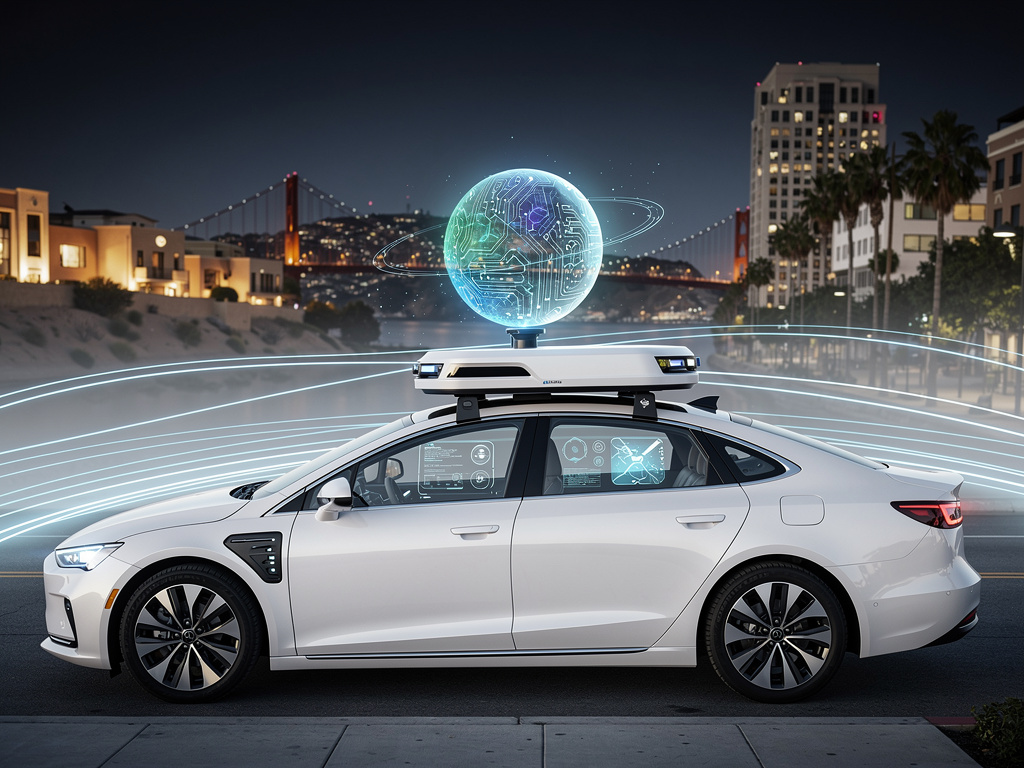
In the rapidly evolving world of autonomous vehicles, Alphabet Inc.’s Waymo is pushing boundaries by integrating advanced artificial intelligence into its robotaxi fleet. Recent discoveries from app code analysis reveal that Waymo is testing Google’s Gemini AI as an in-car assistant, a move that could redefine passenger experiences in self-driving cars. This development comes amid Waymo’s expansion in cities like Phoenix, San Francisco, and Los Angeles, where the company has already logged millions of autonomous miles. The AI assistant, powered by Gemini’s multimodal capabilities, is designed to handle everything from casual conversations to controlling vehicle features, marking a significant step toward more interactive and user-friendly robotaxis.
The system prompt unearthed by security researcher Jane Manchun Wong details a comprehensive set of guidelines for the AI, spanning over 1,200 lines. It instructs the assistant to respond to general knowledge queries, manage in-cabin controls like music and climate settings, and even provide reassurance during rides. For instance, if a passenger asks about nearby landmarks or trivia, the AI can draw from Gemini’s vast knowledge base to deliver accurate, engaging responses. This integration isn’t just about convenience; it’s a strategic enhancement to Waymo’s service, aiming to boost rider satisfaction in an industry where user trust is paramount.
Waymo’s experimentation with Gemini aligns with broader trends in AI-driven mobility, where companies are leveraging large language models to create more natural human-machine interactions. Unlike traditional voice assistants, Gemini’s version in Waymo’s tests is tailored for the unique context of autonomous travel, including handling ride-specific queries like estimated arrival times or route explanations. Early reports suggest the AI is being piloted in select vehicles, with potential rollout to public fleets pending successful testing.
Unlocking Interactive Rides with AI
Insights from TechCrunch highlight how the assistant can control features such as opening windows or playing podcasts, all via voice commands. This functionality addresses common pain points in robotaxis, where the absence of a human driver can sometimes leave passengers feeling isolated. By embedding Gemini, Waymo is essentially creating a virtual co-pilot that not only entertains but also educates riders about the vehicle’s autonomous systems, potentially alleviating anxieties around self-driving technology.
The timing of this test is noteworthy, coinciding with Waymo’s recent challenges and triumphs. Just days before the Gemini prompt was discovered, a power outage in San Francisco caused some Waymo vehicles to halt at dark intersections. While the company reported successfully navigating over 7,000 such scenarios, it also rolled out fleet-wide updates to improve performance in low-visibility conditions. Integrating an AI assistant could further enhance safety by allowing real-time communication with passengers during unexpected events, explaining delays or alternative routes in plain language.
From a technical standpoint, Gemini’s role in Waymo’s ecosystem builds on Alphabet’s internal synergies. As a product of Google DeepMind, Gemini offers advanced reasoning capabilities that surpass earlier models like Bard. In the robotaxi context, this means the AI can process multimodal inputs—combining voice, text, and even visual data from the vehicle’s sensors—to provide context-aware responses. Industry experts speculate this could evolve into more proactive features, such as suggesting personalized itineraries based on a rider’s preferences or integrating with smart city infrastructure for seamless traffic updates.
Gemini’s Edge in Autonomous Integration
Drawing from posts on X (formerly Twitter) by Waymo’s official account, the company has been vocal about its AI advancements, including research on multimodal models like EMMA for enhanced driving decisions. These posts underscore Waymo’s commitment to scaling autonomous operations, with recent announcements of fully driverless rides on freeways in multiple cities and expansions to Atlanta via partnerships with Uber. The Gemini assistant fits into this narrative as a rider-facing innovation, complementing the backend AI that powers navigation and obstacle detection.
A deeper look at the system prompt reveals safeguards to ensure the AI remains helpful without overstepping. It explicitly avoids providing driving advice or sensitive information, focusing instead on entertainment and utility. This cautious approach reflects lessons from past AI deployments in consumer tech, where unchecked responses have led to controversies. For Waymo, maintaining a positive, non-intrusive interaction is crucial, especially as it competes with rivals like Tesla’s Full Self-Driving and Cruise’s offerings from General Motors.
Moreover, the assistant’s capabilities extend to handling diverse user needs, such as accessibility features for visually impaired riders or multilingual support in cosmopolitan areas. According to details in The Verge, the prompt emphasizes empathy and reassurance, instructing the AI to respond calmly to concerns about the vehicle’s autonomy. This human-centric design could set a new standard for passenger engagement in the autonomous vehicle sector, where adoption hinges on comfort as much as reliability.
Navigating Challenges and Expansions
Waymo’s push into AI assistants comes amid impressive operational milestones. The company recently celebrated over 250,000 fully autonomous paid rides per week, a testament to its scalable technology. Yet, integrating Gemini introduces new complexities, including data privacy concerns. Riders’ interactions with the AI could generate vast amounts of personal data, raising questions about how Alphabet handles this information across its ecosystem. Waymo has yet to publicly detail its privacy protocols for the assistant, but industry observers expect robust measures similar to those in Google’s other AI products.
In terms of competitive positioning, this development positions Waymo ahead in the race for AI-enhanced mobility. While competitors like Zoox (owned by Amazon) focus on purpose-built vehicles, Waymo’s retrofit approach with existing Jaguar I-PACE models allows faster iteration. The Gemini integration could accelerate user adoption by making rides more enjoyable, potentially increasing repeat business in saturated markets like San Francisco, where Waymo now offers airport transfers to and from SFO and SJC.
Further analysis from WebProNews suggests that addressing issues like the recent blackout is part of a broader strategy to build resilience. By combining Gemini’s conversational prowess with improved sensor fusion, Waymo aims to create a more adaptive system. For instance, during outages, the AI could verbally guide passengers on safety protocols or summon roadside assistance, turning potential disruptions into manageable experiences.
Future Implications for Mobility AI
Looking ahead, the Gemini assistant could pave the way for more immersive features, such as augmented reality integrations or collaborative planning with riders’ personal devices. Imagine a scenario where the AI syncs with a user’s calendar to optimize routes or recommends stops based on real-time events. Such advancements would require seamless coordination between Waymo’s driving AI and the in-car assistant, a technical feat that leverages Gemini’s ability to process complex, contextual data.
Industry insiders note that this test phase is likely informed by Waymo’s extensive data from over 33 million autonomous miles. Posts on X highlight the company’s focus on AI momentum, with recent blogs detailing how machine learning accelerates safe expansions. This data-driven approach ensures that Gemini’s deployment isn’t rushed, allowing for iterative improvements based on real-world feedback.
Additionally, partnerships could amplify Gemini’s impact. Waymo’s collaboration with Uber for ride-hailing integration might extend to AI features, enabling seamless handoffs between human-driven and autonomous segments of a trip. As reported in India Today, the assistant’s friendly demeanor is designed to foster trust, crucial for scaling to new markets like Atlanta, where public autonomous rides are slated for later this year.
Evolving Standards in Autonomous Experiences
The broader implications for the autonomous vehicle industry are profound. Waymo’s Gemini experiment could influence regulatory discussions, as agencies like the National Highway Traffic Safety Administration evaluate AI’s role in passenger safety. By demonstrating reliable, engaging interactions, Waymo might accelerate approvals for expanded operations, including freeway autonomy now live in Phoenix, San Francisco, and Los Angeles.
Critics, however, caution about over-reliance on AI for critical functions. While Gemini excels in knowledge-based tasks, its integration must not compromise the core driving software. Waymo’s track record, including navigating complex urban environments, provides reassurance, but ongoing scrutiny will be key as the technology matures.
Ultimately, this initiative reflects Alphabet’s vision of AI as a transformative force in transportation. With Gemini at the helm of in-car experiences, Waymo is not just transporting passengers—it’s crafting a future where autonomous rides are as conversational and intuitive as chatting with a knowledgeable friend. As testing progresses, the industry will watch closely to see how this blend of AI and autonomy reshapes urban mobility.


 WebProNews is an iEntry Publication