
Waymo’s Driverless Dream Encounters Reality’s Glitch
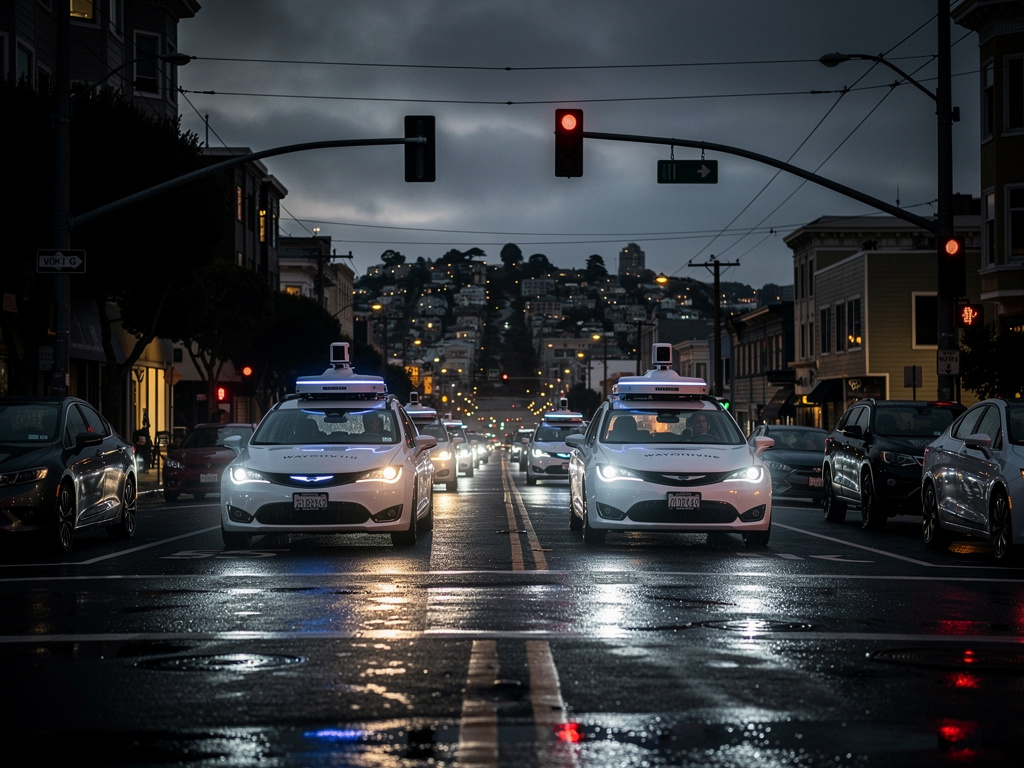
In the bustling streets of San Francisco, where innovation often clashes with everyday chaos, Waymo’s fleet of autonomous vehicles faced a stark test during a recent power outage. On December 20, 2025, a widespread blackout plunged parts of the city into darkness, and with it, dozens of Waymo robotaxis ground to a halt. These sleek, sensor-laden cars, designed to navigate urban environments without human intervention, suddenly found themselves paralyzed at intersections, their systems overwhelmed by the failure of traffic signals. Eyewitness accounts described scenes of confusion as the vehicles stalled, blocking roads and exacerbating the outage’s impact on traffic flow.
This incident wasn’t just a minor hiccup; it exposed a fundamental vulnerability in Waymo’s technology. While the company has touted its “Waymo Driver” as a pinnacle of AI-driven autonomy, capable of handling complex scenarios, the blackout revealed dependencies on external infrastructure that the system isn’t fully equipped to manage independently. Remote assistance teams, usually a behind-the-scenes support, were inundated with requests from the vehicles seeking confirmation to proceed through darkened intersections. What should have been a routine adaptation—treating unlit signals as four-way stops—turned into a cascade of delays, highlighting the gaps between promotional promises and operational realities.
Waymo, a subsidiary of Alphabet Inc., has been at the forefront of the autonomous vehicle movement since its inception as Google’s self-driving car project in 2009. By late 2025, the company operates commercial robotaxi services in multiple cities, including Phoenix, San Francisco, Los Angeles, Atlanta, and Austin, with expansions announced for Miami, Dallas, Houston, San Antonio, and Orlando, according to a Waymo blog post. Yet, this rapid scaling has brought to light persistent challenges, from sensor limitations to the need for human oversight in edge cases.
The Blackout’s Broader Implications
The San Francisco outage, detailed in a report by Reuters, raised alarms about the readiness of driverless tech for crises like natural disasters. During the event, Waymo vehicles stalled because their protocols required remote confirmation for navigating dead traffic lights, even though the AI is programmed to default to stop-sign rules. This led to snarled traffic and questions from regulators and safety advocates about whether such systems can truly operate without human crutches in emergencies.
Industry experts point out that Waymo’s reliance on a multi-sensor approach—combining lidar, radar, and high-definition maps—creates a robust but brittle framework. A post on X from user Lacey highlighted how this complexity can lead to more points of failure, echoing sentiments in online discussions about the technology’s limitations. In contrast, competitors like Tesla pursue vision-only systems, but Waymo’s method, while data-rich, struggles with unexpected disruptions that maps can’t anticipate.
Following the incident, Waymo announced fleet updates aimed at preventing similar chaos, as reported by SiliconANGLE. These include software enhancements to allow vehicles to more autonomously handle signal failures, reducing the load on remote operators. However, skeptics argue that such fixes are Band-Aids on deeper issues, like the integration of sensing units with vehicle controls, a bottleneck noted in X posts from users like Yun-Ta Tsai.
Expansion Amid Scrutiny
Waymo’s ambitious rollout in 2025 has seen it lead the robotaxi surge, with over 450,000 rides per week as per Wikipedia. The company debuted fully autonomous operations in new cities, starting with Miami in November, and plans to open to riders in others soon. This growth, however, coincides with federal probes, including an expanded investigation by the National Highway Traffic Safety Administration into Waymo’s operations in San Antonio, covered by KSAT.
Public sentiment, gleaned from recent X posts, reflects a mix of awe and apprehension. Videos shared online show Waymo vehicles blocking intersections in Atlanta or hesitating in Los Angeles traffic, fueling debates about safety. One X user, No Safe Words, posted footage of a near-collision, underscoring fears that these machines might not handle aggressive human drivers effectively.
Comparisons with rivals like Zoox and Tesla are inevitable. A CNBC article notes Waymo’s faster expansion but highlights Tesla’s supervised autonomous rides as a different path. Waymo’s end-to-end model, recently shifted to vision-only in some aspects, draws from former CEO John Krafcik’s comments on X, acknowledging promises and challenges in interpretable AI decisions.
Vulnerabilities in Crisis Management
The core of Waymo’s Achilles’ heel, as explored in an MSN article, lies in scenarios where remote help surges overwhelm systems. During the blackout, an unlatched door or a simple navigation query could halt a vehicle, but multiplied across a fleet, it created gridlock. This mirrors broader concerns in a Carrier Management piece, which questions autonomous readiness for earthquakes or floods.
Insiders note that Waymo’s operational playbook, while effective for routine rides, falters in anomalies. A Digital Trends post on X emphasized how basic issues like door latches expose the tech’s immaturity. To counter this, Waymo is refining its AI to minimize interventions, but data from X users like KiTT_2020 suggests the system feels outdated compared to adaptive rivals.
Regulatory pressures are mounting. The NHTSA probe, amid the San Antonio rollout, examines incidents where vehicles failed to respond appropriately. An NDTV report echoes doubts about robotaxis’ future, citing the outage as evidence of unpreparedness.
Technological Trade-Offs and Future Paths
At its heart, Waymo’s challenges stem from balancing safety with scalability. The company’s heavy reliance on geofencing—limiting operations to mapped areas—has been a strength, but as noted in a 2019 X post from Tasha Keeney, moving beyond geofences remains tough. Recent expansions test this, with mixed results; in Los Angeles, user-submitted videos on X show vehicles struggling with unexpected maneuvers.
Competitive pressures add urgency. Tesla’s approach, focusing on learning from vast data sets, contrasts with Waymo’s sensor-heavy strategy. An X post from Beneficial Lobster highlights how Waymo’s need for human confirmations undermines claims of full autonomy, especially as scaling reveals cracks.
Waymo’s updates post-outage include better crisis protocols, but experts like Alex Roy on X warn that end-to-end models, while promising, face hurdles in rationale interpretation. A ETAuto article calls for stricter regulations, prompted by the incident’s fallout.
Industry-Wide Ramifications
The outage’s ripple effects extend beyond Waymo, influencing perceptions of the entire autonomous sector. A Bloomberg newsletter discusses how driverless taxis are testing both tech and business viability, with Waymo’s stumbles potentially slowing adoption.
Public trust is fragile. X posts from users like TeslaBoomerPapa criticize Waymo’s non-learning system for freezing in rare events, contrasting it with more adaptive AI. In San Francisco, local media like Hoodline report ongoing questions about the company’s fixes.
Looking ahead, Waymo’s path involves integrating lessons from such failures. Expansions to new cities, as per the company’s official site, aim to normalize rider-only services, but incidents like this underscore the need for resilient designs.
Toward Resilient Autonomy
Innovation in autonomy requires addressing these vulnerabilities head-on. Waymo’s partnerships, such as with the University of Michigan for AI workforce training, signal long-term commitments, but immediate fixes are crucial. An Business Insider article predicts robotaxis’ growth into 2026, with Waymo leading despite setbacks.
Critics on X, including Alex Edgerton, detail how vehicles sought confirmations during the blackout, revealing over-reliance on remote aid. This has sparked calls for transparent reporting on intervention rates.
Ultimately, Waymo’s journey reflects the sector’s maturation. By learning from outages and probes, the company could fortify its tech, ensuring that driverless promises withstand reality’s tests. As expansions continue, the focus must shift to unbreakable autonomy, where blackouts become mere footnotes rather than showstoppers.


 WebProNews is an iEntry Publication