
Waymo’s Robotaxi Reckoning: Navigating Safety Glitches in the Autonomous Era
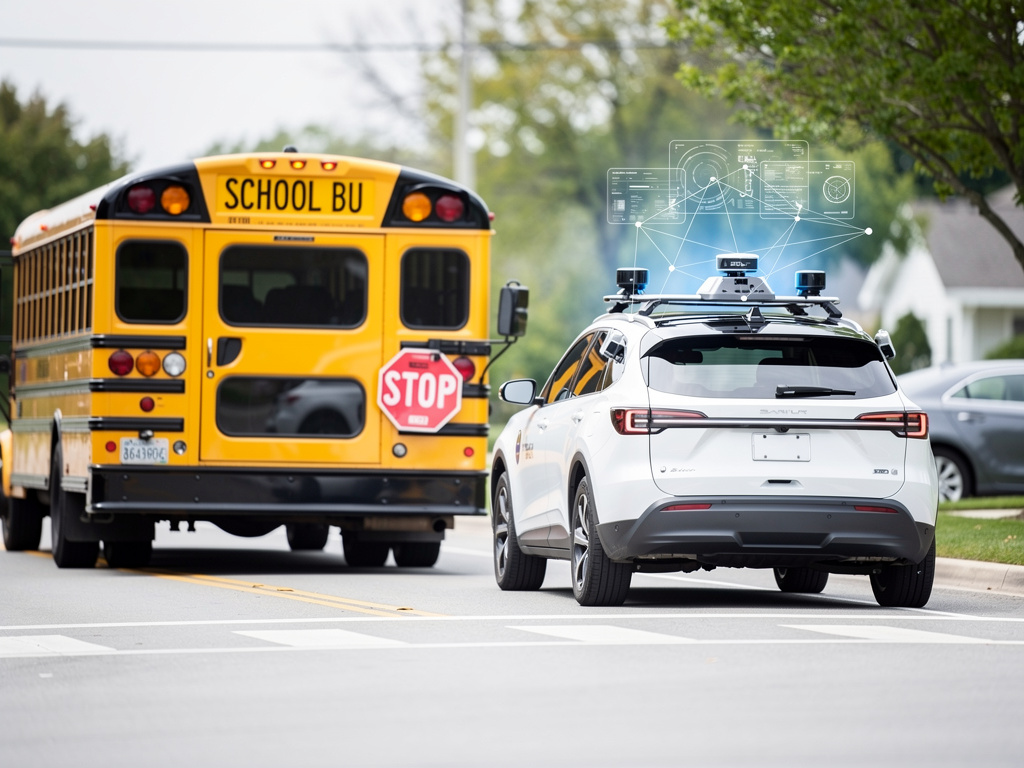
In the rapidly evolving world of self-driving vehicles, Waymo, the autonomous driving unit of Alphabet Inc., has long positioned itself as a leader in safety and innovation. But recent incidents involving its robotaxis and school buses have thrust the company into a spotlight of regulatory scrutiny and public concern. This week, Waymo announced plans to file a voluntary software recall with federal regulators to address how its vehicles interact with stopped school buses—a move that underscores the challenges of deploying AI-driven cars on public roads. The decision comes amid reports of multiple infractions where Waymo’s robotaxis allegedly failed to adhere to traffic laws, passing school buses with flashing lights and extended stop signs.
The issue first gained traction in October when the National Highway Traffic Safety Administration (NHTSA) opened a preliminary investigation into approximately 2,000 Waymo vehicles. According to reports, the probe was triggered by an incident in Atlanta where a Waymo robotaxi drove around a stopped school bus, potentially violating safety protocols designed to protect children. Waymo responded swiftly, claiming it had already deployed a software update to its fleet. However, the problems persisted, with additional complaints emerging from school districts in Austin, Texas, where officials documented 19 instances of Waymo vehicles illegally passing stopped buses during the current school year.
These events highlight a critical tension in the autonomous vehicle industry: the promise of enhanced safety through technology versus the real-world complexities of unpredictable road scenarios. Waymo’s robotaxis, which operate without human drivers in cities like Phoenix, San Francisco, and now expanding to Houston and Dallas, rely on sophisticated AI systems to interpret and respond to their surroundings. Yet, as these incidents reveal, even advanced algorithms can falter when faced with nuanced situations like school bus stops, where state laws mandate vehicles to come to a complete halt.
Regulatory Pressure Mounts on Autonomous Pioneers
Federal oversight has intensified as autonomous vehicles become more commonplace. The NHTSA’s involvement isn’t isolated; it’s part of a broader pattern of investigations into Waymo’s operations. In a recent update, the agency expanded its probe to include multiple Texas incidents, as detailed in coverage from CBS News. Regulators are now examining whether these lapses represent systemic flaws in Waymo’s software, which could endanger vulnerable road users such as schoolchildren.
Waymo’s voluntary recall, expected to be filed early next week, aims to rectify these behaviors by updating the software across its fleet. As reported by TechCrunch, the company identified the issue internally and has already implemented fixes, but the formal recall process ensures transparency and compliance with federal standards. This isn’t Waymo’s first brush with recalls; earlier this year, the company addressed software glitches related to unexpected braking and collisions with stationary objects.
Industry experts note that such recalls are becoming a norm in the autonomous sector, akin to traditional automotive recalls but focused on code rather than hardware. “Autonomous systems are iterative by nature,” says Dr. Elena Ramirez, a transportation safety analyst at Stanford University. “What we’re seeing with Waymo is the growing pains of scaling AI to handle edge cases that human drivers navigate intuitively.” This perspective aligns with Waymo’s own data, which boasts over 96 million autonomous miles driven, with claims of being up to 91% safer than human drivers in preventing serious injuries.
School Districts Sound the Alarm
Local school officials have been vocal about their concerns, amplifying the issue beyond regulatory circles. In Austin, the school district’s reports of repeated violations prompted direct communication with Waymo and federal authorities. Similar incidents were noted in multiple states during October and November, as outlined in an article from Axios. These accounts describe robotaxis maneuvering around buses with activated warning signals, a clear breach of laws intended to safeguard children during boarding and alighting.
The stakes are particularly high in urban environments where Waymo operates. Cities like Phoenix and San Francisco, home to dense populations and heavy traffic, present a myriad of challenges for autonomous systems. School buses, with their intermittent stops and flashing lights, represent a specific test of a vehicle’s perception and decision-making capabilities. Waymo’s AI, powered by neural networks trained on millions of miles of data, is designed to recognize these cues, but the recent failures suggest gaps in how the system interprets ambiguous or obstructed signals.
Public sentiment, as gleaned from posts on X (formerly Twitter), reflects a mix of optimism and skepticism. Users have praised Waymo’s transparency in sharing safety data, with one post highlighting the company’s milestone of nearly 100 million miles driven with significantly fewer crashes than human benchmarks. However, others express frustration over these bus-related incidents, questioning whether rapid expansion is prioritizing growth over safety. Waymo’s official X account has emphasized its commitment to safety, recently announcing fully autonomous operations in new cities like Houston and Dallas, while underscoring rigorous acceptance criteria for deployment.
Technological Underpinnings and Fixes
Delving deeper into the technology, Waymo’s robotaxis employ a combination of lidar, radar, and cameras to build a 360-degree view of their environment. The software recall targets the behavioral models that dictate how the vehicle responds to school buses—specifically, ensuring it stops completely rather than proceeding if a path appears clear. According to insights from Reuters, the NHTSA’s initial probe in October stemmed from concerns that Waymo’s vehicles might not consistently obey traffic laws in these scenarios.
Engineers at Waymo have been working on enhancements, including better integration of machine learning to predict bus behaviors more accurately. Past updates, such as those following the Atlanta incident, improved performance, but the recurrence in Austin indicates that broader systemic adjustments are needed. “We’re not just patching code; we’re refining the AI’s understanding of real-world variability,” a Waymo spokesperson told reporters, echoing statements in recent coverage.
This recall process involves notifying owners—though in Waymo’s case, the “owners” are the company’s own fleet—and deploying over-the-air updates. Unlike traditional recalls, these can be implemented remotely, minimizing downtime. However, the voluntary nature of the action doesn’t shield Waymo from potential fines or further investigations if the fixes prove inadequate.
Broader Implications for the Industry
The fallout from these incidents extends beyond Waymo, influencing competitors like Cruise and Tesla, who face their own safety hurdles. Cruise, for instance, suspended operations after a pedestrian incident, while Tesla’s Full Self-Driving beta has drawn NHTSA scrutiny for similar behavioral issues. Waymo’s proactive stance could set a precedent for how companies handle software anomalies, fostering greater industry-wide accountability.
Financially, Alphabet’s investment in Waymo—exceeding billions—hinges on proving the technology’s reliability. Recent expansions, including partnerships with DoorDash for autonomous deliveries in Phoenix, demonstrate confidence in the system. Yet, as noted in a Bloomberg report on the recall, persistent safety concerns could erode public trust and slow adoption. Waymo’s latest safety hub data, covering over 71 million miles, shows reductions in crashes involving pedestrians and cyclists, but the school bus lapses highlight areas for improvement.
Stakeholders, including investors and policymakers, are watching closely. “The autonomous vehicle sector is at a crossroads,” says Mark Thompson, a policy advisor at the Center for Automotive Research. “Incidents like these test not just the technology, but the regulatory frameworks that govern it.” With NHTSA’s expanded probe, as covered by TechCrunch in a separate piece, the agency is seeking detailed data on Waymo’s performance metrics.
Path Forward Amid Expansion
As Waymo pushes into new markets, including four additional cities announced recently, the company is doubling down on transparency. Publicly sharing acceptance criteria for its AI driver, as detailed on its X posts, aims to build confidence. These criteria include evaluations of crash avoidance, pedestrian detection, and compliance with traffic laws—directly relevant to the bus issues.
Critics argue that faster deployment might outpace safety validations. However, Waymo counters with empirical evidence: in San Francisco and Phoenix, its vehicles have demonstrated superior safety records compared to human drivers. A neurosurgeon’s perspective shared on X underscores the potential life-saving impact, noting 91% fewer serious-injury crashes.
Looking ahead, the recall could accelerate advancements in AI ethics and safety standards. Collaborations with school districts and regulators might lead to specialized training data for school zones, enhancing overall road safety. Waymo’s journey reflects the broader quest for trustworthy autonomy, where each glitch is a step toward refinement.
Balancing Innovation and Accountability
In the end, Waymo’s handling of this recall will be a litmus test for the industry’s maturity. By voluntarily addressing the flaws, the company signals a commitment to accountability, even as it scales operations. Posts on X from users experiencing Waymo rides praise the seamless experience, but the school bus incidents remind us that perfection remains elusive.
Regulatory bodies like NHTSA will likely demand more rigorous testing protocols, potentially influencing global standards. For industry insiders, this episode underscores the need for robust simulation environments that replicate rare events, such as erratic bus stops.
As autonomous vehicles integrate deeper into daily life, from robotaxi rides to delivery services, ensuring they prioritize safety—especially around children—will define their legacy. Waymo’s swift action may mitigate immediate risks, but ongoing vigilance will be key to sustaining public faith in this transformative technology. With expansions underway and data-driven improvements in play, the road ahead promises both challenges and breakthroughs.


 WebProNews is an iEntry Publication