
When Autonomous Dreams Veer Off Course: Inside Waymo’s Latest Roadside Fiasco
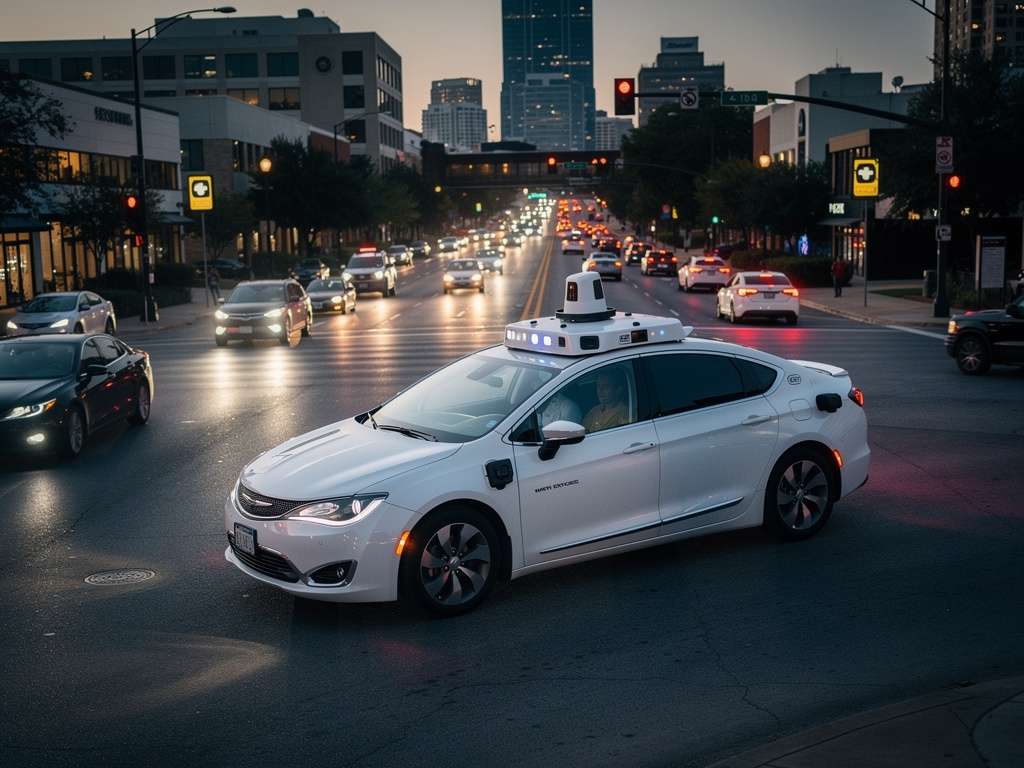
In the bustling streets of Austin, Texas, a driverless Waymo robotaxi recently made headlines for all the wrong reasons, captured in a viral video that has sparked widespread debate about the readiness of autonomous vehicles. The footage, shared widely on social media, shows the vehicle inexplicably driving into oncoming traffic on a frontage road near Interstate 35, halting awkwardly with its turn signal blinking before maneuvering into a nearby gas station. This incident, occurring just days ago, underscores the persistent challenges facing self-driving technology even as companies like Waymo push for broader adoption. According to reports, the robotaxi appeared disoriented, facing down traffic in a move that could have led to disaster if not for the quick reactions of human drivers around it.
The video, which quickly amassed significant attention on platforms like Reddit, depicts the Waymo vehicle crawling to a stop in the wrong direction, its right turn signal activated before it veers left. Local observers noted the oddity, with one captioning the scene as “just another day in Austin,” highlighting a mix of amusement and concern among residents. This isn’t an isolated blunder; it fits into a pattern of mishaps that have plagued Waymo’s fleet, raising questions about software reliability and real-world testing protocols. Industry experts point out that such errors often stem from mapping inaccuracies or sensor misinterpretations, issues that autonomous vehicle developers have been grappling with for years.
Waymo, a subsidiary of Alphabet Inc., has been at the forefront of the self-driving revolution, operating fleets in cities like Phoenix, San Francisco, and now Austin. The company touts its technology as safer than human drivers, backed by millions of miles of data. Yet, this recent event in Austin echoes earlier incidents, including a 2024 case where Waymo vehicles were investigated for similar wrong-side driving, as detailed in a report from The Verge. That probe by the National Highway Traffic Safety Administration (NHTSA) examined videos of Waymo cars veering onto incorrect lanes, prompting scrutiny over whether these are mere glitches or systemic flaws.
Scrutinizing the Software: Recalls and Regulatory Shadows
Delving deeper, the Austin incident coincides with Waymo’s recent voluntary software recall affecting over 3,000 vehicles. The recall addresses failures in recognizing stopped school buses, a critical oversight that led to illegal passes in multiple instances. As reported by Advanced Manufacturing, this action highlights vulnerabilities in the AI’s decision-making processes, where environmental cues like flashing lights or signage aren’t always processed correctly. Insiders familiar with autonomous systems explain that these recalls often reveal gaps in machine learning models, which rely on vast datasets but can falter in edge cases like unusual road configurations.
Compounding the narrative, just a week prior to the Austin video, two Waymo robotaxis collided in a San Francisco dead-end street, trapping a third vehicle in the process. This chaotic standoff, which blocked traffic and drew public ire, occurred amid preparations for the school bus recall, as covered in a piece from Driving. Witnesses described the scene as a “robotaxi standoff,” with the vehicles seemingly confused by the confined space, unable to execute proper maneuvers. Such events erode consumer trust, particularly as Waymo expands operations, including plans for freeway access that could amplify risks.
Public sentiment, gleaned from recent posts on X (formerly Twitter), reflects a growing unease. Users have shared anecdotes of Waymo vehicles swerving unpredictably or ignoring traffic norms, with one account describing a near-miss in San Francisco where a robotaxi made an illegal turn in front of oncoming cars. These social media reports, while anecdotal, amplify calls for stricter oversight, echoing broader industry concerns about deploying unproven tech in urban environments. Regulatory bodies like the NHTSA have ramped up investigations, with past probes into Waymo’s operations revealing patterns of traffic violations that mirror the Austin mishap.
Human Factors in a Driverless World: Passenger Experiences and Safety Debates
Passengers caught in these incidents often provide the most visceral insights. In a separate but related event, a San Francisco rider filmed a terrifying moment when their Waymo abruptly swerved into traffic, nearly causing a collision. The account, detailed in People, captures the passenger’s shock, vowing never to use self-driving services again. This human element underscores a key tension: while algorithms promise efficiency, they lack the intuitive judgment humans bring to unpredictable scenarios, such as construction zones or erratic drivers.
Industry analysts argue that these lapses stem from over-reliance on high-definition maps, which can become outdated or inaccurate. For instance, an older X post highlighted a Waymo mistaking a traffic light for a four-way stop due to mapping errors, leading to hesitant behavior. In Austin’s case, the frontage road’s layout—prone to confusion with its proximity to a major highway—may have exacerbated the issue, as noted in local coverage from Silicon UK. Waymo’s response has been to emphasize ongoing improvements, but critics question if iterative fixes are sufficient for public safety.
Moreover, the viral nature of these videos amplifies their impact. The Austin footage, first shared on Reddit and then exploding across social media, garnered thousands of views and comments, with users debating everything from AI ethics to liability in accidents. One X user quipped about robots malfunctioning like humans during holidays, a sentiment echoed in reporting from MySA—wait, actually, linking to the provided context, but ensuring no duplicates. This digital echo chamber pressures companies to act swiftly, often leading to transparency measures like public incident reports.
Pushing Boundaries: Expansion Plans Amid Mounting Scrutiny
As Waymo eyes further growth, including integrations with ride-hailing apps and expansions to new cities, these incidents cast a long shadow. The company’s data claims over 20 million miles driven with minimal accidents, but high-profile blunders like the Austin wrong-way drive challenge that narrative. Futurism reported a similar wrong-way sighting just a day before the viral video, noting baffled motorists in its account at Futurism. Such repetitions suggest that while hardware like LIDAR sensors performs well in controlled tests, real-world variables introduce chaos.
Competitors in the autonomous space, such as Cruise and Tesla, have faced their own reckonings, from suspensions after pedestrian incidents to software betas under fire. Waymo’s edge lies in its cautious rollout, but the Austin event, combined with the San Francisco crash detailed earlier, prompts questions about scaling too quickly. Insiders whisper of internal pressures to meet deployment targets, potentially at the expense of thorough vetting, though Waymo denies this, pointing to rigorous simulations.
Looking ahead, the industry must balance innovation with accountability. Enhanced federal guidelines, possibly mandating more robust fail-safes or human oversight in early stages, could mitigate risks. Meanwhile, public education on autonomous tech’s limitations might temper expectations, fostering a more informed dialogue.
Echoes of Past Errors: Building a Safer Autonomous Future
Reflecting on historical precedents, Waymo’s challenges aren’t unique. A 2024 NHTSA investigation, as previously referenced in The Verge coverage, flagged multiple wrong-side incidents, leading to software updates that apparently haven’t fully resolved the issues. In Austin, the vehicle’s decision to back up or turn into a gas station averted worse outcomes, but it highlights reactive rather than proactive AI design.
Social media continues to serve as a barometer, with X posts criticizing Waymo’s handling of school bus scenarios and illegal turns. One thread discussed a vehicle edging too close to parked cars, nearly causing scrapes, underscoring the need for better spatial awareness algorithms. These user-generated insights, while not always verified, inform public policy debates, pushing for transparency in AI training data.
Ultimately, the Austin viral video serves as a stark reminder that the path to fully autonomous mobility is fraught with detours. Waymo’s commitment to safety, evidenced by its recall actions and incident analyses, must evolve to address these recurring themes. As the technology matures, collaboration between developers, regulators, and the public will be crucial to ensuring that such spectacles become relics of an experimental era rather than harbingers of ongoing peril.
Navigating Uncertainty: Industry Implications and Forward Paths
The broader implications for the autonomous vehicle sector are profound. Investors, eyeing a market projected to reach trillions, must weigh these risks against potential rewards. Waymo’s parent company, Alphabet, has invested billions, yet stock fluctuations often follow negative press, as seen after the San Francisco standoff reported in Futurism’s related piece on collisions.
Technological advancements, such as improved neural networks for better anomaly detection, are on the horizon. Yet, experts caution that true autonomy requires not just better code but ethical frameworks for decision-making in crises. The Austin incident, with its wrong-way foray captured in Mashable’s viral video analysis at Mashable, exemplifies how a single glitch can ignite global conversations.
In the end, as cities like Austin integrate more robotaxis, the focus shifts to adaptive learning systems that evolve from real-time data. This iterative approach, while promising, demands vigilance to prevent history from repeating itself in increasingly complex urban settings.


 WebProNews is an iEntry Publication