
Silicon Meets Soil: Washington’s Bold AI Push to Reshape Farming’s Future
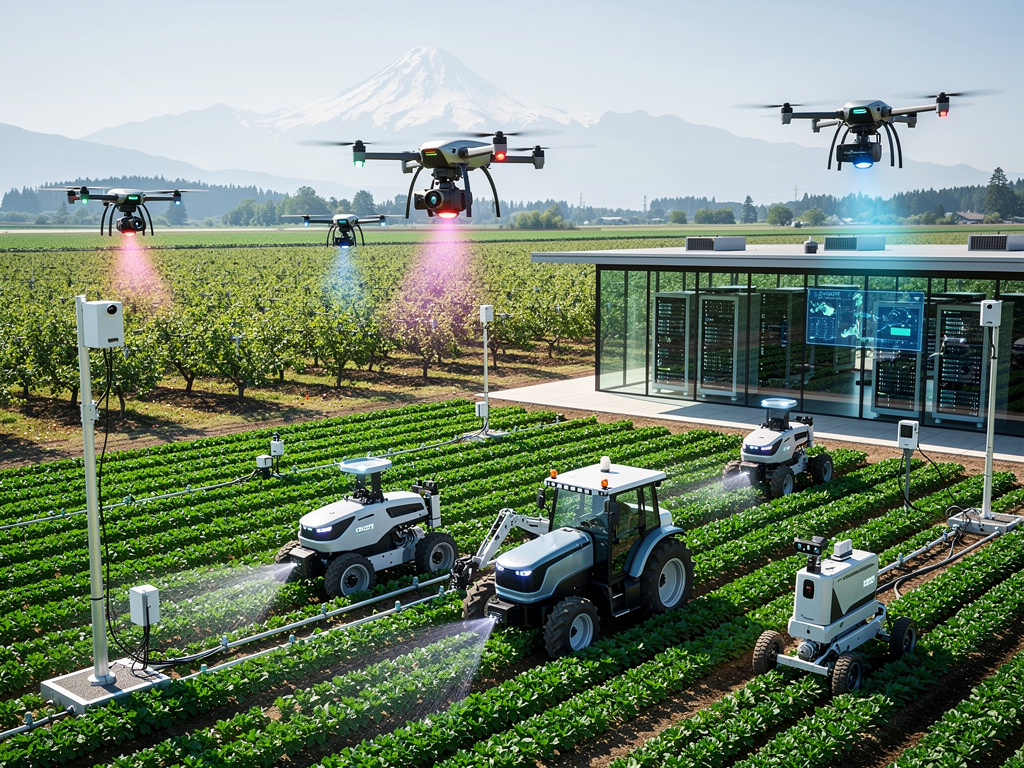
In the fertile valleys of eastern Washington, where apple orchards stretch for miles and wheat fields sway under vast skies, a quiet revolution is underway. Farmers who once relied on generations of hard-earned wisdom are now turning to algorithms and sensors to combat climate volatility, labor shortages, and rising costs. At the heart of this shift is artificial intelligence, with state initiatives positioning Washington as a testing ground for tech-driven agriculture. Recent developments, including partnerships between universities, startups, and government agencies, highlight how AI is being deployed to optimize everything from irrigation to pest management.
This surge in innovation comes at a critical juncture. Global food demands are escalating, and Washington’s agricultural sector, a powerhouse contributing over $10 billion annually to the economy, faces existential threats. Droughts, unpredictable weather patterns, and a dwindling workforce have prompted leaders to invest heavily in AI solutions. For instance, programs at Washington State University are equipping the next generation of farmers with tools like predictive analytics and robotic systems, as detailed in a WSU Insider report from last year.
Beyond education, practical applications are emerging rapidly. Startups in the Puget Sound region are developing AI-powered drones that scan crops for early signs of disease, allowing for targeted interventions that reduce chemical use. These technologies not only promise higher yields but also align with sustainability goals, minimizing environmental impact in a state known for its progressive policies.
Harnessing Data for Precision
The integration of AI in Washington’s farming practices is deeply rooted in data analytics. Satellite imagery and IoT sensors provide real-time insights into soil health, moisture levels, and crop vitality. According to a piece from Farmonaut, by 2026, these tools have become indispensable, enabling farmers to allocate resources more efficiently and detect issues before they escalate.
Investors are taking notice, drawn by the state’s robust ecosystem of biotech and gene-editing advancements. Venture capital is flowing into AI startups focused on seed innovation, where machine learning algorithms predict optimal planting times and hybrid varieties resistant to pests. This investor enthusiasm underscores a broader trend: Washington’s agriculture is evolving into a high-tech industry, blending traditional methods with cutting-edge computation.
State-backed initiatives further amplify these efforts. The Washington State Academy of Sciences has launched webinar series exploring AI’s role in building resilient food systems, as outlined in their Growing with AI program. These discussions emphasize economic viability, showing how AI can help small farms compete with industrial giants.
Robotics and Automation Take Root
On the ground, robotic innovations are transforming daily operations. Autonomous machines, like those developed by companies such as AIGEN, are mechanically removing weeds without herbicides, a boon for organic producers in Washington’s diverse crop regions. Posts on X highlight similar solar-powered robots that operate tirelessly, reducing the need for manual labor in labor-scarce areas.
These robots aren’t just novelties; they’re scalable solutions addressing real pain points. In the Red River Valley, though not in Washington, the principles apply similarly, with local adaptations for the state’s unique terrain. Engineers are customizing AI systems to navigate hilly orchards and vast potato fields, ensuring precision in varied environments.
Moreover, AI is revolutionizing livestock management. Sensor-equipped wearables monitor animal health, predicting illnesses before symptoms appear. This proactive approach, discussed in a Forbes article on AI’s agricultural impact, is gaining traction in Washington’s dairy and poultry sectors, where efficiency gains translate to substantial cost savings.
Policy and Regulation in Focus
As AI permeates farming, regulatory frameworks are evolving to keep pace. Washington lawmakers are debating measures to govern these technologies, balancing innovation with ethical concerns like data privacy and job displacement. A recent Washington State Standard piece details proposals aimed at reining in AI while fostering growth.
Critics argue that without careful oversight, AI could exacerbate inequalities, favoring large operations over family farms. Proponents, however, point to inclusive programs that provide subsidies for AI adoption, ensuring broader access. This debate mirrors national conversations, as seen in Davos 2026 discussions where OpenAI executives likened AI to transformative inventions like the semiconductor, per a BusinessToday report.
Education plays a pivotal role here. Initiatives like those at WSU, referenced earlier, are preparing students not just to use AI but to shape its ethical implementation. By integrating computer science with agronomy, these programs aim to produce a workforce adept at navigating the tech-ag intersection.
Economic Projections and Global Context
The economic potential is staggering. Market analyses project the global AI in agriculture sector to reach $8.5 billion by 2030, growing at a 25.1% CAGR, according to a GlobeNewswire release from BCC Research. Washington is poised to capture a significant share, leveraging its tech hubs in Seattle and proximity to Silicon Valley.
Globally, AI is addressing food security challenges, with innovations like predictive modeling for climate adaptation. A World Economic Forum story emphasizes how AI-enabled intelligence can revolutionize farming amid population growth, a sentiment echoed in Washington’s strategies.
Local farmers are already seeing benefits. In the Yakima Valley, AI-driven irrigation systems have cut water usage by up to 30%, crucial in a region prone to droughts. These efficiencies not only boost profitability but also support environmental conservation, aligning with state mandates for sustainable practices.
Challenges and Hurdles Ahead
Despite the optimism, challenges persist. High initial costs for AI infrastructure can deter smaller operations, though grants and partnerships are mitigating this. Connectivity issues in rural areas also hinder widespread adoption, prompting investments in broadband expansion.
Skepticism from traditional farmers is another barrier. Many view AI as an intrusion on time-honored methods, requiring demonstration of tangible returns. Success stories, such as those shared on X about AI drones detecting pests early, are helping to build trust.
Furthermore, the rapid pace of innovation raises questions about workforce adaptation. As automation increases, retraining programs become essential. Congressman Grothman’s recent queries to AI executives, covered in Seehafer News, highlight the need for educational integration to prepare students and workers.
Innovators Leading the Charge
Key players are driving this transformation. Startups like Farm-ng are creating modular robotic platforms, as noted in X discussions, allowing customization for Washington’s varied agriculture. These open-source approaches foster collaboration, accelerating innovation.
Universities and research institutions are also at the forefront. The Washington State Academy of Sciences’ initiatives, previously mentioned, convene experts to tackle pressing issues, from AI ethics to scalable implementation.
Looking ahead, integrations with emerging tech like blockchain for supply chain transparency could further enhance AI’s impact. In Washington’s wine industry, for example, AI is optimizing grape cultivation, predicting harvest times with unprecedented accuracy.
Sustainability at the Core
Sustainability remains a cornerstone of Washington’s AI farming push. By reducing pesticide and fertilizer runoff, these technologies protect the state’s rivers and ecosystems. Farmonaut’s insights, cited earlier, underscore how satellite data supports eco-friendly practices, aligning with global sustainability goals.
Consumer demand for traceable, sustainable food is another driver. AI enables detailed tracking from farm to table, building trust and opening premium markets. This traceability is particularly vital in Washington’s export-oriented sectors, like apples and cherries.
As AI evolves, its role in climate resilience grows. Predictive models forecast weather impacts, allowing proactive adjustments. This foresight is invaluable in a state vulnerable to wildfires and floods, ensuring food production stability.
Voices from the Field
Farmers’ perspectives provide grounded insights. One eastern Washington grower, interviewed in recent X posts aggregated from industry accounts, praised AI for saving his crop from an unexpected blight. Such anecdotes illustrate the human element behind the tech.
Industry leaders echo this sentiment. In a GeekWire article titled “Engineers in the field: Washington state bets on AI to help save the future of farming,” experts discuss how state investments are catalyzing change, from research grants to pilot programs. This GeekWire piece captures the optimism, portraying AI as a lifeline for an industry in flux.
Yet, cautionary tales remind us of potential pitfalls. Over-reliance on AI could lead to vulnerabilities, like cyber threats to connected systems. Robust security measures are thus integral to these advancements.
The Road Forward
Washington’s AI farming initiatives are setting precedents for other regions. By blending tech innovation with agricultural heritage, the state is forging a model for future-proof food systems. Collaborations between tech giants and local co-ops exemplify this synergy.
Emerging trends, such as AI in vertical farming, could expand urban agriculture in cities like Seattle, reducing transport emissions. These developments, highlighted in a Analytics Insight overview, point to broader applications.
Ultimately, the success of these efforts hinges on inclusive growth, ensuring that AI benefits all stakeholders. As Washington pioneers this path, its experiences will inform global strategies, potentially reshaping how the world feeds itself in an uncertain future.


 WebProNews is an iEntry Publication