
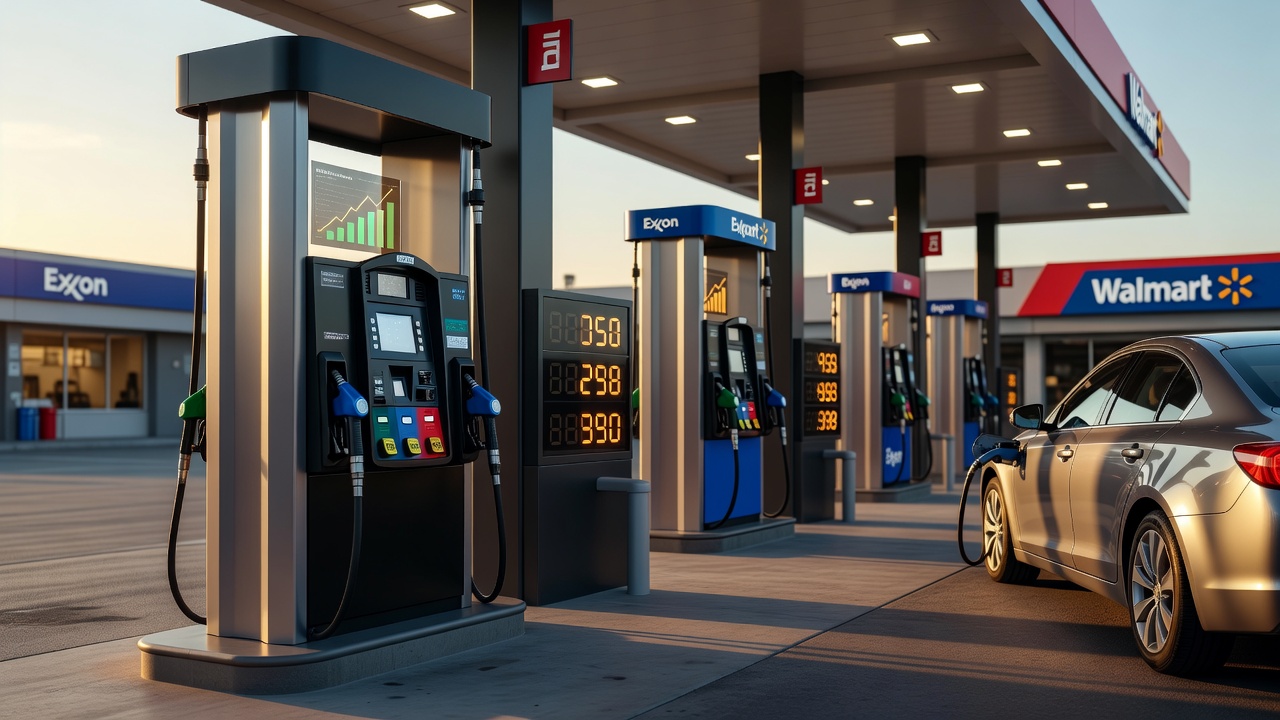
Walmart has introduced a membership perk that stands to lower fuel expenses for millions of drivers across the United States. The retail giant recently expanded its fuel discount program, allowing qualifying Walmart+ subscribers to save money at the pump through a combination of in-store incentives and partnerships with major gasoline retailers. This move comes at a time when many households continue to feel pressure from fluctuating energy prices and everyday living costs.
The program ties directly into the existing Walmart+ subscription service, which already offers benefits such as free delivery and early access to certain sales. Now, members can receive discounts of up to 5 cents per gallon at more than 14,000 Exxon, Mobil, and Walmart fuel stations nationwide. For those who fill up frequently, the savings add up quickly. A driver who purchases 50 gallons of gas each month could trim roughly $2.50 off their bill with the basic discount, but the program includes opportunities for even greater reductions when combined with other promotions.
According to details shared in a recent Yahoo Finance article, the initiative reflects Walmart’s strategy to make its membership tier more attractive by addressing one of the most consistent household expenses. Fuel costs often rank among the top three or four monthly outlays for American families, particularly those living in suburban or rural areas where public transportation options remain limited. By folding gasoline savings into the membership package, Walmart positions itself as a one-stop solution for both grocery needs and transportation costs.
The mechanics of the discount are straightforward. Walmart+ members simply link their account to the fuel rewards app or present their membership at participating stations. The credit appears automatically at the pump or is applied after the transaction. Some locations also allow customers to stack the membership discount with manufacturer fuel points or retailer-specific loyalty rewards. This stacking capability can push total savings to 10 or even 15 cents per gallon on certain days when additional limited-time offers appear.
Walmart has steadily grown its fuel station footprint over the past decade. The company now operates more than 500 of its own gas stations attached to supercenters, and it maintains relationships with major oil brands to extend the network far beyond its physical locations. This broad reach matters because convenience and availability often determine whether consumers actually use a discount program. A perk that only works at a handful of sites would see limited adoption, but the current setup covers a significant percentage of American drivers within a reasonable driving distance of an eligible pump.
Analysts following the retail sector suggest the fuel benefit could help Walmart+ compete more directly with warehouse clubs such as Costco and Sam’s Club, both of which have long offered gasoline discounts to their members. Costco, in particular, built much of its reputation on low-price fuel at its warehouse locations. Walmart appears to have studied that model and adapted it to a more distributed network that does not require shoppers to travel to a single large warehouse. The flexibility may appeal to families who prefer frequent smaller shopping trips rather than bulk purchasing once or twice a month.
Beyond the immediate savings, the program carries potential environmental and behavioral implications. Lower fuel prices at the pump sometimes encourage increased driving, yet Walmart has paired the discount with digital tools that help members track their spending and locate the cheapest stations in their area. The associated mobile app provides real-time price comparisons and suggests routes that combine grocery pickup with fuel stops. These features could indirectly support smarter consumption patterns even as they reduce out-of-pocket costs.
Membership numbers for Walmart+ have grown steadily since its national launch. The company has not released exact current figures, but industry estimates place the subscriber base in the low double-digit millions. Each new benefit added to the package increases the perceived value of the annual fee, which currently sits at $98 or the equivalent monthly payment. For many households, the combination of free delivery, pharmacy services, and now fuel discounts can easily offset the subscription price within the first few months of use.
Retail experts point out that Walmart’s scale gives it distinct advantages in negotiating fuel supply contracts and payment processing fees. The company buys gasoline in enormous volumes across its network, allowing it to secure favorable wholesale prices that smaller retailers cannot match. Those savings flow partly to the consumer through the membership program. In this sense, the fuel perk represents more than a marketing gimmick; it functions as a practical application of Walmart’s massive purchasing power.
The timing of the expansion also deserves attention. Gasoline prices have shown considerable volatility in recent years, influenced by global supply disruptions, refinery maintenance schedules, and shifting demand patterns. When prices spike, consumer frustration tends to rise in parallel. Offering a consistent way to trim costs provides a measure of stability that shoppers appreciate. Even during periods of lower average prices, the psychological comfort of knowing a discount awaits at the pump can strengthen brand loyalty.
Critics sometimes argue that such programs primarily benefit middle-income households with vehicles rather than the lowest-income populations who may rely on public transit or simply drive less. Walmart has attempted to address broader accessibility by maintaining its traditional low-price fuel offerings at non-membership stations and by continuing to accept government assistance programs inside its stores. The membership tier essentially serves as an optional upgrade for those who can afford the annual fee and stand to gain from the bundled services.
From a competitive standpoint, other retailers are watching closely. Amazon, which owns Whole Foods, already offers certain fuel discounts through its Prime membership at select stations. Target and Kroger have also expanded their loyalty programs to include fuel rewards. The battle for consumer wallet share has moved beyond grocery aisles and into the fuel market, forcing companies to think creatively about how everyday services interconnect.
Walmart’s approach differs by integrating the fuel discount with its rapidly expanding online grocery business. Members can place an order for curbside pickup, fill their tank while they wait, and drive away with both groceries and a lower fuel receipt. This convergence of services creates a convenient loop that saves time as well as money. In communities where Walmart serves as the dominant retailer, the program reinforces the store’s position as an essential part of local routines.
Data gathered from early adopters shows that many members increase their shopping frequency after activating the fuel benefit. The discount acts as an incentive to choose Walmart over competing supermarkets or convenience stores. Higher foot traffic inside the stores typically leads to additional impulse purchases, helping the company offset the cost of the fuel subsidy. This virtuous cycle explains why many large retailers continue to invest in loyalty programs even when the immediate margin on gasoline remains thin.
Looking forward, Walmart has hinted at further enhancements to the fuel program. Future updates could include integration with electric vehicle charging networks as more drivers transition away from traditional combustion engines. The company already operates thousands of electric vehicle chargers at select locations and has signaled interest in expanding that infrastructure. A membership that offers both gasoline discounts today and charging credits tomorrow would position Walmart+ as a forward-looking solution for an automotive market in transition.
Regional variations in fuel pricing mean the program’s value differs from state to state. Drivers in California, where taxes and environmental regulations keep pump prices elevated, stand to save more in absolute dollars than those in states with abundant local refining capacity. Similarly, rural members who drive longer distances each week may feel the benefit more acutely than urban residents with shorter commutes. Walmart has structured the program to deliver value across these diverse conditions, though the most significant gains naturally accrue to higher-mileage households.
The initiative also reflects broader trends in retail finance. Many companies now treat their loyalty programs as quasi-financial products, complete with points systems, tiered benefits, and data-driven personalization. Walmart’s fuel discount adds another layer to this financialization of everyday spending. Each gallon purchased becomes an opportunity to collect data on consumer behavior, which in turn helps the company refine its offerings and marketing messages.
Consumer advocacy groups have generally responded positively to the announcement, provided the discounts prove transparent and easy to redeem. Past fuel club programs have sometimes drawn criticism for hidden fees or restrictions that limited actual savings. Walmart appears to have learned from those examples by keeping the terms relatively simple and the participating stations clearly marked in its app.
As the program matures, independent fuel retailers may face increased pressure to match or exceed Walmart’s offers. Smaller operators often lack the volume discounts that allow large chains to absorb the cost of lower margins. This dynamic could accelerate industry consolidation, with more independent stations either closing or affiliating with larger brands that can provide competitive fuel pricing.
For individual drivers, the practical takeaway remains clear. Adding Walmart+ to an existing household budget requires weighing the annual fee against projected savings on fuel, delivery, and other services. Those who already shop at Walmart frequently and drive at least 40 or 50 gallons per month will likely come out ahead. Others may find greater value in alternative loyalty programs offered by their local grocery chain or wholesale club.
The expansion of Walmart’s fuel discount program illustrates how large retailers continue to adapt their membership models to meet changing consumer priorities. By addressing the persistent pain point of gasoline prices, Walmart has created a tangible benefit that millions of drivers can experience every time they fill their tanks. Whether the program ultimately shifts significant market share away from competitors will depend on execution, but the early indicators suggest strong interest from existing and potential subscribers alike.
This development also highlights the increasing overlap between retail, energy, and technology sectors. Companies that once focused solely on selling physical goods now find themselves deeply involved in energy distribution and digital service bundles. The lines between supermarket, gas station, and technology platform continue to blur, creating new opportunities for efficiency and customer convenience. Walmart’s latest move represents one more step in that ongoing transformation, offering concrete savings while collecting valuable insights about how Americans travel and shop.


 WebProNews is an iEntry Publication