
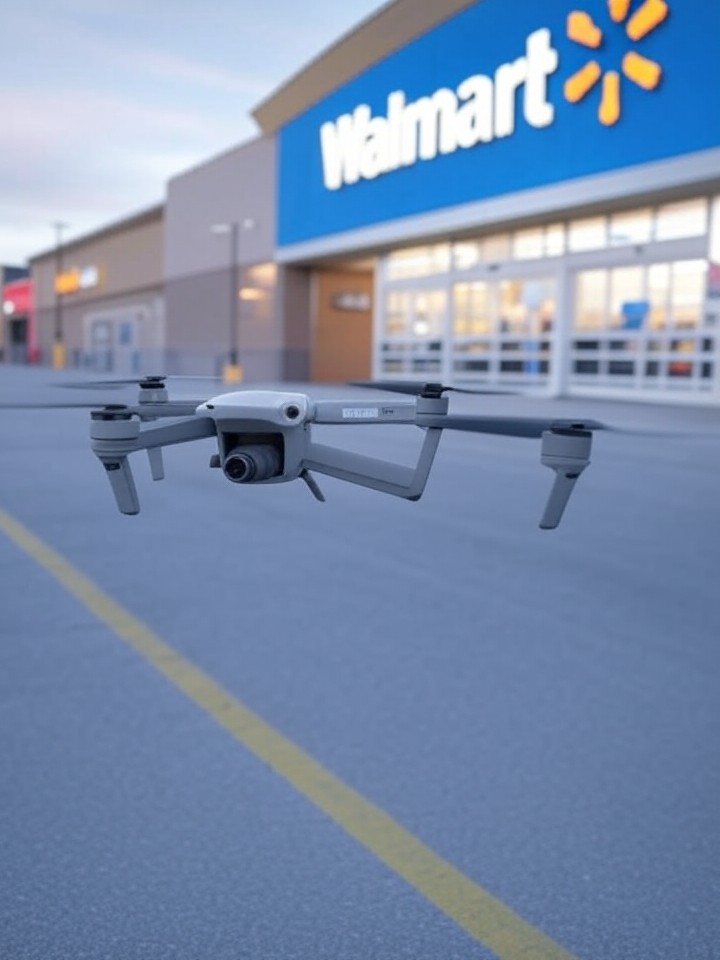
Walmart’s Aerial Ambitions: Scaling Drone Delivery to Redefine Retail Speed
Walmart’s latest push into drone delivery marks a pivotal moment for the retail giant, as it partners with Alphabet-owned Wing to expand operations dramatically across the United States. Announced at the National Retail Federation’s annual show in New York City, the initiative promises to bring ultra-fast, aerial deliveries to millions more customers, leveraging lightweight drones capable of zipping small packages to doorsteps in under 30 minutes. This move not only intensifies Walmart’s rivalry with e-commerce behemoths like Amazon but also signals a broader shift toward automated logistics in everyday shopping.
The expansion builds on existing pilots in select markets, where Walmart has already demonstrated the viability of drone technology for quick-turnaround orders. In areas like Dallas-Fort Worth and Atlanta, customers have grown accustomed to receiving items such as snacks, household essentials, and even over-the-counter medications via drone, often free for Walmart+ subscribers. Wing’s drones, which can carry payloads up to about 2.5 pounds, hover above delivery zones and lower packages via winch, minimizing noise and disruption while adhering to strict safety protocols.
This new phase, detailed in announcements from Wing and Walmart, aims to cover an additional 150 stores in 2026, with a long-term goal of establishing a network of over 270 locations by 2027. Cities newly entering the fold include Los Angeles, St. Louis, Miami, and Cincinnati, joining established hubs in Texas, Arkansas, and parts of the Southeast. According to reports from The Verge, this rollout will make drone delivery accessible to roughly 40 million Americans, a staggering increase from current coverage.
From Pilot Programs to Nationwide Network
The journey to this expansion has been years in the making. Walmart first dipped its toes into drone delivery in 2021 with limited trials, partnering with companies like Zipline and DroneUp before deepening ties with Wing in 2023. These early efforts focused on rural and suburban areas where regulatory hurdles were lower, allowing the company to refine operations and gather data on customer preferences. Feedback has been overwhelmingly positive, with users praising the convenience for last-minute needs, such as forgotten ingredients during meal prep or urgent pharmacy items.
Technologically, Wing’s system stands out for its integration with Walmart’s supply chain. Drones are stationed at or near stores on charging pads, ready to launch upon order placement through the Wing app or Walmart’s platform. Once loaded, they navigate autonomously using advanced AI for route optimization and obstacle avoidance, ensuring deliveries within a 6- to 10-mile radius. This store-centric model gives Walmart an edge over competitors who rely on centralized warehouses, potentially reducing costs and delivery times.
Industry observers note that this expansion aligns with broader trends in retail automation. Posts on X, formerly Twitter, from users like tech enthusiasts and business analysts highlight growing excitement, with some sharing videos of drone drops and speculating on the impact to urban logistics. One such post from a retail tech account emphasized how this could save Walmart significant labor costs while enhancing customer loyalty through speed.
Competitive Pressures and Market Dynamics
Walmart’s drone ambitions don’t exist in a vacuum; they’re a direct response to moves by rivals. Amazon has been testing its Prime Air drones for years, recently launching “ultra-fast” services in select areas, as noted in coverage from ABC News. Meanwhile, Uber Eats employs autonomous robots, and DoorDash experiments with aerial options, all vying for dominance in the instant-delivery space. Walmart’s advantage lies in its vast physical footprint—over 4,600 stores nationwide—allowing for hyper-local fulfillment that drones can exploit efficiently.
The financial stakes are high. Analysts estimate that the last-mile delivery market could exceed $100 billion by 2030, driven by consumer demand for immediacy. Walmart’s partnership with Wing, a subsidiary of Google parent Alphabet, brings not just technological prowess but also regulatory savvy. Wing has secured Federal Aviation Administration approvals for beyond-visual-line-of-sight operations, a key enabler for scaling in densely populated areas.
However, challenges abound. Safety concerns, including potential mid-air collisions or malfunctions, remain top of mind. Regulators like the FAA are pushing for updated rules, with proposed guidelines that could facilitate broader drone integration into national airspace. Walmart and Wing have invested heavily in redundancy systems, such as multiple sensors and fail-safes, to mitigate risks, but public acceptance will be crucial.
Urban Expansion and Customer Impact
Rolling out to major metros like Los Angeles introduces new complexities. In a city known for traffic snarls, drones could bypass ground congestion, delivering to backyards or designated drop zones in minutes. Mashable reports that this expansion targets high-density areas, where the service might appeal to busy professionals seeking quick restocks of everyday items. Early adopters in pilot cities have reported satisfaction rates above 90%, with many opting for drone delivery repeatedly.
For Walmart+ members, the service is often complimentary, bundling it with other perks like free shipping and fuel discounts. This integration aims to boost subscription numbers, which already top 100 million, by offering a futuristic convenience that sets Walmart apart from traditional retailers. Non-members can access it for a small fee, broadening appeal.
On the operational side, Walmart is training store associates to handle drone packing, ensuring seamless handoffs from shelf to sky. This human element remains vital, as drones are best suited for lightweight, non-perishable goods, leaving heavier items to ground transport.
Regulatory Hurdles and Technological Innovations
Navigating the regulatory environment is no small feat. The FAA’s evolving framework for commercial drones requires operators to demonstrate robust safety measures, including real-time tracking and collision avoidance. Wing’s track record in Australia and Finland, where it has conducted millions of deliveries, provides a blueprint for U.S. success. Recent announcements indicate that the company is collaborating with air traffic control systems to integrate drones safely.
Innovation extends to sustainability. Wing’s electric drones produce minimal emissions compared to delivery vans, aligning with Walmart’s environmental goals. A study cited in TechCrunch suggests that widespread drone adoption could reduce urban delivery carbon footprints by up to 30%, a boon for eco-conscious consumers.
Yet, not all feedback is glowing. Some X posts express privacy worries, with users decrying “invasions of personal airspace” over homes. Walmart addresses this by limiting flight paths and notifying residents in advance, but building trust will take time.
Economic Implications for Retail and Beyond
Economically, this expansion could reshape job markets. While drones automate delivery, they create roles in maintenance, software development, and oversight. Estimates from industry reports project that automation in logistics might displace some driving jobs but generate others in tech sectors. Walmart’s approach, emphasizing augmentation rather than replacement, could serve as a model.
Looking ahead, the partnership’s ambitions extend beyond 2027. Wing envisions a fully integrated ecosystem where drones handle a larger share of small-package deliveries, potentially expanding to groceries or even partnerships with other retailers. As Robotics 24/7 details, the NRF keynote by Walmart’s incoming CEO John Furner and Google’s Sundar Pichai underscored this vision, highlighting investments in AI for predictive inventory.
Competitors are watching closely. Amazon’s recent drone setbacks, including regulatory delays, contrast with Walmart’s steady progress, potentially shifting market share. If successful, this could accelerate adoption across the sector, making aerial delivery a standard option.
Voices from the Ground and Sky
Customer stories illuminate the real-world impact. In Atlanta, where services launched recently, residents have shared on X how drones delivered emergency supplies during bad weather, avoiding road hazards. Such anecdotes underscore the technology’s potential in disaster-prone areas.
For small businesses, Walmart’s model might inspire similar innovations, though scale remains a barrier. Wing’s open-platform approach could eventually license tech to others, democratizing access.
As Walmart forges ahead, the blend of retail might and cutting-edge aviation positions it as a leader in next-gen commerce. With millions poised to experience drone drops, the skies above America’s neighborhoods are set to buzz with possibility, transforming how we shop one delivery at a time.
Strategic Horizons in Automated Commerce
Delving deeper into strategy, Walmart’s drone push is part of a broader digital transformation. Investments in omnichannel experiences, including app enhancements for real-time tracking, ensure customers feel connected throughout the process. Data from these deliveries feeds into analytics, refining inventory and predicting demand with greater accuracy.
Partnership dynamics with Alphabet add another layer. Wing benefits from Walmart’s customer base, while Walmart gains proprietary tech without full R&D costs. This symbiosis, as explored in DroneLife, could pave the way for more cross-industry collaborations.
Ultimately, success hinges on seamless execution. Pilot data shows average delivery times of 20 minutes, far outpacing traditional methods. If Walmart maintains this efficiency while scaling, it could redefine expectations for retail speed, compelling others to follow suit.
The Path Forward Amid Uncertainties
Uncertainties persist, particularly around weather resilience and urban noise regulations. Wing is testing enhanced drones for adverse conditions, but widespread rollout will test these limits.
Community engagement is key. Walmart plans town halls in new markets to address concerns, fostering goodwill. Positive sentiment on X, with influencers praising the innovation, suggests momentum is building.
In the grand scheme, this expansion isn’t just about drones—it’s about reimagining retail’s future. By harnessing the skies, Walmart is not only delivering packages but also a vision of efficiency that could endure for decades.


 WebProNews is an iEntry Publication