
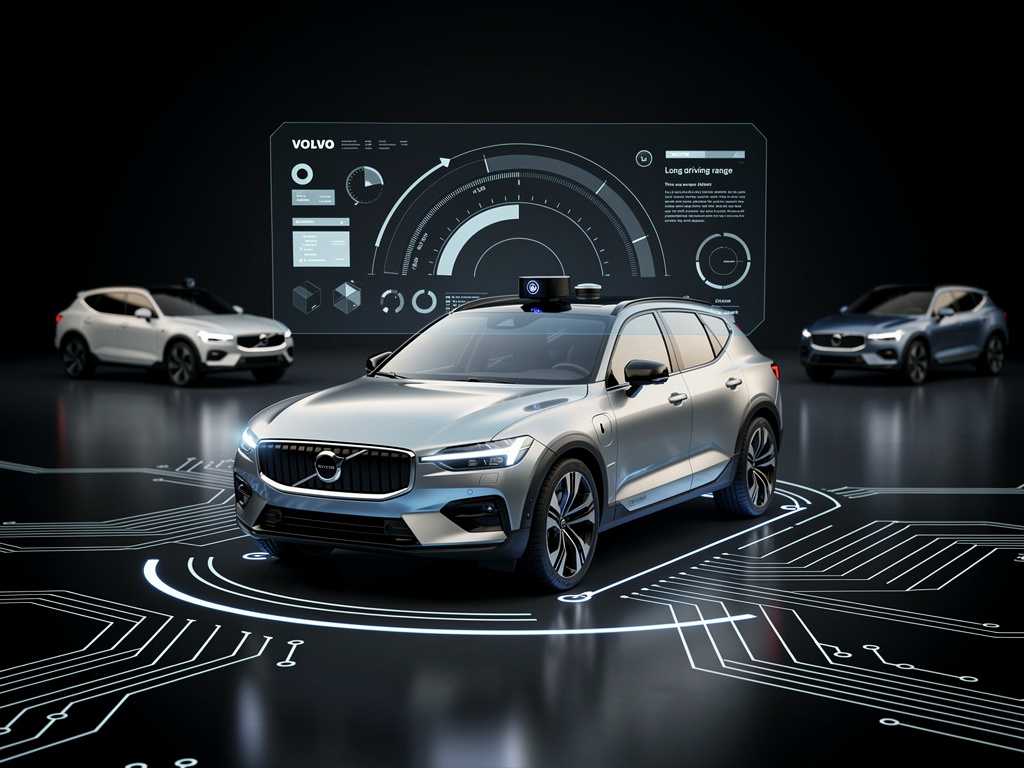
Volvo’s Bold Leap: Conquering Software Demons in the EX60 Era
Volvo Cars has long positioned itself as a pioneer in automotive safety and innovation, but its journey into the electric vehicle realm hasn’t been without turbulence. With the recent unveiling of the EX60, the Swedish automaker is not just introducing a new mid-size electric SUV—it’s declaring victory over persistent software glitches that have plagued its previous models. This move comes at a pivotal moment when competitors like Ford and Volkswagen are grappling with their own digital dilemmas, prompting Volvo to issue a cheeky challenge to the industry.
The EX60, set to hit markets in 2027, represents a significant evolution from Volvo’s earlier electric offerings, such as the EX30 and EX90, which faced criticism for buggy infotainment systems and over-the-air update failures. Drawing from lessons learned, Volvo claims to have ironed out these issues through a revamped software architecture. This isn’t mere marketing spin; it’s backed by substantial engineering overhauls that could redefine reliability in electric vehicles.
At the heart of this transformation is Volvo’s adoption of a new core computing system, integrating advanced AI and machine learning to preempt software conflicts. Unlike the fragmented setups in past models, the EX60’s platform unifies hardware and software, promising seamless updates and enhanced user experiences. Industry observers note that this approach mirrors strategies seen in tech giants like Tesla, but Volvo adds its signature focus on safety integration.
Engineering Overhauls and Competitive Jabs
Volvo’s confidence stems from rigorous testing and partnerships with tech firms, including Google for infotainment and Nvidia for processing power. According to reports from TechRadar, Volvo executives have openly taunted rivals, saying, “Good luck to the rest of you,” in reference to Ford’s delays with its Explorer EV and Volkswagen’s software woes in the ID series. This bravado underscores a broader shift where software prowess is becoming as crucial as battery range or horsepower.
The EX60 boasts up to 400 miles of range and 670 horsepower in its top trim, but it’s the software suite that steals the spotlight. Features like predictive maintenance alerts and adaptive driver assistance systems rely on real-time data processing, minimizing downtime from glitches. Volvo’s engineers have reportedly reduced software-related recalls by incorporating modular code that allows for isolated updates without disrupting the entire system.
Comparisons with competitors highlight Volvo’s edge. Ford has faced backlash over its BlueCruise system’s reliability, while Volkswagen’s Cariad software division has undergone multiple restructurings amid delays. Volvo, by contrast, has streamlined its development process, leveraging its ownership under Geely to access cutting-edge Chinese tech resources without the bureaucratic hurdles plaguing legacy automakers.
Safety Tech Takes Center Stage
Beyond software stability, the EX60 integrates groundbreaking safety features that leverage its robust digital backbone. Lidar sensors and AI-driven supercomputers, first previewed in the EX90, are standard here, enabling what Volvo calls “Safe Space Technology.” This system not only detects external hazards but also monitors occupant well-being, adjusting seat belts dynamically—a nod to the innovative seat belt mentioned in coverage from WIRED.
Electric vehicle advancements aren’t just about going green; they’re about reimagining the driving experience. The EX60’s megacasting technique, inspired by Tesla, uses large aluminum parts for a lighter, more efficient chassis. This manufacturing innovation, detailed in a Consumer Reports preview, enhances structural integrity while reducing production complexity, potentially lowering costs and improving scalability.
For industry insiders, the real intrigue lies in Volvo’s software ecosystem. The company has moved away from the Android Automotive OS pitfalls that caused lags in earlier models, opting for a bespoke version with enhanced cybersecurity measures. This addresses vulnerabilities that have led to high-profile hacks in other EVs, ensuring that over-the-air updates are both swift and secure.
Market Positioning and Rival Responses
Positioning the EX60 against heavyweights like the BMW iX3 and Mercedes electric GLC, Volvo emphasizes its “game-changer” status, as highlighted in an electrive.com article on the world premiere. With a starting price around $60,000, it aims for the heart of the mid-size SUV market, where electric adoption is accelerating globally.
Recent posts on X from users and Volvo’s official account reveal mixed sentiments. While some praise the brand’s electrification push, others vent frustrations over past issues, like battery problems in the XC90 or software glitches in the EX30. Volvo’s responses, often directing users to direct messages for support, indicate a proactive customer service approach that’s crucial for rebuilding trust.
Competitors aren’t standing idle. Ford has invested billions in software upgrades, and Volkswagen is pushing forward with its Trinity project to overhaul its EV tech. Yet, Volvo’s taunt resonates because it highlights a truth: software integration remains a stumbling block for many traditional automakers transitioning to electric platforms.
Powertrain Innovations and Efficiency Gains
Diving deeper into the EX60’s tech, its dual-motor setup delivers impressive performance, with a Cross Country variant planned for 2028 offering added ruggedness. As noted in a Car and Driver reveal, the SUV’s 503-mile range in European testing cycles addresses “range anxiety,” a common EV barrier. This is achieved through advanced battery chemistry and aerodynamic design, pushing efficiency boundaries.
Software plays a pivotal role in optimizing energy use. The EX60’s intelligent connectivity predicts driving patterns, adjusting power distribution for maximal range. This level of sophistication, combined with Volvo’s history of electrification—dating back to announcements like the diesel-free S60 in 2018—positions it as a leader in sustainable mobility.
For insiders, the EX60’s adoption of SPA3 platform revolutionizes production. As described in an Autocar piece, this architecture enhances both build quality and technological capabilities, allowing for faster iteration on features like autonomous driving aids.
Challenges Ahead and Industry Implications
Despite the optimism, challenges remain. Early adopters of Volvo’s EVs have reported issues with infotainment responsiveness, as critiqued in a MotorTrend review questioning if Volvo has truly fixed its systems. The EX60’s success will hinge on real-world performance, where software reliability under diverse conditions will be tested.
Broader industry implications are profound. As electric vehicles become mainstream, the battle shifts from hardware to software ecosystems. Volvo’s approach—fusing Scandinavian design with cutting-edge tech—could inspire others, but it also raises questions about data privacy and the ethics of AI in vehicles.
Looking at global trends, the EX60 enters a market where policy shifts, like incentives for EVs in the U.S. and Europe, favor innovative players. Volvo’s commitment to all-electric by 2030 aligns with this, but executing flawlessly on software will determine if its taunt to rivals turns into a lasting advantage.
User Experiences and Future Prospects
Feedback from current Volvo owners, gleaned from X discussions, underscores the importance of post-sale support. Complaints about update delays in models like the EX30 highlight areas where the EX60 must excel. Volvo’s official responses on the platform show a dedication to addressing these, which could bolster loyalty in a competitive field.
Technological advancements extend to connectivity, with the EX60 featuring seamless integration with smart home devices and cloud services. This holistic ecosystem, as explored in Volvo’s own technology page, promises a connected journey that’s intuitive and secure.
As the EX60 rolls out, its impact on electric vehicle adoption could be transformative. By overcoming software hurdles, Volvo not only challenges Ford and Volkswagen but sets a benchmark for the industry, proving that reliability and innovation can coexist in the electric age.
Sustainability and Long-Term Vision
Sustainability is woven into the EX60’s DNA, with recycled materials and energy-efficient production methods. This aligns with Volvo’s legacy, from its early electrification pledges to current lidar-equipped safety tech, as seen in posts dating back to 2021 announcing AI supercomputers for future models.
For industry professionals, the EX60 represents a case study in adaptive engineering. Its software solutions could influence supply chain strategies, encouraging more automakers to prioritize digital resilience.
Ultimately, Volvo’s bold stance with the EX60 signals a maturing electric vehicle sector, where overcoming software issues isn’t just a fix—it’s a competitive weapon. As rivals scramble to catch up, the Swedish brand’s innovations may well define the next chapter in automotive evolution.


 WebProNews is an iEntry Publication