
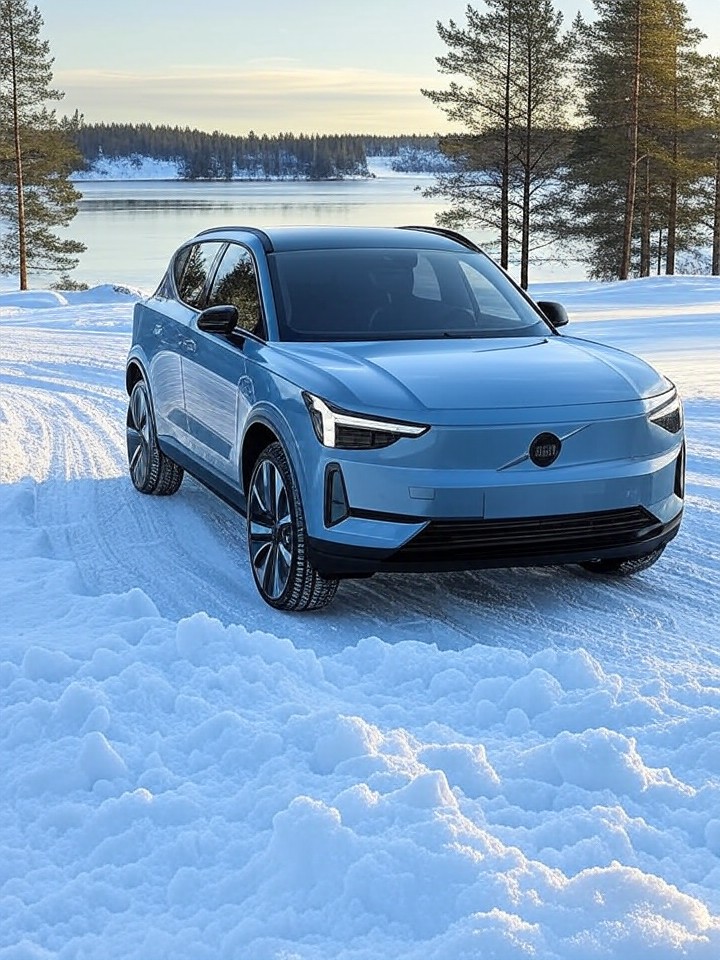
Volvo’s EX60 Emerges: A Bold Leap in Electric Mobility with Range That Redefines Expectations
Volvo Cars is poised to unveil its latest electric vehicle, the EX60, a midsize SUV that promises to blend the brand’s hallmark safety features with cutting-edge battery technology. Set for a full reveal on January 21, 2026, the EX60 is generating buzz in the automotive sector as a direct competitor to models like the Tesla Model Y. Drawing from recent teasers, this vehicle is not just an addition to Volvo’s growing EV lineup but a strategic move to capture the lucrative midsize crossover market, where demand for efficient, long-range electric options continues to surge.
The EX60 will be built on Volvo’s new electric-only platform, marking a departure from hybrid architectures and underscoring the company’s commitment to pure electrification. According to details shared in a teaser from Car and Driver, the SUV is positioned as the electric equivalent to the popular XC60, aiming to replicate its predecessor’s success in the compact luxury segment. Industry analysts note that this model could help Volvo accelerate its transition away from internal combustion engines, aligning with global regulatory pressures and consumer shifts toward sustainable transport.
Teaser images and preliminary specifications suggest the EX60 will feature a sleek design with familiar Volvo cues, such as the Thor’s Hammer LED headlights and a minimalist Scandinavian interior. Production is slated to begin in the first half of 2026 at Volvo’s Gothenburg factory, with availability expected shortly thereafter. This timeline positions the EX60 to enter a competitive field, where rivals are ramping up their own EV offerings amid fluctuating battery material costs and supply chain challenges.
Unveiling the Powertrain: Efficiency Meets Performance
At the heart of the EX60’s appeal is its impressive range estimate of up to 400 miles on a single charge, based on EPA standards, which would surpass any current Volvo EV. This figure, highlighted in reports from USA Today, positions the vehicle as a leader in eliminating range anxiety, a persistent barrier to EV adoption. Volvo achieves this through advancements in battery density and energy management, potentially incorporating next-generation cells that optimize power delivery without compromising weight or space.
Fast charging capabilities further enhance the EX60’s practicality, with the ability to add 173 miles of range in just 10 minutes when connected to a compatible DC fast charger. As detailed in an article from Car and Driver, this feature leverages Volvo’s new platform to support ultra-rapid charging rates, making long-distance travel more feasible for families and commuters alike. Such innovations reflect broader industry trends toward quicker replenishment times, reducing downtime and aligning with the convenience of traditional refueling.
Beyond raw specs, the EX60 integrates Volvo’s Safe Space Technology, including lidar, cameras, and AI-driven systems for enhanced autonomy and collision avoidance. This builds on the safety legacy seen in models like the EX90, ensuring that the midsize SUV doesn’t sacrifice protection for performance. Insiders speculate that these features could include over-the-air updates, allowing continuous improvements post-purchase and potentially extending the vehicle’s lifecycle in a rapidly evolving tech environment.
Safety Innovations: Building on a Legacy of Protection
Volvo’s emphasis on safety remains unwavering in the EX60, with teasers indicating the inclusion of advanced occupant monitoring systems that detect driver fatigue or distraction. Drawing from historical posts on X by Volvo Cars, which have consistently highlighted lidar and AI in their electric lineup, the EX60 is expected to elevate these technologies for the midsize category. This approach not only meets but exceeds regulatory standards, appealing to safety-conscious buyers in markets like Europe and North America.
The interior design promises a serene, tech-forward cabin, complete with sustainable materials and intuitive infotainment powered by Google’s Android Automotive OS. Reports from Top Electric SUV suggest seamless integration with smart home devices and voice assistants, enhancing the user experience beyond mere transportation. For industry professionals, this signals Volvo’s strategy to differentiate through user-centric innovation, potentially including bidirectional charging for home energy backup.
Market positioning is crucial, as the EX60 aims to slot between the compact EX40 and the larger EX90, filling a gap in Volvo’s portfolio. Pricing details, to be revealed on January 21, are anticipated to start around the mid-$50,000 range, making it accessible yet premium. This pricing strategy, inferred from competitive analysis in various sources, could pressure rivals to adjust their offerings, especially as incentives for EVs fluctuate under policies like the U.S. Inflation Reduction Act.
Market Dynamics: Competing in a Crowded Field
The competitive arena for midsize electric SUVs is intensifying, with the EX60 entering a space dominated by the Tesla Model Y, Ford Mustang Mach-E, and upcoming models from BMW and Mercedes. Volvo’s advantage lies in its reputation for reliability and safety, which could sway buyers wary of newer entrants. Recent news from WhichCar emphasizes the EX60’s claimed 800-kilometer range in WLTP testing, translating to over 500 miles in some metrics, though EPA figures are more conservative at 400 miles.
Production scalability is another key factor, with Volvo’s Gothenburg facility ramping up to meet demand. Challenges such as semiconductor shortages and raw material volatility, as seen in broader industry reports, could impact timelines, but Volvo’s vertical integration in battery tech may mitigate these risks. For insiders, this represents a test of Volvo’s supply chain resilience, especially as parent company Geely expands its global footprint.
Consumer sentiment, gleaned from recent posts on X, shows enthusiasm for Volvo’s electric push, with users praising the brand’s shift from diesel engines as far back as 2018 announcements. This organic buzz could translate to strong pre-order numbers, particularly in eco-conscious regions like Scandinavia and California, where EV infrastructure is robust.
Technological Edge: Platform and Battery Breakthroughs
The EX60’s dedicated electric platform allows for optimized weight distribution and a lower center of gravity, enhancing handling and efficiency. As noted in TechEBlog, this architecture supports a spacious interior despite the midsize footprint, catering to families needing versatility without excess bulk. Battery placement under the floor maximizes cabin space, a design choice that echoes successful implementations in other EVs.
Charging infrastructure compatibility is vital, and the EX60’s rapid charging promise aligns with expanding networks like Electrify America and Tesla’s Superchargers opening to non-Tesla vehicles. Industry experts predict this could accelerate adoption rates, with Volvo potentially partnering for exclusive access or incentives. Moreover, the vehicle’s software ecosystem, including app-based controls and predictive maintenance, positions it as a connected device on wheels.
Sustainability extends to manufacturing, with Volvo committing to recycled materials and carbon-neutral processes. This aligns with corporate goals outlined in earlier communications, reinforcing the brand’s environmental ethos. For automotive executives, the EX60 exemplifies how legacy manufacturers can pivot to electrification while preserving core values.
Future Implications: Volvo’s Electric Roadmap
Looking ahead, the EX60’s launch could catalyze Volvo’s ambition to go fully electric by 2030, influencing supplier networks and R&D investments. Teasers from Volvo Cars’ official site invite viewers to the January 21 livestream, building anticipation and allowing real-time engagement. This digital-first approach mirrors industry shifts toward virtual unveils, reducing costs and broadening reach.
Potential variants, such as performance-oriented Polestar-engineered models, might follow, expanding the EX60’s appeal. Economic factors, including interest rates and EV tax credits, will shape sales trajectories, with analysts forecasting robust growth in the segment. Volvo’s data-driven design, informed by user feedback, ensures the vehicle addresses real-world needs like all-weather performance and towing capacity.
Integration with smart cities and autonomous features could define the EX60’s long-term value, as software updates enable new functionalities. This forward-thinking strategy, supported by partnerships with tech giants, underscores Volvo’s evolution from traditional automaker to mobility innovator.
Strategic Positioning: Global Reach and Challenges
Globally, the EX60 targets key markets including China, where electric adoption is rampant, and the U.S., with its vast highway system demanding high range. Adaptations for regional preferences, such as enhanced cold-weather battery performance, are likely based on Volvo’s heritage in harsh climates. Trade tensions and tariffs, however, pose risks to pricing and availability.
Collaboration with battery suppliers like Northvolt could ensure a steady flow of advanced cells, mitigating dependencies on Asian manufacturers. For industry insiders, this highlights the importance of diversified sourcing in an era of geopolitical uncertainty.
Ultimately, the EX60 represents Volvo’s bet on a future where electric vehicles dominate, blending innovation with proven strengths to carve out a significant share in the midsize SUV category. As the reveal approaches, the automotive world watches closely, eager to see if this teaser lives up to its promises.


 WebProNews is an iEntry Publication