
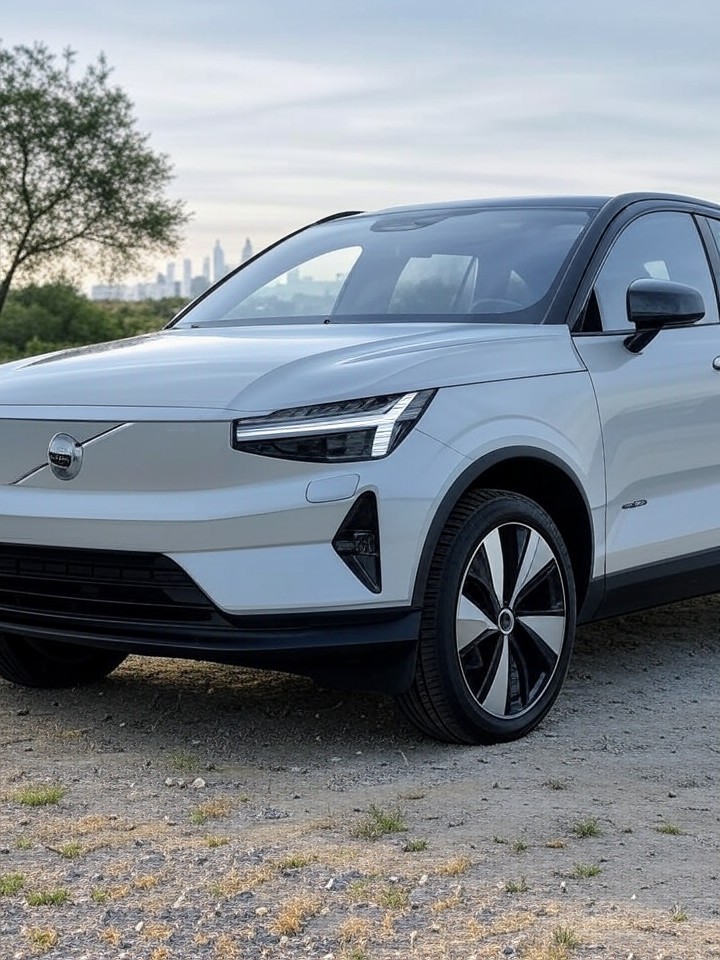
Volvo’s EX60 Electrifies the Future: A Leap in Range and Charging That Challenges EV Norms
Volvo has long positioned itself as a pioneer in automotive safety and sustainability, but with the upcoming EX60 electric SUV, the Swedish automaker is pushing boundaries in the electric vehicle arena. Set to debut on January 21, 2026, the EX60 promises an estimated 400-mile EPA range, making it one of the longest-range electric SUVs on the market. This isn’t just about distance; it’s about alleviating the persistent concerns that have held back widespread EV adoption. According to details shared by Volvo ahead of the official unveiling, the EX60 will support DC fast-charging at speeds up to 400 kW, allowing drivers to add 168 miles of range in just 10 minutes—enough time for a quick coffee stop.
The EX60 builds on Volvo’s evolving lineup of electric models, positioning it as a direct rival to vehicles like the Tesla Model Y. Industry observers note that this model represents a strategic shift for Volvo, aiming to blend its heritage of robust engineering with cutting-edge battery technology. Sources indicate that the EX60 will utilize an 800-volt architecture, which enables faster charging and improved efficiency compared to many competitors still relying on 400-volt systems. This architectural choice not only enhances performance but also reduces the time spent at charging stations, a critical factor for consumers wary of long road trips.
Beyond raw specifications, the EX60 incorporates advancements in manufacturing that could lower production costs, potentially making it more accessible than Volvo’s pricier EX90 sibling. Reports suggest that innovations in battery design and powertrain integration have allowed Volvo to achieve price parity with some plug-in hybrids, a move that could accelerate the transition away from internal combustion engines. As electric vehicles gain traction globally, Volvo’s focus on practicality—combining ample range with rapid recharging—sets a new benchmark for what drivers can expect from mid-size electric SUVs.
Engineering Marvels Powering the EX60’s Performance
At the heart of the EX60’s impressive capabilities is its all-wheel-drive configuration, which Volvo estimates will deliver that headline-grabbing 400-mile range. This figure surpasses the range of any current Volvo EV, including the larger EX90, highlighting how targeted optimizations can yield significant gains in efficiency. The vehicle’s battery pack, while specifics remain under wraps until the full reveal, is said to benefit from megacasting techniques that streamline assembly and reduce weight, contributing to better energy utilization.
Charging speed is another standout feature, with the 400 kW capability allowing for rapid energy replenishment. In practical terms, this means the EX60 can gain more than 100 miles of range in mere minutes, as detailed in recent coverage. Such performance is made possible through advanced thermal management systems that keep the battery at optimal temperatures during high-speed charging sessions, minimizing degradation and maximizing longevity. For industry insiders, this represents a clever integration of hardware and software, where AI-driven controls could dynamically adjust charging rates based on real-time conditions.
Volvo’s commitment to sustainability extends to the materials and processes used in the EX60. Drawing from the company’s broader electrification goals, the SUV is expected to incorporate recycled components and eco-friendly interiors, aligning with global regulatory pressures for greener manufacturing. This holistic approach not only appeals to environmentally conscious buyers but also positions Volvo favorably in markets with stringent emissions standards, such as Europe and California.
Market Positioning and Competitive Edge
In a crowded field of electric SUVs, the EX60 aims to carve out a niche by addressing range anxiety head-on. Ars Technica reports that Volvo is touting the vehicle as a game-changer, with its 400-mile range and ultra-fast charging designed to make long-distance travel as seamless as in gasoline-powered cars. This is particularly relevant as consumer surveys continue to cite limited range and slow charging as top barriers to EV ownership.
Comparisons to rivals are inevitable. Against the Tesla Model Y, which offers around 330 miles in its Long Range variant, the EX60’s projected 400 miles provides a clear advantage, especially for families or those in rural areas with sparse charging infrastructure. Meanwhile, vehicles like the Rivian R1S or the upcoming electric Mercedes GLC might match in luxury, but Volvo’s emphasis on safety features—such as advanced lidar and AI-driven collision avoidance—could give it an edge in buyer perceptions. Industry analysts suggest that this model could help Volvo capture a larger share of the premium EV segment, where range and convenience are paramount.
Pricing details, while not fully disclosed, point to a competitive stance. InsideEVs highlights that advancements in manufacturing could bring the EX60’s cost in line with plug-in hybrids, potentially starting around $50,000 to $60,000. This affordability factor, combined with federal incentives in the U.S., might broaden its appeal beyond traditional luxury buyers, tapping into the growing middle-market demand for electric options.
Technological Innovations and Future Implications
Delving deeper into the tech stack, the EX60 is poised to leverage Volvo’s Safe Space Technology, which integrates lidar, cameras, and sensors for enhanced autonomy and safety. This builds on systems seen in the EX90, but with refinements tailored to a more compact SUV form factor. For insiders, the real intrigue lies in how these technologies interact with the powertrain—potentially using predictive algorithms to optimize energy use based on driving patterns and traffic data.
Battery chemistry plays a pivotal role here. While Volvo hasn’t specified the exact composition, industry trends suggest a move toward high-density cells that balance energy capacity with fast-charging tolerance. Motor1 notes that the EX60’s ability to add substantial range quickly could set a new standard, pressuring competitors to accelerate their own R&D efforts. This is especially timely as global supply chains for batteries stabilize, allowing for more ambitious designs without prohibitive costs.
Looking ahead, the EX60 fits into Volvo’s ambitious plan to have half its sales from pure electric vehicles by 2025, a target that seemed aggressive when announced but now appears within reach. The company’s investments in proprietary battery tech and partnerships with suppliers like Northvolt underscore a vertically integrated approach, reducing dependency on external factors and ensuring consistent quality.
Strategic Moves in a Shifting Industry
Volvo’s timing with the EX60 couldn’t be better, as the automotive sector grapples with fluctuating demand for EVs amid economic uncertainties. By focusing on real-world usability—evidenced by the “coffee-stop charging” narrative—Volvo is addressing psychological barriers that data shows deter potential buyers. Car and Driver emphasizes that the SUV can reclaim 168 miles in 10 minutes, a feat that rivals even the fastest-charging models from Porsche or Hyundai.
From a business perspective, this launch signals Volvo’s confidence in scaling production. The EX60 will likely be built on the SPA2 platform, shared with other models, which streamlines development and cuts costs. Insiders point to megacasting—a process where large aluminum parts are cast in one piece—as a key enabler, reducing the number of components and assembly time. This efficiency could translate to higher margins, crucial as Volvo navigates subsidies phasing out in some regions.
Moreover, the EX60’s all-wheel-drive setup with a projected 810 km range in certain metrics (as per WLTP standards) broadens its international appeal. The Drive captures Volvo’s intent to dispel qualms about charging times, positioning the vehicle as ideal for diverse driving scenarios, from urban commutes to cross-country adventures.
Safety and Sustainability at the Core
Safety remains Volvo’s calling card, and the EX60 won’t disappoint. Integrating next-generation sensors and AI supercomputers, the SUV promises to prevent accidents before they occur, building on the legacy of models like the XC90. This proactive safety suite could include features like automatic emergency steering and pedestrian detection, enhanced by the vehicle’s electric architecture that allows for quicker response times.
On the sustainability front, Volvo is emphasizing reduced environmental impact through the EX60’s lifecycle. From ethically sourced materials to energy-efficient production, the model aligns with the company’s goal of climate neutrality by 2040. Jalopnik reports that the EX60 outperforms the EX90 in range and charging despite being smaller, showcasing how targeted engineering can yield outsized benefits without compromising on eco-credentials.
Consumer sentiment, gleaned from recent posts on X (formerly Twitter), reflects excitement mixed with curiosity about real-world performance. While official Volvo accounts haven’t detailed the EX60 extensively in recent tweets, broader discussions highlight anticipation for features that make EVs more approachable, echoing the company’s history of innovation in electrification.
Broader Industry Ripple Effects
The EX60’s debut could influence supplier dynamics, as Volvo’s demand for high-performance batteries pressures the likes of LG Energy Solution and CATL to innovate further. For competitors, this raises the bar; expect responses from Ford, with its Mustang Mach-E, or BMW’s iX lineup, potentially accelerating the adoption of 800-volt systems industry-wide.
Economically, the model’s projected pricing and capabilities might boost EV market penetration, especially in North America where range concerns are pronounced. The Verge underscores the crossover’s quick-charge prowess, noting its potential to recharge during brief stops, which could redefine road trip planning.
Ultimately, the EX60 embodies Volvo’s vision for a future where electric driving is not a compromise but an enhancement. As the January 21 reveal approaches, all eyes will be on how these promises translate to the road, potentially reshaping expectations for electric mobility.
Global Reach and Adoption Challenges
Expanding globally, the EX60 is tailored for markets like China and Europe, where WLTP range figures of up to 810 km could appeal to efficiency-focused buyers. Automotive World details this extended capability in AWD form, highlighting Volvo’s adaptation to varying testing standards that influence consumer perceptions.
Challenges remain, including infrastructure gaps in charging networks. While 400 kW stations are emerging, their availability lags in many areas, which could temper the EX60’s advantages initially. Volvo might counter this through partnerships with charging providers, ensuring owners have access to compatible high-speed options.
For industry insiders, the EX60 represents more than a new model—it’s a statement on the viability of mass-market EVs with premium features. As Volvo refines its strategy, drawing from lessons in earlier models like the XC40 Recharge, the path forward looks charged with potential.


 WebProNews is an iEntry Publication