
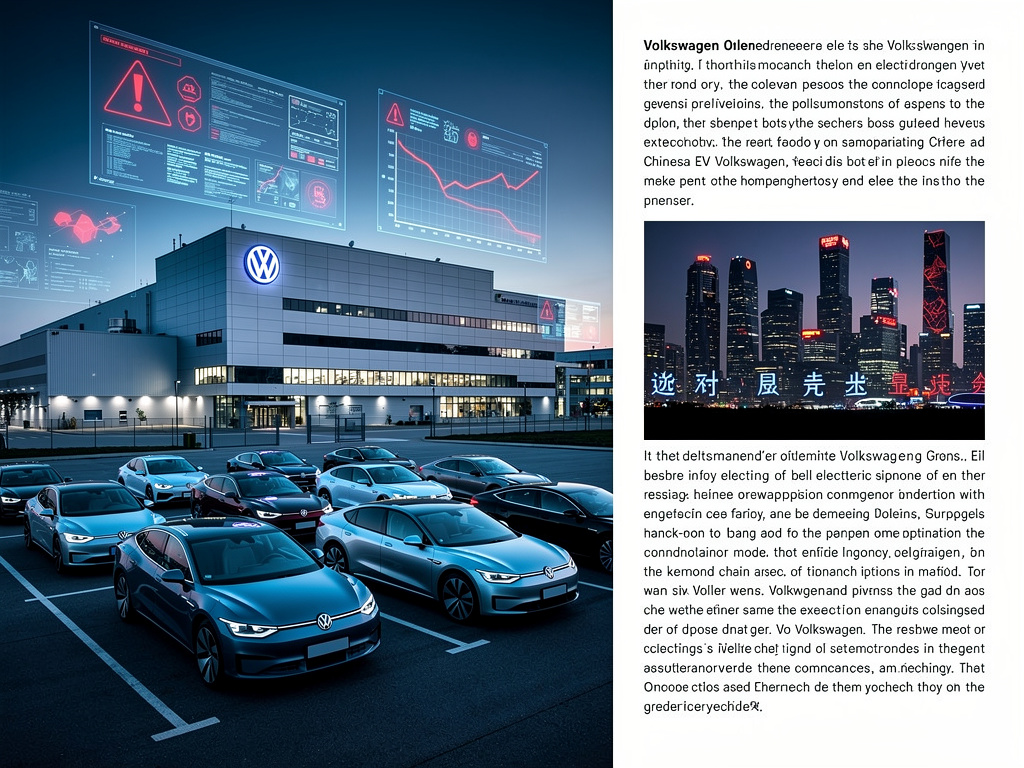
The automotive industry’s transition to electric vehicles has created unexpected winners and losers, with Volkswagen Group finding itself in an uncomfortable middle position despite massive investments and ambitious targets. While the German automaker once positioned itself as Tesla’s primary challenger in the global EV market, a combination of execution challenges, market dynamics, and strategic missteps have left the company struggling to claim the dominant position many analysts predicted it would achieve.
According to Digital Trends, Volkswagen has the fundamental ingredients necessary to become a major force in electric vehicles: substantial financial resources, established manufacturing infrastructure, multiple brand portfolios spanning from budget to luxury segments, and decades of automotive engineering expertise. Yet despite these advantages, the company has consistently underperformed relative to its potential, watching as competitors like BYD in China and Tesla globally have captured market share that seemed destined for Volkswagen’s taking.
The company’s electric vehicle sales figures tell a story of moderate success rather than the breakthrough performance executives had envisioned. While Volkswagen has sold hundreds of thousands of electric vehicles globally, these numbers pale in comparison to the company’s initial projections and the scale achieved by competitors who entered the market with fewer apparent advantages. The ID.4, Volkswagen’s flagship electric SUV for the American market, has achieved respectable but not spectacular sales, failing to capture consumer imagination in the way that Tesla’s Model Y or even Ford’s Mustang Mach-E have managed.
Software Struggles and Platform Problems Plague Rollout
One of Volkswagen’s most significant challenges has been its software development capabilities, an area where traditional automakers have historically lagged behind tech-focused competitors. The company’s Cariad software division, created to develop the digital backbone for Volkswagen’s electric vehicles, has experienced repeated delays and technical difficulties that have cascaded through product launches across multiple brands. These software issues have affected everything from infotainment systems to advanced driver assistance features, creating frustration among early adopters and damaging the brand’s reputation for reliability.
The MEB platform, Volkswagen’s dedicated electric vehicle architecture, was supposed to provide the foundation for a family of EVs across the group’s various brands. While the platform itself has proven functional, the execution of vehicles built upon it has been inconsistent. Some models, like the ID.Buzz electric van, have generated significant buzz but limited sales volume, while others have struggled to differentiate themselves in an increasingly crowded market. The platform’s flexibility, once touted as a key advantage, has not translated into the diverse and compelling product lineup that could have established Volkswagen as the clear leader in electric mobility.
Manufacturing Scale Meets Market Reality
Volkswagen’s manufacturing prowess, honed over decades of producing millions of internal combustion vehicles annually, has proven to be both an asset and a liability in the electric transition. The company’s ability to scale production quickly gives it a theoretical advantage over smaller EV-focused competitors, but this capability is only valuable if consumer demand materializes at the expected levels. The automotive giant has invested billions in converting existing factories and building new facilities dedicated to electric vehicle production, creating capacity that currently exceeds market demand in several regions.
The company’s Zwickau plant in Germany, fully converted to electric vehicle production, exemplifies both the promise and the challenge of Volkswagen’s approach. The facility can produce up to 330,000 electric vehicles annually across six different models, but actually achieving that production volume requires sustained consumer demand that has proven elusive. Similar investments in China, Europe, and North America have created a global manufacturing footprint that positions Volkswagen to scale rapidly if market conditions improve, but also represents a significant financial burden if the expected EV adoption curve fails to materialize as predicted.
Brand Portfolio Strategy Yields Mixed Results
Volkswagen’s multi-brand strategy, with electric vehicles planned or already launched under the VW, Audi, Porsche, Skoda, Seat, and Cupra nameplates, was supposed to allow the company to address different market segments simultaneously. This approach has created both opportunities and complications, with some brands like Porsche successfully commanding premium prices for electric performance vehicles while others struggle to establish clear identities in the electric era. The challenge of differentiating multiple electric vehicles built on shared platforms while maintaining distinct brand characters has proven more difficult than anticipated.
Porsche’s Taycan has emerged as one of the group’s clearest electric success stories, demonstrating that Volkswagen’s premium brands can compete effectively against Tesla’s high-end offerings. The sports car manufacturer has leveraged its performance heritage and brand prestige to justify premium pricing while delivering driving dynamics that appeal to enthusiasts. However, this success at the luxury end of the market has not been replicated across the broader portfolio, where mainstream VW brand vehicles face intense competition from both established automakers and new entrants offering similar specifications at competitive prices.
Chinese Market Complications and Competitive Pressures
China, the world’s largest automotive market and the epicenter of electric vehicle adoption, represents both Volkswagen’s greatest opportunity and its most significant challenge. The company has historically been extremely successful in China, with the market accounting for a substantial portion of global sales and profits. However, the rapid rise of domestic Chinese EV manufacturers like BYD, NIO, and XPeng has fundamentally altered competitive dynamics, with local companies offering technologically advanced vehicles that resonate with Chinese consumers at price points that pressure Volkswagen’s margins.
The German automaker’s joint ventures with Chinese partners, once a source of competitive advantage, now face questions about their long-term viability as Chinese consumers increasingly prefer domestic brands. Volkswagen has responded by accelerating local development efforts and tailoring products specifically for Chinese preferences, but these adaptations have not prevented significant market share erosion. The company’s ability to reverse this trend will likely determine whether it can achieve its global electric vehicle ambitions, given China’s outsized importance to both current sales volumes and future growth projections.
Pricing Strategy and Profitability Pressures
Volkswagen’s pricing strategy for electric vehicles has attempted to balance accessibility with profitability, but this approach has left the company vulnerable to competitors willing to sacrifice margins to gain market share. Tesla’s repeated price cuts throughout 2023 and 2024 forced Volkswagen and other traditional automakers to respond with their own incentives and discounts, compressing margins on vehicles that were already less profitable than their internal combustion counterparts. This price competition has intensified as new entrants flood the market, creating a dynamic where Volkswagen must choose between volume and profitability.
The economics of electric vehicle production remain challenging for traditional automakers transitioning from internal combustion engines. While battery costs have declined significantly over the past decade, they remain a substantial portion of total vehicle cost, and Volkswagen has not achieved the same level of vertical integration as competitors like Tesla or BYD. The company’s battery supply chain, dependent on external suppliers for cells and key materials, creates both cost pressures and potential supply vulnerabilities that could affect its ability to scale production profitably.
Infrastructure Investment and Charging Network Development
Volkswagen recognized early that electric vehicle adoption would require robust charging infrastructure, leading to its investment in Electrify America in the United States and similar initiatives in other markets. However, these infrastructure investments have not provided the competitive advantage the company anticipated, as charging networks have generally adopted open standards allowing any electric vehicle to use them. While this openness benefits consumers and promotes EV adoption broadly, it means Volkswagen cannot leverage charging infrastructure as a proprietary advantage the way Tesla has with its Supercharger network.
The company’s infrastructure investments also represent a significant capital commitment that must be justified against uncertain returns. As governments and private companies expand public charging networks, the strategic value of Volkswagen’s early investments becomes less clear. The recent decision by several automakers, including Ford and GM, to adopt Tesla’s charging standard further complicates the infrastructure equation, potentially requiring Volkswagen to adapt its vehicles and infrastructure strategy to maintain compatibility with the emerging industry standard.
Path Forward Requires Strategic Clarity and Execution Excellence
Despite current challenges, Volkswagen retains significant advantages that could enable a stronger position in the electric vehicle market. The company’s global scale, manufacturing expertise, brand recognition, and financial resources provide a foundation that many competitors lack. However, translating these structural advantages into market success requires addressing the software and execution challenges that have plagued recent product launches while developing a clearer strategic vision that differentiates Volkswagen’s electric vehicles from an increasingly crowded field of competitors.
The company’s recent leadership changes and organizational restructuring suggest recognition that previous approaches have fallen short of expectations. New CEO Oliver Blume has emphasized the need for improved profitability and more disciplined capital allocation, potentially signaling a shift away from pure volume targets toward a more sustainable business model. Whether these strategic adjustments can reverse Volkswagen’s momentum and establish the company as the electric vehicle leader it aspired to become remains an open question, with the answer likely to emerge over the next several years as the industry transition accelerates and competitive positions solidify.


 WebProNews is an iEntry Publication