
In the annals of automotive history, few events carry the weight of Volkswagen’s decision to shutter a production facility on its home soil for the first time in nearly nine decades. The closure of the Dresden plant, announced amid mounting financial pressures and shifting global market dynamics, marks a poignant turning point for Germany’s industrial powerhouse. This move not only underscores the challenges facing traditional carmakers in an era of electric vehicle transitions and international trade tensions but also signals broader implications for Europe’s manufacturing sector.
The Dresden facility, which opened in 2001 as a symbol of post-reunification optimism, ceased car production on December 16, 2025, according to reports from The New York Times. Initially designed to produce luxury models like the Phaeton and later electric vehicles such as the ID.3, the plant employed around 300 workers at its peak. Its shutdown is part of a larger cost-cutting strategy that includes “socially responsible” job reductions affecting over 35,000 employees in Germany by 2030, as detailed in an agreement with unions.
Volkswagen’s leadership cited weaker demand, particularly in key markets like China and Europe, compounded by steep U.S. tariffs on imported vehicles. These tariffs, intensified under recent trade policies, have squeezed profit margins, forcing the company to reevaluate its operational footprint. Industry analysts point to this as a symptom of deeper issues, including overcapacity in Europe and the high costs associated with Germany’s stringent labor laws and energy prices.
The Roots of Volkswagen’s Restructuring Efforts
The path to this historic closure began in earnest in late 2024, when Volkswagen first floated the idea of plant shutdowns to address a €10 billion savings target. A Reddit thread on r/germany from November 2024 captured public bewilderment, with users questioning why a company synonymous with German engineering excellence was resorting to such measures. Discussions highlighted competition from Chinese electric vehicle manufacturers, whose lower production costs and rapid innovation have eroded Volkswagen’s market share.
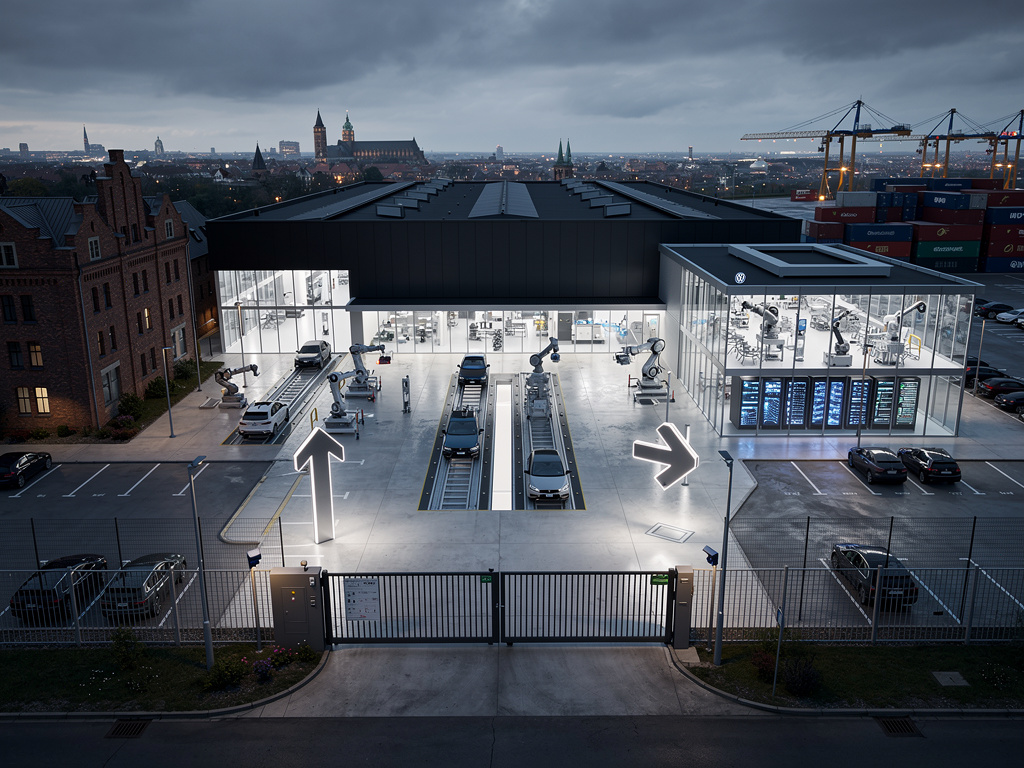
Further insights come from an analysis by American University’s School of International Service, published in August 2024, which warned of the implications of these cost-cutting moves. Professor Stephen Silvia emphasized that Volkswagen’s troubles stem from a combination of slumping sales in China—where the company once dominated—and the slow pivot to electric mobility. The Dresden plant, despite its modern “transparent factory” design meant to showcase assembly processes to visitors, never achieved the economies of scale needed to remain viable.
By October 2024, negotiations with trade unions intensified, as reported by Euronews. Initial plans targeted three plants for closure, but after protracted talks, the focus narrowed. The agreement averted widespread strikes but included painful concessions, such as salary reductions of up to 18% and the elimination of certain social benefits, echoing sentiments from X posts where users lamented the “dying” state of German industry due to energy crises and global competition.
Global Pressures and Competitive Shifts
Volkswagen’s woes are not isolated. The broader automotive sector in Germany faces similar headwinds, with companies like Bosch, SAP, and Continental announcing thousands of layoffs in 2024, as noted in various X discussions. One post from October 2024 highlighted Volkswagen’s plan to downsize remaining plants and cut tens of thousands of jobs, attributing it to the loss of cheap energy resources post-Ukraine conflict. This narrative aligns with expert views that Europe’s deindustrialization is accelerating, driven by high energy costs and bureaucratic hurdles.
A December 2024 article from Car and Driver delved into the financial underpinnings, revealing that Volkswagen’s operating profits have been hammered by a 20% drop in European sales and intensifying rivalry from Tesla and BYD. The company’s ambitious electric vehicle rollout, including the ID series, has faced delays and higher-than-expected costs, exacerbating the need for restructuring. In Dresden, production peaked at around 200,000 vehicles annually but dwindled as consumer preferences shifted toward more affordable imports.
Moreover, U.S. tariffs have played a pivotal role. Imposed to protect domestic manufacturers, these levies have made exporting from Germany less profitable, prompting Volkswagen to bolster operations in North America and Asia. This strategic pivot reflects a broader trend where legacy automakers are forced to consolidate in high-cost regions like Europe while expanding in emerging markets.
Repurposing Dresden: A Glimpse of the Future
Rather than abandoning the Dresden site entirely, Volkswagen has outlined plans to transform it into a research hub focused on artificial intelligence, robotics, and semiconductor development. Partnering with the Technical University of Dresden, the company is committing €50 million over seven years, as reported in a recent update from ASSEMBLY Magazine. This repurposing retains limited use of the facility for customer experiences and prototype testing, potentially preserving some jobs in a high-tech capacity.
The move is seen as a forward-looking strategy amid the industry’s push toward autonomous and connected vehicles. Gizmodo’s coverage from December 2025 noted the irony: a plant closing due to traditional manufacturing woes is pivoting to AI, symbolizing the auto sector’s evolution. Industry insiders suggest this could set a precedent for other European manufacturers, blending legacy operations with cutting-edge innovation to stay competitive.
However, skepticism abounds. X users have pointed out that while the pivot sounds promising, it may not fully offset the job losses or address underlying issues like excessive bureaucracy and employee rights in Germany. One post from December 2025 described the closure as a “historic warning sign,” highlighting how energy costs and delayed adaptations are eroding even iconic brands.
Union Negotiations and Worker Impacts
The human element of this closure cannot be overstated. Volkswagen’s agreement with unions, finalized in late 2024, emphasizes “socially responsible” layoffs, including retraining programs and early retirement options. Yet, the scale—over 35,000 positions affected by 2030—has sparked outrage. A Chosun Ilbo report from December 2025 framed the Dresden shutdown as reflective of EV transition struggles and market pressures, noting the plant’s 88-year lineage back to Volkswagen’s founding in 1937.
Workers at Dresden, many with decades of service, face uncertain futures. Union leaders, as quoted in a New York Times piece from October 2024, initially resisted closures, arguing they break with Volkswagen’s tradition of job security in Germany. The compromise, while averting immediate conflict, includes capacity reductions at other sites, potentially leading to further downsizing.
Broader economic ripples are evident. Germany’s automotive industry, a cornerstone of its economy, employs millions directly and indirectly. The closure exacerbates unemployment in Saxony, where Dresden is located, and could pressure suppliers and local businesses. Analysts from Anadolu Agency in a December 2025 article warned that this first closure might not be the last, as Volkswagen eyes efficiency amid a projected €6.5 billion shortfall.
Strategic Implications for the Auto Industry
Looking ahead, Volkswagen’s decision illuminates key trends reshaping the global auto sector. The rise of Chinese competitors, with their state-subsidized EV production, has forced European giants to adapt or retreat. A Yahoo Finance report from December 2025 described the closure as “unprecedented,” underscoring how 88 years of uninterrupted German production are ending due to these pressures.
Innovation remains a bright spot. By repurposing Dresden for AI and robotics, Volkswagen aims to lead in next-generation technologies, potentially integrating these into future models. This aligns with industry shifts toward software-defined vehicles, where value lies in data and automation rather than sheer manufacturing volume.
Yet, challenges persist. High energy costs in Germany, stemming from the shift away from Russian gas, continue to hamper competitiveness. X sentiment from users like those posting in December 2025 emphasizes that without policy reforms—such as streamlining regulations or incentivizing green energy—more closures could follow, not just at Volkswagen but across the sector.
Lessons from a Landmark Decision
For industry observers, the Dresden closure serves as a case study in balancing tradition with transformation. Volkswagen’s history, from its Beetle-era dominance to modern scandals like Dieselgate, has always involved adaptation. This latest chapter, as explored in a Financial Times mention via Oreanda-News in December 2025, highlights the first production halt in Germany, driven by economic crises and internal bureaucracy.
Comparisons to other firms abound. While Volkswagen navigates this, rivals like Mercedes-Benz and BMW are also trimming operations, though none have yet closed a home plant. The key takeaway: agility in high-cost environments is paramount, with diversification into tech-driven ventures offering a lifeline.
Ultimately, this event may catalyze broader reforms in Europe’s manufacturing framework, pushing for policies that foster innovation while protecting workers. As Volkswagen charts its post-closure path, the industry watches closely, aware that the echoes of Dresden could reshape production strategies worldwide for years to come.


 WebProNews is an iEntry Publication