
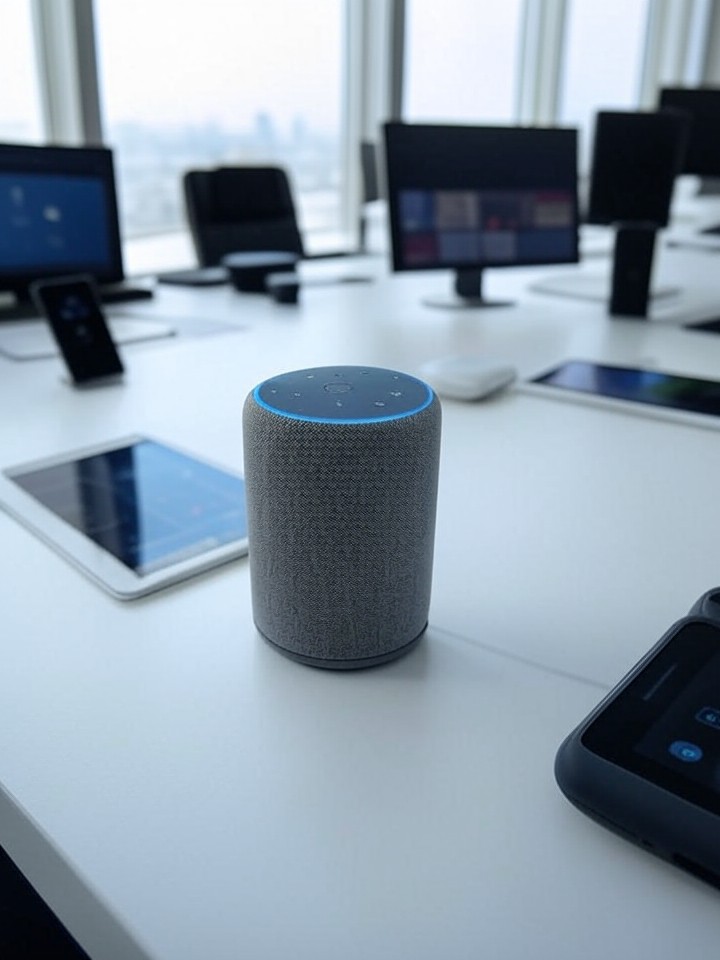
The Faded Promise of Speaking to Shop: Unraveling Voice Commerce’s Quiet Demise
In the mid-2010s, tech visionaries painted a future where shopping would be as simple as uttering a command to a virtual assistant. Devices like Amazon’s Alexa and Google’s Home were heralded as the gateways to seamless, hands-free purchasing, promising to revolutionize retail by turning conversations into transactions. Billions were projected in market value, with forecasts suggesting voice commerce could hit $40 billion by 2022. Yet, as we stand in 2026, that vision has largely evaporated, leaving industry insiders pondering what went wrong and whether a revival is possible.
The initial excitement stemmed from rapid advancements in speech recognition and artificial intelligence. Companies invested heavily, integrating voice tech into smart speakers and mobile apps, envisioning a world where consumers could reorder groceries or buy gadgets without lifting a finger. Early adopters embraced the novelty, but widespread adoption stalled. According to a recent analysis in Lifehacker, the hype around voice-activated shopping on platforms like Alexa collapsed under the weight of practical limitations, revealing broader lessons about technology predictions.
Digging deeper, consumer behavior played a pivotal role. People gravitated toward visual interfaces for shopping, where they could browse options, compare prices, and read reviews at a glance. Voice interactions, by contrast, felt linear and restrictive, often leading to frustration when assistants misunderstood commands or failed to provide sufficient details. Posts on X from tech observers in recent years echo this sentiment, noting that despite capabilities mimicking sci-fi interfaces, demand for voice-first shopping never surged as expected.
The Technological Hurdles That Stifled Growth
Accuracy issues plagued early voice systems, with accents, background noise, and ambiguous phrasing causing frequent errors. Even as AI improved, the shopping experience remained suboptimal. For instance, asking a device to “buy toothpaste” might result in a generic selection, devoid of the personalization shoppers crave. Industry reports highlight how these shortcomings eroded trust, with many users reverting to screens for complex purchases.
Privacy concerns further compounded the challenges. Voice devices, always listening, raised alarms about data security and surveillance. High-profile breaches and regulatory scrutiny, including EU data protection rules, made consumers wary of linking financial information to such systems. A 2025 study from Capital One Shopping revealed that while voice search grew modestly, actual transactions lagged, with only a fraction of users comfortable completing purchases verbally.
Moreover, integration with e-commerce ecosystems proved uneven. Not all retailers optimized for voice, leading to fragmented experiences. Big players like Amazon dominated, but smaller businesses struggled to adapt, limiting the technology’s reach. As one X post from a venture capitalist in 2025 noted, voice AI’s potential in enterprise settings outpaced consumer applications, suggesting a pivot away from retail toward business automation.
Shifting Consumer Habits and Market Realities
By 2024, statistics showed voice-enabled device ownership had plateaued, with adoption rates hovering around 40% in the U.S., per older surveys referenced in X discussions. The convenience factor, once a selling point, diminished as mobile apps and websites became more intuitive. Shoppers preferred the tactile feedback of scrolling and tapping, especially for high-value items where visualization is key.
Economic factors also influenced the trajectory. During the pandemic, online shopping boomed, but voice didn’t capture a significant share. Instead, visual platforms like Instagram and TikTok integrated shopping features, drawing users with immersive, image-driven experiences. A report from Grand View Research projected the voice commerce market to grow to $186 billion by 2030, yet this optimism contrasts with current stagnation, indicating that growth may stem from niche applications rather than mass adoption.
Challenges extended to accessibility. While voice tech promised inclusivity for the visually impaired, implementation fell short, with inconsistent support across languages and dialects. Industry insiders, as discussed in a 2026 GlobeNewswire release, point to opportunities in AI-driven personalization, but acknowledge that without addressing core usability issues, broad appeal remains elusive.
Lessons from Failed Predictions and Emerging Trends
Reflecting on the hype cycle, experts draw parallels to other overpromised technologies, like virtual reality’s slow mainstreaming. The voice shopping boom-and-bust cycle underscores the importance of aligning innovation with genuine user needs. As a recent X thread from tech analysts in 2026 observed, the lack of “killer apps” for consumer voice AI has led model developers to deprioritize voice modes, focusing instead on text-based interactions.
Looking ahead, some see potential in hybrid systems that combine voice with visual aids, such as augmented reality displays. Automotive voice AI, for example, is gaining traction, with a market expected to reach billions by 2036, according to a OpenPR overview. This suggests voice may thrive in contexts where hands-free operation is paramount, like driving, rather than general shopping.
Investment strategies are adapting accordingly. Venture firms, as highlighted in a 2025 GWI blog, emphasize trends like conversational AI for search over direct commerce, recognizing that while voice excels in quick queries, it falters in deliberative buying processes.
Regulatory and Ethical Considerations Shaping the Future
Governments are stepping in to address voice tech’s pitfalls. New laws on data privacy and AI ethics, including bans on certain surveillance features, could either hinder or refine the field. In fashion and retail, a 2026 Business of Fashion briefing notes an AI backlash, predicting that autonomous agents might revive voice in targeted ways, but only if trust is rebuilt.
Ethical dilemmas, such as bias in voice recognition, persist. Systems trained predominantly on standard accents often marginalize diverse users, a point raised in recent X conversations among developers. Addressing these requires inclusive datasets and transparent algorithms, potentially unlocking new markets in global regions.
Despite setbacks, pockets of innovation endure. Voice commerce finds footing in quick-replenishment scenarios, like reordering household staples via smart speakers. A Vocal Media piece from 2025 explores how conversational AI is transforming digital shopping in subtle ways, suggesting a quieter evolution rather than a dramatic takeover.
Innovation Pathways and Potential Revivals
Entrepreneurs are experimenting with voice in niche sectors. For instance, integrating it with smart home ecosystems for automated reordering based on usage patterns. This could mitigate discovery issues by leveraging predictive analytics, as discussed in a Sunflower Lab post forecasting enterprise trends through 2027.
Competition from emerging interfaces, like brain-computer links or gesture controls, poses additional threats. Yet, voice’s natural intuitiveness keeps it relevant. Industry observers on X argue that advancements in low-latency AI could make voice interactions feel more human-like, potentially reigniting interest.
For businesses, the key lies in hybrid strategies. Combining voice with multimodal inputs—voice plus screen confirmations—might bridge gaps. A 2024 OKMG blog outlined such trends, emphasizing personalized experiences that voice can enhance when paired with other tech.
Strategic Shifts for Retailers and Tech Giants
Retail giants are recalibrating. Amazon, once a voice pioneer, has scaled back aggressive promotions, focusing on ecosystem integration. Smaller players, per insights from a 2025 Technocratiq article, are advised to optimize for voice search to capture incidental traffic, even if full transactions remain rare.
The enterprise angle offers brighter prospects. Voice agents for customer service and internal operations are booming, with a16z’s 2025 X post highlighting scalable programmable voice for business transformation. This shift underscores how consumer failures can inform B2B successes.
Ultimately, voice shopping’s story is one of tempered expectations. While not dead, its role has narrowed, teaching the industry to prioritize user-centric design over flashy predictions. As tech evolves, voice may yet find its voice in shopping, but only through careful, iterative improvements.
Voices from the Field: Insider Perspectives
Interviews with developers reveal ongoing experiments. One engineer, speaking anonymously, noted that recent models handle context better, reducing errors in shopping dialogues. X posts from 2026, including those from AI enthusiasts, discuss deployments of voice agents that reason over knowledge bases, maintaining consistency without excessive deference.
Consumer sentiment, gleaned from social platforms, shows mixed feelings. Some lament the unfulfilled promise, while others appreciate voice for simple tasks. A Lifehacker piece from days ago reinforces this, attributing the collapse to overhyped expectations mismatched with real-world utility.
Looking globally, adoption varies. In Asia, where mobile commerce dominates, voice integrates differently, often via apps like WeChat. GlobeNewswire’s 2026 report identifies investment opportunities in AI-enhanced hands-free experiences, suggesting regional strategies could drive resurgence.
Navigating Uncertainty in a Post-Hype Era
The path forward involves balancing innovation with realism. Tech firms are investing in voice AI for non-retail uses, like healthcare assistants or educational tools, building expertise that could circle back to commerce.
Challenges like high development costs and competition from visual AI persist. Yet, as GWI’s 2025 trends indicate, voice search’s evolution points to shopping integrations that feel organic, not forced.
In this evolving domain, the quiet demise of voice shopping serves as a cautionary tale, urging insiders to focus on solving real problems rather than chasing futuristic fantasies. With AI advancing rapidly, the next chapter might still surprise us, blending voice seamlessly into daily commerce without the fanfare of yesteryear.


 WebProNews is an iEntry Publication