
AI’s Grip on Garbage: Virginia’s Bold Bet on Tech to Reshape Waste
In the heart of southeastern Virginia, a quiet revolution is underway that’s poised to redefine how America handles its trash. The Southeastern Public Service Authority (SPSA), responsible for waste management across eight communities serving 1.2 million residents, has inked a groundbreaking 20-year deal with AMP Robotics Corporation. This partnership, announced in late 2025, aims to deploy artificial intelligence-powered sorting technology on an unprecedented scale, potentially diverting half of the region’s municipal solid waste from landfills. For the last two years, the project has been processing 150 tons of waste daily through AMP’s innovative systems, a figure that will go up to 540,000 tons per year once the project fully ramps up.
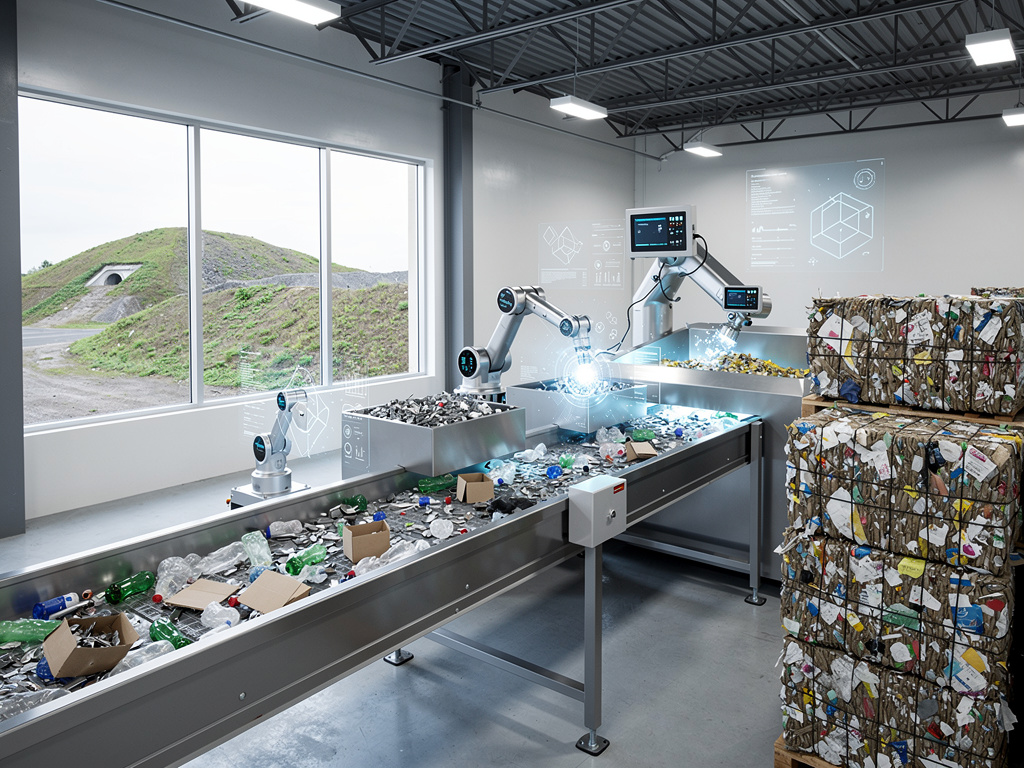
At the core of this initiative is AMP’s AI-driven sortation technology, which uses advanced robotics to identify and separate recyclables from mixed waste streams with remarkable precision. Unlike traditional methods that rely on manual labor or basic mechanical sorting, AMP’s systems employ computer vision and machine learning to recognize materials in real time, even amidst contaminants. This isn’t just an upgrade; it’s a fundamental shift toward automated, efficient waste processing that could set a new standard for the industry nationwide.
The deal comes at a critical time for waste management in the U.S., where landfills are filling up faster than ever, and recycling rates have stagnated around 32% according to federal data. SPSA’s move addresses these challenges head-on by integrating AI into every stage of waste handling, from collection to recovery. Officials estimate that the project will process municipal solid waste, recyclables, and organics, turning what was once destined for burial into valuable commodities like plastics, metals, and compost.
Scaling Up Innovation: How AI is Transforming Waste Streams in Real Time
The technology behind this venture, detailed in a recent feature by AMP, involves the AMP ONE system—a modular setup capable of handling massive volumes without the need for extensive infrastructure overhauls. This system can sort materials at speeds far exceeding human capabilities, identifying over 100 different categories of recyclables with accuracy rates above 95%. For SPSA, this means converting mixed trash into sorted streams that can be sold to manufacturers, creating a circular economy loop right in Virginia’s backyard.
Environmental benefits are compelling. By diverting 50% of waste from landfills, the initiative aligns with broader sustainability goals, reducing methane emissions—a potent greenhouse gas—from decomposing trash. Posts on X from industry watchers, including accounts like AMP’s official handle, emphasize how this project could inspire similar efforts elsewhere, with real-time sentiment reflecting optimism about AI’s role in combating climate change through better resource management.
Economic and Regulatory Forces Driving the Push for Advanced Recycling
Delving deeper, the project’s timing coincides with a surge in regulatory pressures and market demands for sustainable practices. Recent updates in food and beverage law, as outlined in Allens’ 2025 Food and Beverage Law Bulletin, point to stricter ACCC recycling schemes and ESG reforms that encourage companies to adopt circular models. In the U.S., similar trends are evident, with states like Virginia pushing for higher diversion rates to comply with federal guidelines on waste reduction.
AMP’s involvement isn’t isolated; it’s part of a broader wave of AI applications in waste management. News from Yahoo Finance notes that the contract follows AMP’s successful pilots in other regions, where AI has boosted recovery rates by up to 30%. For SPSA, this translates to processing not just household trash but also commercial waste, creating a comprehensive system that integrates with existing infrastructure like the regional landfill in Suffolk.
Critics, however, raise questions about the technology’s limitations. While AI excels at sorting clean streams, heavily contaminated waste can still pose challenges, requiring preprocessing steps. Industry insiders, drawing from discussions on platforms like X where users share updates on global waste innovations, note that scalability issues have plagued similar projects in the past, though AMP’s track record suggests they’ve addressed many of these hurdles.
From Landfill Lifelines to Community Impacts: Virginia’s Waste Evolution
The human element of this project can’t be overlooked. For the 1.2 million residents in SPSA’s service area, including cities like Norfolk and Virginia Beach, the shift means a simpler waste disposal process. By 2029, as covered in WAVY.com, households will transition to single-stream recycling, eliminating the need to separate trash and recyclables. This user-friendly change is expected to increase participation rates, which have historically lagged due to confusion over sorting rules.
Community feedback, gleaned from recent X posts, shows a mix of excitement and skepticism. Some users praise the innovation for its potential to create greener neighborhoods, while others worry about initial disruptions during the rollout. SPSA has responded by planning public education campaigns to smooth the transition, emphasizing transparency through real-time data on diversion metrics.
Global Context and Future Horizons: Lessons from Virginia’s Ambitious Model
Looking outward, this Virginia project stands out against international benchmarks. For instance, Shenzhen’s waste-to-energy plant, highlighted in X discussions by users like Godfree Roberts, processes 5,000 tons daily with advanced filtration, generating clean energy. While SPSA’s focus is on recycling rather than incineration, the parallels underscore a global trend toward tech-integrated waste solutions, with AI at the forefront.
Market projections add weight to the initiative’s potential. According to OpenPR, the U.S. advanced recycling market is set to reach $14.91 billion by 2032, growing at over 8% annually, driven by innovations like AMP’s. Similarly, the metal recycling sector, as per GlobeNewswire, is booming, with recovered metals from projects like this feeding into manufacturing supply chains.
Challenges remain, including regulatory hurdles around e-scrap exports, as noted in Resource Recycling. SPSA’s project must navigate these to ensure compliant handling of electronics, but AMP’s AI is designed to segregate such materials efficiently, minimizing risks.
Technological Edge and Industry Ripple Effects: Pioneering a New Era in Sustainability
Drilling into the tech, AMP’s systems leverage neural networks trained on millions of images to distinguish subtle differences in materials, such as various plastic types or paper grades. This precision, as explored in Recycling Product News, allows for higher purity in recovered commodities, fetching better market prices and incentivizing further investment.
The ripple effects extend to policy and investment. With SPSA’s success, other regions may follow suit, potentially accelerating adoption of AI in waste management across the U.S. X posts from accounts like Suthra Punjab highlight similar large-scale systems in Pakistan, recognized by Forbes as the world’s largest integrated waste network, offering lessons in rapid deployment that Virginia could emulate.
For industry insiders, the real value lies in data analytics. AMP’s platforms provide insights into waste composition, helping municipalities refine collection strategies. This data-driven approach could transform waste from a liability into an asset, fostering innovation in areas like bio-based materials and zero-waste goals.
Stakeholder Perspectives and Long-Term Viability: Building a Resilient Waste Framework
In a The AI Journal piece, experts note that the 20-year horizon allows for iterative improvements, such as software updates to handle emerging waste types like electric vehicle batteries.
Yet, long-term success hinges on adaptability. As global supply chains evolve, so too will waste streams, requiring ongoing R&D. X sentiment, including shares from NE Ohio Regional Sewer District on ash reuse, illustrates how diversified strategies can complement AI sorting, turning byproducts into resources.
Ultimately, Virginia’s venture with AMP represents a pivotal step toward sustainable waste practices, blending cutting-edge tech with practical economics to address one of society’s most persistent challenges. As the project ramps up, its outcomes could influence national standards, proving that intelligent machines might just be the key to cleaning up our act.


 WebProNews is an iEntry Publication