
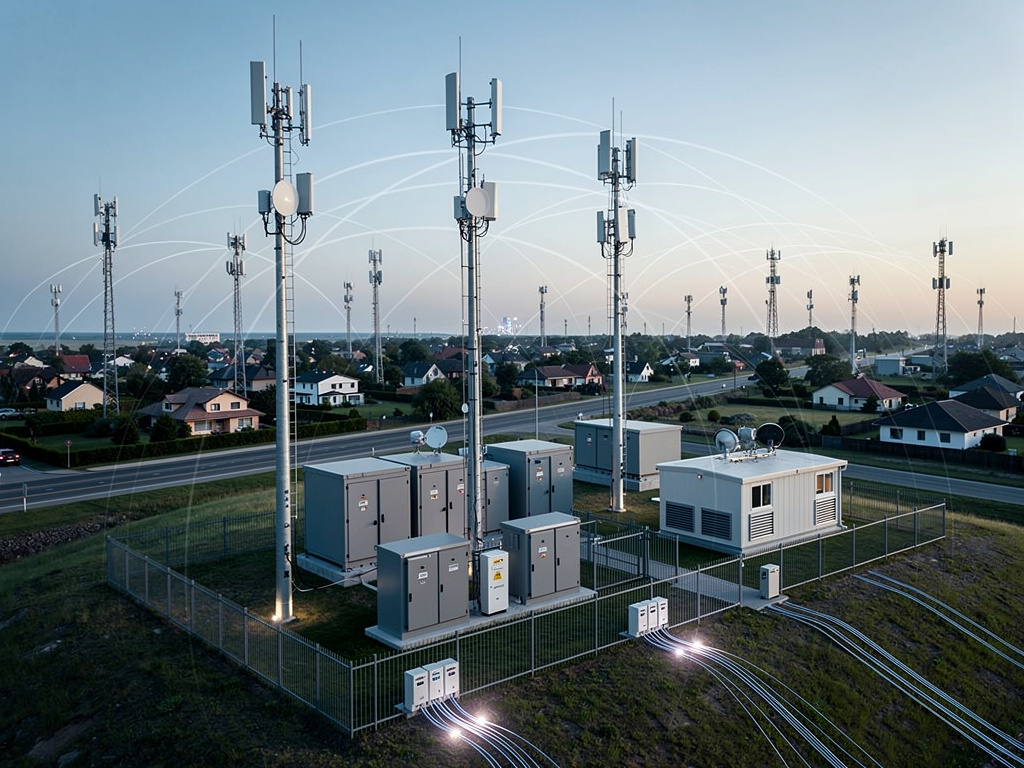
Verizon’s Tower Gambit: How a 4,400-Site Pact Could Redefine Wireless Dominance
In a bold move to fortify its position in the fiercely competitive wireless market, Verizon Communications Inc. has inked a multi-year agreement with Array Digital Infrastructure, granting the telecom giant access to 4,400 tower sites across the United States. This partnership, announced earlier this week, aims to enhance Verizon’s 5G network by leveraging Array’s infrastructure, which was formerly part of UScellular’s portfolio. The deal comes at a time when carriers are racing to expand coverage and improve service quality amid surging data demands from consumers and businesses alike.
Details of the agreement reveal that Verizon will collocate its equipment on these towers, allowing for greater flexibility in deploying advanced technologies without the immediate need to build new structures from scratch. This strategy not only accelerates rollout times but also helps control costs, a critical factor as the industry grapples with economic pressures and regulatory hurdles. According to reports, the pact includes provisions for Verizon to potentially add even more sites in the future, positioning the company to respond swiftly to evolving market needs.
Industry observers note that this move is part of Verizon’s broader efforts to close the gap with rivals like T-Mobile, which has aggressively expanded its mid-band 5G spectrum. By tapping into Array’s assets, Verizon could significantly boost signal strength in underserved areas, potentially improving customer satisfaction and retention rates. The timing is particularly noteworthy, as it follows Verizon’s recent spectrum acquisitions and network upgrades, signaling a comprehensive push toward nationwide 5G ubiquity.
Strategic Alliances in Telecom Infrastructure
The collaboration with Array, rebranded from its UScellular roots, underscores a growing trend among carriers to partner with independent tower operators rather than owning assets outright. This shift allows companies like Verizon to focus on core competencies such as service innovation and customer engagement, while outsourcing the capital-intensive aspects of infrastructure management. Financial analysts suggest that such deals can reduce operational expenditures by up to 20%, based on similar arrangements in the sector.
Verizon’s official statement emphasizes the benefits for end-users, promising enhanced network flexibility and faster deployment of future technologies like 6G precursors. “This agreement establishes a streamlined pricing structure on these new sites, providing greater cost efficiency and long-term stability,” noted a Verizon executive in a news release from Verizon. The partnership is expected to particularly strengthen coverage in rural and suburban regions, where tower density has historically lagged behind urban centers.
Comparisons to past deals highlight the scale of this initiative. For instance, Verizon’s earlier $3.3 billion transaction with Vertical Bridge in 2024 involved leasing rights to over 6,000 towers, a move that was praised for optimizing asset utilization. While that agreement focused on monetizing existing infrastructure, the Array pact is more forward-looking, emphasizing expansion and adaptability in a dynamic regulatory environment.
Competitive Pressures Driving Expansion
T-Mobile’s lead in 5G deployment has put pressure on Verizon to innovate aggressively. Recent data from industry benchmarks show T-Mobile holding an edge in average download speeds, prompting Verizon to invest heavily in infrastructure. The Array deal could help Verizon achieve parity by increasing the number of small cells and macro sites, essential for handling high-bandwidth applications like streaming and IoT devices.
Social media buzz on platforms like X reflects mixed sentiments about the announcement. Posts from telecom enthusiasts highlight optimism, with one user noting the potential for “closing the gap on T-Mobile’s mid-band dominance” in a thread discussing wireless updates. However, some consumers express skepticism, questioning whether the added towers will translate to noticeable improvements in service reliability, especially in areas plagued by outages.
Array Digital Infrastructure, now a standalone entity post its separation from UScellular, brings a robust portfolio to the table. The company’s towers are strategically located to support multi-carrier operations, making them attractive for colocation. This deal marks one of Array’s first major partnerships since its rebranding, potentially setting the stage for similar agreements with other operators seeking to optimize their networks.
Economic Implications and Cost Efficiencies
From a financial perspective, the agreement is poised to deliver substantial savings for Verizon. By leasing rather than building, the company avoids the hefty upfront costs associated with new tower construction, which can exceed $250,000 per site in some regions. Analysts at firms like Fierce Network estimate that this could free up capital for other investments, such as fiber optic expansions or AI-driven network management tools.
The pact also aligns with broader industry shifts toward sustainability. Tower colocation reduces the environmental footprint by minimizing the need for new builds, which often involve land disruption and high energy consumption during construction. Verizon has committed to green initiatives, and this deal supports those goals by maximizing the use of existing structures.
Looking ahead, the success of this partnership will depend on seamless integration. Challenges could arise from regulatory approvals or technical hurdles in equipment deployment, but early indications suggest a smooth rollout. Verizon’s track record with similar ventures, including its Vertical Bridge deal, bodes well for execution.
Network Flexibility and Future Tech Readiness
One of the key advantages touted in the agreement is the enhanced flexibility it provides for Verizon’s 5G ecosystem. With access to these 4,400 sites, the carrier can more easily implement dynamic spectrum sharing and edge computing capabilities, crucial for emerging applications in autonomous vehicles and smart cities. This positions Verizon not just as a service provider but as an enabler of next-generation technologies.
Insights from Fierce Network detail how the deal allows Verizon to “enhance 5G network flexibility and customer experience,” drawing parallels to Array’s evolution from UScellular. The publication notes that Array’s towers are optimized for high-capacity usage, which could help Verizon address pain points like network congestion during peak hours.
Customer experience remains a focal point. Verizon has faced criticism for service disruptions in the past, as evidenced by social media complaints about outages. This tower expansion could mitigate such issues by increasing redundancy and coverage overlap, ultimately leading to fewer dropped calls and faster data speeds.
Rival Responses and Market Dynamics
Competitors are not standing idle. AT&T, for example, recently announced its own spectrum deals and infrastructure investments, aiming to bolster its fiber and wireless convergence strategy. A report from 24/7 Wall St. contrasts Verizon’s approach with AT&T’s, highlighting how Verizon’s tower strategy complements its dividend hikes and customer-first initiatives under new leadership.
On X, industry insiders are abuzz with speculation about potential ripple effects. Posts suggest that this could trigger a wave of similar partnerships, with smaller carriers possibly following suit to remain competitive. One viral thread even links the deal to broader telecom mergers, referencing Verizon’s past spectrum leases with entities like AST SpaceMobile for satellite integration.
For Array, the agreement validates its business model as a neutral host provider. By securing a major tenant like Verizon, Array gains revenue stability and credibility, which could attract additional clients. This symbiotic relationship exemplifies how infrastructure players are becoming pivotal in the wireless ecosystem.
Challenges and Opportunities Ahead
Despite the optimism, hurdles remain. Integrating equipment across thousands of sites requires meticulous planning to avoid service interruptions. Regulatory scrutiny from bodies like the FCC could delay timelines, especially if antitrust concerns arise in concentrated markets.
Opportunities abound, however. The deal could catalyze innovation in areas like private 5G networks for enterprises, where reliable infrastructure is paramount. Verizon’s emphasis on cost efficiency might also enable more aggressive pricing strategies, potentially sparking a price war that benefits consumers.
Industry experts predict that by 2027, such colocation deals will account for over 40% of new tower deployments in the U.S., driven by the need for denser networks to support AI and metaverse applications. Verizon’s proactive stance with Array positions it well to capitalize on these trends.
Investor Perspectives and Long-Term Outlook
Investors have responded positively to the news, with Verizon’s stock seeing a modest uptick following the announcement. The deal is viewed as a prudent capital allocation move, especially in light of economic uncertainties. Dividend-focused shareholders appreciate the stability it brings, as highlighted in analyses comparing Verizon’s strategy to peers.
Drawing from Data Center Dynamics, the partnership is described as “another tower colocation deal for Verizon,” underscoring its pattern of strategic leasing to fuel 5G expansion. This approach not only mitigates risks associated with asset ownership but also enhances scalability.
As the wireless sector evolves, Verizon’s tower gambit with Array could prove transformative, reshaping how carriers build and maintain networks. By prioritizing partnerships over proprietorship, Verizon is betting on collaboration to drive growth, a strategy that may well define the next era of connectivity. With implementation underway, the true impact will unfold in the coming months, potentially setting new benchmarks for network performance and efficiency.


 WebProNews is an iEntry Publication