
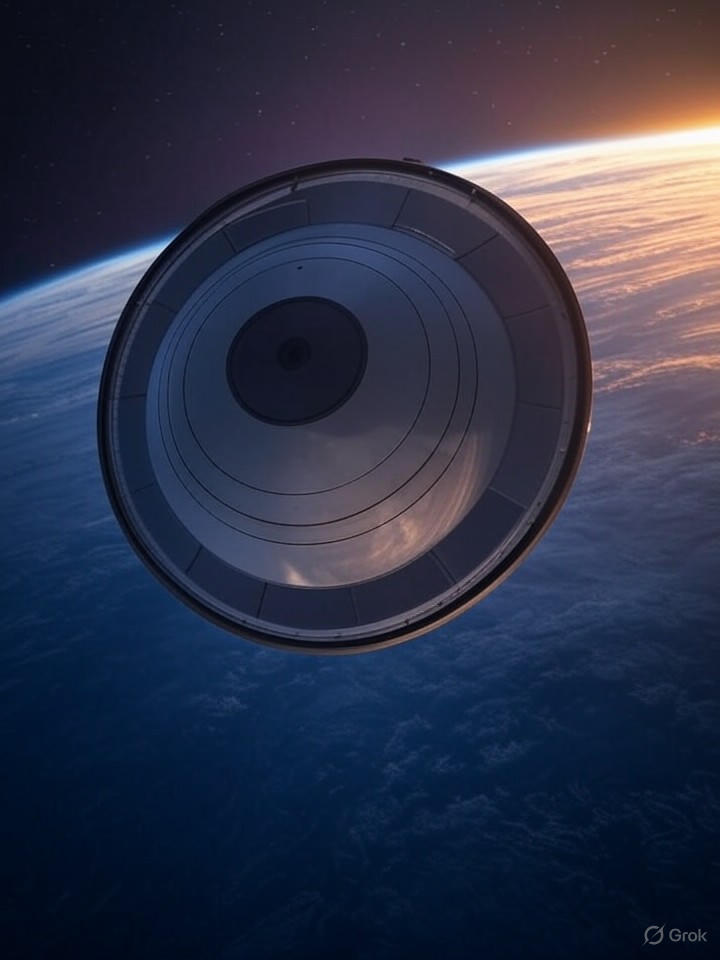
In a significant milestone for the burgeoning private space sector, Vast, a California-based startup, has successfully deployed its first orbital module, marking what company executives describe as a crucial “foothold” in space. The module, launched aboard a SpaceX Falcon 9 rocket, represents the initial step in Vast’s ambitious plan to build and operate a fully commercial space station by 2026. Unlike traditional government-led projects, this initiative underscores a shift toward privatized habitats in low Earth orbit, potentially reshaping how humans live and work beyond our planet.
The deployment occurred without major hitches, with the module achieving stable orbit and beginning basic operations, including power generation and communication tests. Vast’s approach emphasizes iterative demonstrations, starting small to mitigate risks before scaling up—a strategy that sets it apart from competitors racing to replace the aging International Space Station (ISS), which is slated for deorbiting around 2030.
A Differentiated Path to Orbital Ambition
What makes Vast’s strategy particularly noteworthy for industry observers is its focus on progressive complexity. As detailed in a recent report by Ars Technica, the company is flying a series of demos that build upon each other, allowing for real-world data collection and refinements. This contrasts with peers like Axiom Space or Blue Origin, which often pursue larger, more integrated prototypes from the outset.
Funding for Vast has been robust, with investments nearing $1 billion, including backing from cryptocurrency billionaire Jed McCaleb. The startup’s timeline is aggressive: following this initial module, Vast plans to launch its Haven-1 station in 2026, capable of hosting crews for extended stays. Partnerships with SpaceX for launches have been pivotal, providing reliable access to orbit at a fraction of historical costs.
Challenges and Competitive Dynamics
Yet, hurdles remain. Orbital debris, regulatory approvals from bodies like the Federal Aviation Administration, and the technical challenges of life support systems in microgravity pose ongoing risks. Vast’s executives acknowledge these, emphasizing their demo-driven model as a hedge against failures that have plagued other ventures.
Comparisons to historical precedents are inevitable. As noted in coverage by CNN, Vast aims to be the world’s first operational commercial station, potentially opening doors to tourism, research, and manufacturing in space. This echoes NASA’s pivot under recent leadership to foster private replacements for the ISS, with contracts awarded to multiple firms to ensure redundancy.
Broader Implications for Space Commerce
The foothold achieved by Vast could accelerate commercialization trends, from pharmaceutical development in zero gravity to data centers in orbit, as explored in analyses by Ars Technica. Industry insiders point to potential revenue streams exceeding billions annually, driven by private clients rather than government subsidies.
Critics, however, warn of overoptimism. Past announcements, such as Vast’s 2023 partnership with SpaceX detailed in TechCrunch, have seen timelines slip, highlighting the sector’s volatility. Still, with this module now operational, Vast is positioning itself as a frontrunner in a post-ISS era.
Looking Ahead: Innovation and Uncertainty
For aerospace engineers and investors, Vast’s progress signals a maturing ecosystem where startups can challenge established players. The company’s next milestones include crewed missions and module expansions, potentially integrating technologies like advanced robotics for in-orbit assembly.
Ultimately, this development may democratize space access, but success hinges on execution. As the private sector steps up, the coming years will test whether Vast’s foothold evolves into a thriving orbital outpost or joins the annals of ambitious but unrealized visions.


 WebProNews is an iEntry Publication