
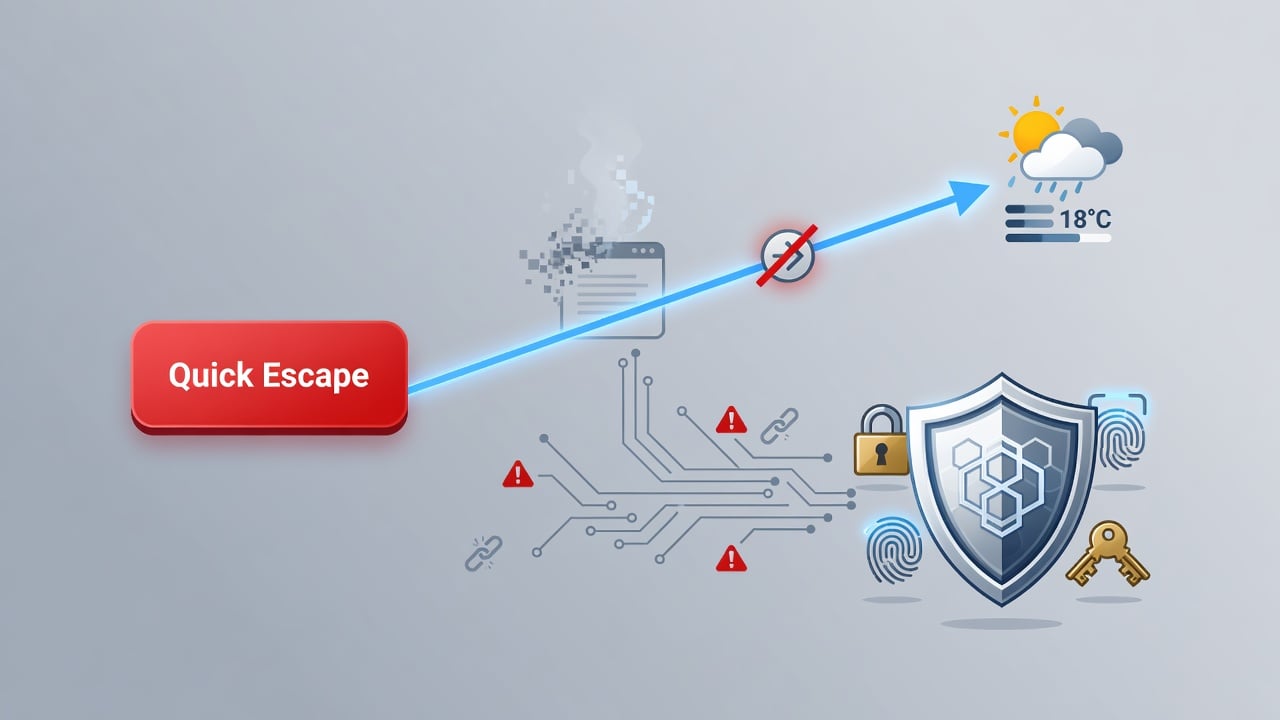
Police websites rarely make headlines for design choices. Yet the Vancouver Police Department’s prominent red button has drawn notice. It promises a fast way out. One click and the page vanishes. The site disappears from browser history. The back button stops working. Users land on a neutral weather page instead.
Vancouver Is Awesome first highlighted the feature in April 2024. VPD spokesperson Sgt. Steve Addison explained its goal. “It exists mainly to give victims of crime, or others who want to discretely visit our website, an opportunity to quickly click away and go to another site if they don’t want someone else to see what they’re looking at.” Simple. Direct. And aimed at those living in fear.
The button sits at the bottom right. It stays visible while scrolling. Works on phones and computers alike. Press it. The screen switches to Environment Canada’s weather forecast. No trace left in the history list. At least that’s the claim. Such tools matter when every second counts.
Visit vpd.ca today. Right at the top sits the prompt. “Need to leave site for your safety?” Below it, “Quick Escape.” The link redirects to Google.ca on the homepage. On the intimate partner violence page it follows the same pattern. These pages detail threats. Intimidation. Physical harm. Sexual assault. They list resources for those ready to report.
And the need is real. Domestic violence remains a persistent crisis. Victims often share devices with abusers. Partners check phones. They monitor browsers. One wrong tab can trigger violence. The button offers cover. It buys time. It reduces immediate risk of discovery.
But does it fully wipe the site from history? The Vancouver Is Awesome report says yes. The site does not show in browser history when the button activates. Back navigation fails. That design choice stands out. Few police agencies offer anything similar.
Other organizations have adopted comparable features. Columbia Health displays a persistent red Quick Escape button. Click it and users reach the Weather Channel. The site warns about monitoring. It advises safer computer habits. Delete history carefully. Use private browsing. Avoid raising suspicion with a blank log.
Columbia Health stresses a key point. These buttons provide cover but carry limits. They redirect. They may block easy return. Yet sophisticated monitoring tools can still reveal activity. Abusers with access might recover data. The button buys moments. It does not guarantee invisibility.
A 2025 post from House of Grace Domestic Violence Services drives this home. “While the exit button provides immediate safety, it does not erase your browsing history.” Someone with device access could still see visits. The article appeared on houseofgracedv.org in August 2025. It urges broader digital awareness. Change routines. Use incognito when possible. Clear data only if safe.
Tech Safety experts echo the caution. The Safety Net Project at techsafety.org notes many sites now carry these prompts. They help when an abuser enters the room. Yet they cannot stop remote tracking or history review. Users must combine the button with other steps. Sign out of accounts first. Consider separate devices if feasible.
Academic reviews question effectiveness too. A paper presented at CHI 2023 evaluated quick exit implementations. It found added burdens on support services. Inconsistent behavior across sites confuses users. Some buttons open new tabs with neutral content. Others replace the current page. Results vary. The ACM Digital Library entry highlights how design details affect real safety outcomes.
Still, the VPD version improves on basic redirects. By removing the site from history and disabling back navigation, it addresses a common failure point. Reddit discussions among web developers reveal frustration. One thread from early 2023 asked how to make escape buttons also clear cache. Contributors working with abuse agencies called it a frequent shortcoming. The VPD approach appears to tackle part of that gap.
Whistleblowers face parallel risks. Corporate sites or government portals can expose them. A single visit to reporting resources might alert supervisors. The same button logic applies. Quick exit. Clean exit. Reduced digital footprint. Law enforcement sites that serve both victims and informants gain from such tools.
Canadian federal resources include similar aids. The Department of Justice page on family violence offers a quick escape option. It redirects users away from sensitive content. Government of Canada guidance stresses coordinated responses. Victim services work with police. Safety plans come first.
Recent coverage shows the feature’s reach. In late 2025, news outlets reported on rideshare drivers intervening in domestic incidents involving Vancouver police. Those stories underscore ongoing dangers. A driver rammed while helping a victim escape. Video evidence circulated widely. Such events remind why discreet information access matters.
Critics argue one button cannot solve systemic problems. Abusers adapt. They install tracking apps. They demand passwords. They check devices at night. The escape tool serves as first line defense. Not the only one. Experts recommend layered strategies. Private browsing. Separate email accounts. Trusted friends who can receive messages.
VPD pairs the button with concrete help. Its intimate partner violence page lists hotlines. Battered Women’s Support Services offers 24-hour lines. Victim Link BC provides province-wide support. Non-emergency police lines accept reports. The department follows a policy of mandatory arrest in many cases. It participates in coordinated community responses.
Yet gaps persist. Not every visitor feels safe calling from home. The button lets them browse first. Gather information. Decide next steps without immediate exposure. That breathing room carries value. Especially for those in coercive control situations where even phone calls risk retaliation.
Implementation details matter. The VPD button uses simple redirection. No complex JavaScript that might fail on older devices. It persists across pages. Mobile compatibility stands out as users increasingly rely on phones. These choices reflect practical thinking about real user scenarios.
Other cities have followed. Some police departments added similar features after seeing early adopters. A few chose weather sites. Others picked news outlets or shopping pages. The goal stays consistent. Make the switch look ordinary. Avoid anything that screams “I was seeking help.”
Limitations deserve plain talk. The button cannot defeat keyloggers. It cannot hide traffic from network monitors. Shared WiFi or workplace devices leave other traces. Advanced abusers might notice sudden weather page visits. Patterns can still betray users. So the tool works best alongside education.
Organizations like the White Hatter offer analysis. Their 2024 post argued quick exit banners could improve. Better placement. Clearer instructions. Integration with safety checklists. The piece called for evolution beyond basic redirects. The White Hatter suggested pairing buttons with pop-up safety reminders.
Design firm Oomph built a Drupal module for quick exit after client work. Their 2023 insights detailed challenges. Different audiences need different behaviors. One site served both general users and abuse survivors. The team open-sourced their solution. It shows growing technical attention to the problem.
Georgia Tech’s Equal Opportunity office explains the concept plainly. Click the bar or press X. The page reloads to weather.com. Back button disabled. Their version targets students and staff facing harassment or stalking. The same principles travel across sectors.
Back at VPD headquarters the button reflects broader awareness. Police see the digital dimension of abuse daily. Reports come through online forms. Tips arrive via email. Yet fear keeps many silent. A visible escape route signals understanding. It says the department gets it. Your safety comes first. Even online.
Future updates may add more. Some envision buttons that also clear recent cache. Others call for integration with panic modes that alert trusted contacts. For now the simple version delivers. One tap. New page. No trace. Enough to escape notice and regroup.
Victims, informants, and anyone with something to hide gain an ally. The red button does not solve abuse. It does not replace hotlines or shelters. But it removes one barrier. It makes seeking information less dangerous. In a domain where control is everything, that small freedom counts.
Advocates continue pushing for better. More agencies should adopt the feature. They should test it rigorously. They should pair it with clear warnings about its limits. Because false security helps no one. The VPD button sets a standard. Others would do well to match it. And improve upon it where possible.


 WebProNews is an iEntry Publication