
Valve has filed new documents with the Federal Communications Commission that point to an imminent release of its long-awaited Steam Machine hardware. According to details uncovered in the filing reported by The Next Web, the company expects to begin shipping the Linux-based gaming devices on June 29. The disclosure marks a significant milestone for a project that has generated considerable attention since its announcement last year.
The FCC documents describe a compact computer system designed specifically for living-room gaming. Valve submitted testing data for both the hardware itself and its accompanying wireless controller. Engineers at the agency reviewed radio emissions from the device to ensure compliance with federal standards before it can be sold to consumers. These routine approvals often precede product launches by only a few weeks, which explains the specific June 29 date listed in the paperwork.
Steam Machines represent Valve’s ambitious attempt to extend its popular Steam digital distribution platform beyond traditional personal computers. The company envisions these devices as dedicated consoles that connect directly to televisions, allowing players to access their entire Steam libraries from the couch. Unlike conventional game consoles, however, Steam Machines run a customized version of the Linux operating system and support a wide range of user modifications.
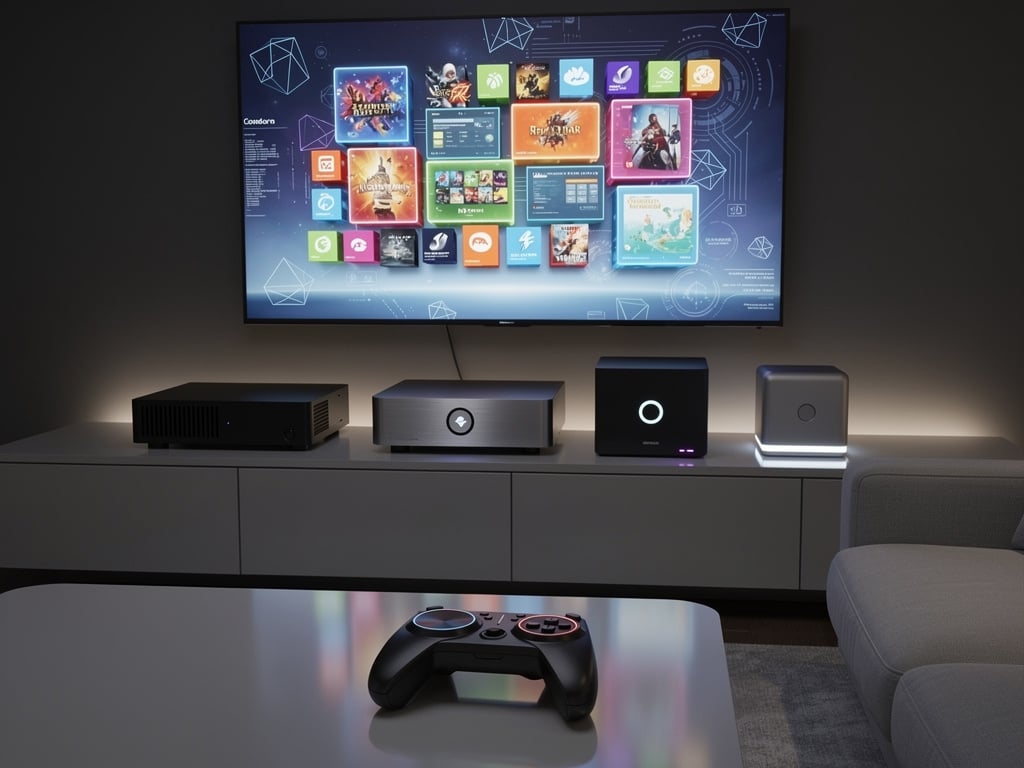
The hardware itself comes from multiple manufacturing partners rather than a single unified design. Different companies will produce models with varying specifications, price points, and performance levels. Some versions will target budget-conscious buyers with modest graphics capabilities while others will incorporate high-end components capable of running demanding modern titles at high resolutions and frame rates. This flexible approach differs markedly from the standardized specifications that define products like the PlayStation or Xbox.
At the center of the Steam Machine experience sits the SteamOS operating system. Built on a Linux foundation, SteamOS aims to provide a console-like interface that hides much of the underlying complexity of traditional computing. Users navigate menus using the controller rather than a mouse and keyboard, though both input methods remain fully supported for those who prefer them. The system automatically handles updates, installations, and library management through the familiar Steam client interface.
Valve has invested heavily in encouraging developers to support Linux through its Steam platform. The company offered financial incentives and technical assistance to studios willing to port their games to the operating system. While the initial library of native Linux titles was relatively small, the number of compatible games has grown steadily. Many Windows titles also run through compatibility layers like Proton, which translates DirectX calls to Vulkan and allows non-native software to function with minimal performance loss.
The wireless controller mentioned in the FCC filing deserves particular attention. Valve designed this input device from the ground up to address perceived shortcomings of traditional gamepads when playing PC games. The controller features two trackpads positioned where analog sticks would normally sit. These trackpads provide haptic feedback and can be configured to emulate mouse movement, precise aiming, or traditional directional controls depending on the game. Physical buttons and triggers complete the layout, creating a hybrid device that attempts to bridge the gap between console controllers and PC peripherals.
Early demonstrations of the controller have shown promising results. Players report that the trackpads offer satisfying tactile response and can be tuned to feel remarkably similar to using a mouse on a desktop. This capability could prove especially valuable for strategy games, first-person shooters, and other genres that traditionally favor keyboard and mouse controls. The controller also includes a built-in gyroscope for motion-based input, expanding the range of possible control schemes.
Power consumption and thermal management presented significant challenges during development. Because Steam Machines must operate quietly in living rooms rather than dedicated computer rooms, engineers focused extensively on creating efficient cooling solutions. The final designs incorporate large heat sinks and carefully engineered airflow paths that maintain reasonable noise levels even under heavy gaming loads. Some models may include user-adjustable fan curves that allow owners to prioritize either silence or maximum performance.
The June 29 launch date carries additional significance because it aligns with the start of the summer Steam sale, one of the platform’s largest annual events. By timing the hardware release with this promotion, Valve can encourage potential buyers to purchase both the device and a selection of games at discounted prices. The strategy mirrors how traditional console manufacturers often coordinate new hardware launches with major software releases to create immediate value for early adopters.
Pricing remains one of the most discussed aspects of the Steam Machine initiative. Because multiple manufacturers will produce different configurations, customers will face a range of options from entry-level systems around $500 to premium builds exceeding $2000. This variety allows consumers to select hardware that matches both their budgets and performance expectations. However, the lack of a single standard price point has created some confusion in early discussions about the platform’s market positioning.
Valve has emphasized that Steam Machines should be viewed as an additional way to enjoy Steam content rather than a replacement for traditional gaming PCs. The company continues to support Windows and Mac versions of its client software and has shown no intention of abandoning those platforms. Instead, the new hardware expands the potential audience by appealing to users who prefer a dedicated living-room device over a general-purpose computer.
The broader implications for the PC gaming industry could prove substantial. If Steam Machines achieve meaningful market penetration, they might encourage more developers to optimize their titles for controller-based play and lower resolutions typical of console experiences. This shift could help narrow the gap between PC and console development practices that has persisted for decades. At the same time, the open nature of the platform allows tinkerers and enthusiasts to modify both hardware and software in ways that closed console systems prohibit.
Technical support represents another area where Steam Machines differ from traditional consoles. Because the devices run a full operating system and support user modifications, troubleshooting may occasionally require more technical knowledge than simply restarting a console. Valve has worked to minimize these complications by creating streamlined recovery tools and extensive documentation. The company also maintains active community forums where users share solutions to common problems.
Graphics performance will vary considerably across the different Steam Machine models. Entry-level versions equipped with integrated graphics chips will handle older titles and less demanding modern games adequately but may struggle with the latest releases at high settings. Higher-end configurations featuring dedicated graphics cards from AMD and NVIDIA will deliver experiences comparable to mid-range gaming PCs. This performance spectrum allows the platform to serve both casual and hardcore audiences, though it requires careful marketing to set appropriate expectations.
The FCC filing itself contains limited technical specifications beyond what was already known. However, the documents confirm that the devices will support both wired and wireless networking capabilities. Built-in Bluetooth and Wi-Fi modules will enable easy connection to home networks and peripheral devices. The inclusion of multiple USB ports provides additional flexibility for attaching external storage, keyboards, or other accessories.
Looking ahead, the success of Steam Machines will likely depend on several factors. The quality of the user experience upon first unboxing will prove critical. If setup proves overly complicated or the interface feels confusing, many potential customers may return to their existing consoles or PCs. Conversely, if Valve delivers on its promise of console-like simplicity combined with extensive game libraries, the devices could attract significant interest from consumers seeking alternatives to traditional gaming hardware.
The Linux foundation of SteamOS offers both advantages and challenges. On one hand, the open-source nature allows for extensive customization and avoids licensing fees associated with other operating systems. On the other hand, driver support and software compatibility have historically lagged behind Windows. Valve has dedicated substantial resources to addressing these gaps, including hiring key Linux kernel developers and working directly with hardware manufacturers to improve support.
Community reception to the Steam Machine concept has been mixed but generally positive among PC enthusiasts. Many appreciate the company’s willingness to experiment with new form factors and input methods. Others express skepticism about whether consumers will embrace yet another gaming platform in an already crowded market. The coming months will reveal whether these experimental devices can establish a sustainable niche or if they will remain a curiosity for dedicated fans of the Steam platform.
The wireless controller may ultimately prove more influential than the Steam Machine hardware itself. Its innovative design addresses long-standing complaints about PC gaming on televisions. If the controller gains widespread adoption, it could influence future input device development across the industry. Several other manufacturers have already begun exploring similar hybrid approaches that combine elements of traditional controllers with precision pointing capabilities.
Manufacturing partners working with Valve include both established computer builders and newer entrants to the gaming hardware space. This collaborative approach allows the project to benefit from existing expertise in small form factor design while introducing fresh perspectives on living-room computing. Each partner will handle its own marketing, distribution, and customer support, creating a decentralized model quite different from the tightly controlled ecosystems of major console manufacturers.
As the June 29 launch date approaches, anticipation continues to build within the PC gaming community. The FCC filing provides concrete evidence that development has progressed to the final stages of regulatory approval and production. While questions about pricing, performance, and market reception remain, the imminent availability of these devices marks an important moment in the ongoing evolution of digital entertainment hardware. Valve’s experiment with Steam Machines could either validate a new approach to PC gaming or serve as a valuable learning experience that informs future initiatives in the space. Either way, the project has already succeeded in sparking meaningful conversations about how and where people choose to play their games.


 WebProNews is an iEntry Publication