
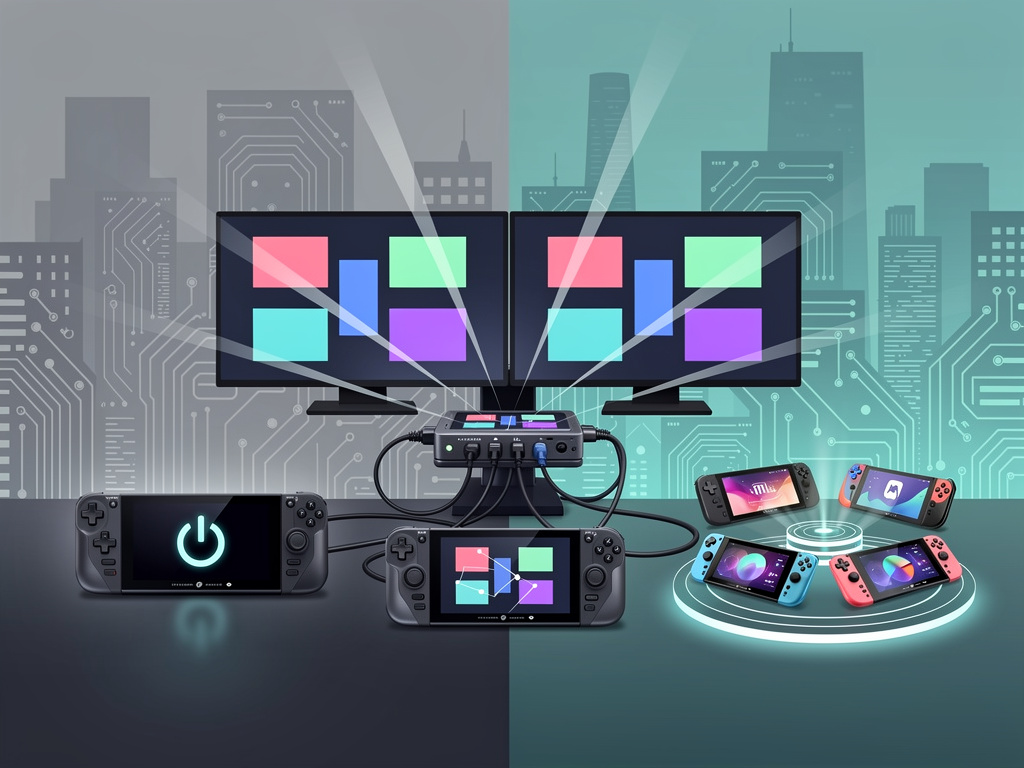
Valve just made its boldest move yet to become the default operating system for handheld gaming PCs — and possibly much more. The release of SteamOS 3.8, announced on June 26, 2025, brings a long list of technical improvements to the Steam Deck. But the real story isn’t about one device. It’s about Valve positioning SteamOS as a serious competitor to Windows in a hardware category that barely existed three years ago.
The update, reported by The Verge, introduces hibernation support for the Steam Deck OLED, a feature that lets the device save its state to the SSD and fully power down rather than merely sleeping. That means near-zero battery drain while the device sits idle — a capability Windows handhelds have struggled to deliver reliably. It’s the kind of feature that sounds minor on paper but changes how people actually use a portable device day to day.
There’s more under the hood. SteamOS 3.8 adds external display support at up to 1440p and 120Hz when docked, improved Bluetooth reliability, better support for third-party controllers, and a reworked audio pipeline. Valve also expanded its non-Deck hardware compatibility, officially supporting the Lenovo Legion Go S as the first third-party device to ship with SteamOS, while adding beta support for the ASUS ROG Ally and ROG Ally X.
That last detail matters enormously.
For years, Valve’s Linux-based operating system was tightly coupled to its own hardware. The Steam Deck launched in February 2022 as a vertically integrated product — Valve’s hardware, Valve’s software, Valve’s storefront. It worked because Valve controlled the full stack. But the company has been telegraphing a broader ambition since at least early 2025, when it began releasing SteamOS builds compatible with select third-party handhelds. SteamOS 3.8 accelerates that strategy considerably.
The ASUS ROG Ally and Ally X are particularly significant targets. These are Windows-based handhelds that have sold well but suffer from an awkward software experience — Windows 11 was never designed for a seven-inch touchscreen with gamepad controls. Users have long complained about clunky navigation, poor sleep/wake behavior, and the overhead of a full desktop OS consuming resources on hardware with tight thermal and power budgets. SteamOS, built from the ground up for exactly this form factor, addresses nearly all of those pain points.
Valve’s approach here mirrors what Google did with Android in the smartphone era: build the reference hardware yourself, prove the concept, then let the OS spread to other manufacturers. The Steam Deck is the Nexus phone. The Lenovo Legion Go S running SteamOS is the first sign that OEMs see value in adopting Valve’s platform rather than fighting Windows into a form factor it wasn’t made for.
And Valve isn’t stopping at handhelds. The company has confirmed that a new generation of Steam Machines — living room PCs designed to compete with traditional consoles — is in development. The original Steam Machines, launched in 2015, were a commercial failure. The hardware was overpriced, the software wasn’t ready, and the game compatibility layer (SteamOS was based on Debian at the time, with limited Windows game support) couldn’t deliver on the promise of a console-like experience. Valve pulled the plug quietly.
A decade later, the conditions have changed dramatically. Proton, Valve’s compatibility layer built on Wine, now runs the vast majority of popular Steam titles on Linux with minimal performance loss. The Steam Deck proved that millions of consumers would accept a Linux-based gaming device if the experience was good enough. And the living room PC concept has fresh relevance as console generations stretch longer and PC hardware costs decline.
The Verge noted that SteamOS 3.8 includes improvements specifically aimed at the Steam Machine use case, including better support for external displays, enhanced controller compatibility, and performance optimizations for docked or desktop configurations. Valve designer Lawrence Yang has publicly discussed the company’s vision for SteamOS as a platform that works across handhelds, living room boxes, and potentially even standard desktop PCs.
The hibernation feature in SteamOS 3.8 deserves closer technical scrutiny. Traditional sleep modes on the Steam Deck kept the device in a low-power state with RAM still energized. This worked, but battery drain over days or weeks was noticeable. Hibernation writes the entire contents of RAM to the SSD, then powers the device off completely. When the user wakes it, the system reads the saved state back into memory and resumes exactly where it left off. It’s functionally identical to sleep from the user’s perspective, but with essentially zero power consumption while hibernating.
This is standard fare on laptops running Windows or macOS. But implementing it cleanly on a Linux-based handheld gaming device — where games may have active GPU states, audio streams, and network connections that all need to be preserved and restored — is a nontrivial engineering problem. Valve apparently limited the initial rollout to the Steam Deck OLED, suggesting the original LCD model may have hardware or firmware constraints that complicate the feature. The company hasn’t confirmed whether hibernation will come to the older hardware.
Bluetooth improvements in 3.8 are also worth noting for what they reveal about Valve’s priorities. The Steam Deck has historically been finicky with certain Bluetooth audio devices and controllers, a frustration for users who want to pair wireless earbuds or use non-Steam controllers. Better Bluetooth support signals that Valve is thinking about SteamOS as a general-purpose platform, not just a locked-down gaming appliance.
So where does this leave Microsoft? The company finds itself in an unusual position. Windows dominates PC gaming on desktops and laptops. But in the handheld space, its operating system is increasingly seen as a liability rather than an asset. The ASUS ROG Ally launched with Windows 11 and immediately drew criticism for its software experience. Lenovo chose to ship the Legion Go S with SteamOS rather than Windows. If more OEMs follow, Microsoft could lose its grip on an emerging hardware category before it fully matures.
Microsoft has shown limited interest in building a handheld-optimized version of Windows. The company’s focus has been on cloud gaming through Xbox Game Pass and on bringing Xbox games to more platforms, including PC and mobile. A lightweight, handheld-friendly Windows SKU has been rumored but never materialized. Every month that passes without one gives Valve more room to entrench SteamOS as the default.
There are limitations to Valve’s platform play, of course. SteamOS is fundamentally tied to the Steam storefront. Games purchased on the Epic Games Store, GOG, or other platforms can sometimes be run through workarounds, but the experience isn’t first-class. This creates a walled garden of sorts — ironic for an open-source Linux distribution, but commercially logical for a company that earns a 30% cut on every Steam sale. If SteamOS becomes the dominant OS for handheld PCs, Valve’s storefront becomes even more powerful, and competitors like Epic will have legitimate complaints about platform lock-in.
There’s also the question of anti-cheat software. Many competitive multiplayer games use kernel-level anti-cheat systems like Easy Anti-Cheat and BattlEye, which have been slow to support Linux. Valve has made progress here — both EAC and BattlEye now offer Proton-compatible modes — but some major titles still don’t work on SteamOS. For a casual single-player gamer, this is irrelevant. For someone who wants to play Fortnite or Destiny 2 on their handheld, it’s a dealbreaker.
Valve’s track record with long-term platform commitments is also mixed. The company abandoned the original Steam Machines. It discontinued the Steam Controller. The Steam Link hardware was replaced by a software app. Valve has a pattern of launching ambitious hardware projects and walking away when they don’t gain immediate traction. The Steam Deck has been the exception — it’s Valve’s most successful hardware product by a wide margin — but OEMs considering SteamOS adoption have to weigh the risk that Valve could lose interest.
Still, the momentum right now is undeniable. The handheld PC market is growing fast, with analysts estimating shipments could reach 10 million units annually within the next few years. Every major PC hardware manufacturer — ASUS, Lenovo, MSI, Acer — either has a handheld in the market or is developing one. The operating system question is wide open. Windows is the incumbent but a poor fit. SteamOS is purpose-built but tied to one storefront. Something has to give.
SteamOS 3.8 is available now as a stable release for Steam Deck owners. Third-party device support remains in beta, accessible through Valve’s SteamOS download page. The update can be installed via the system settings menu on existing devices or flashed to new hardware using a USB drive.
What Valve is building isn’t just an operating system update. It’s infrastructure for a platform that could define how an entire category of hardware works for the next decade. The hibernation feature, the external display improvements, the third-party device support — none of these are flashy on their own. Together, they tell a coherent story about a company that learned from its failures, found product-market fit with the Steam Deck, and is now methodically expanding its reach. The living room is next. The desktop could follow. And Microsoft, for once, doesn’t seem to have a clear answer.


 WebProNews is an iEntry Publication