
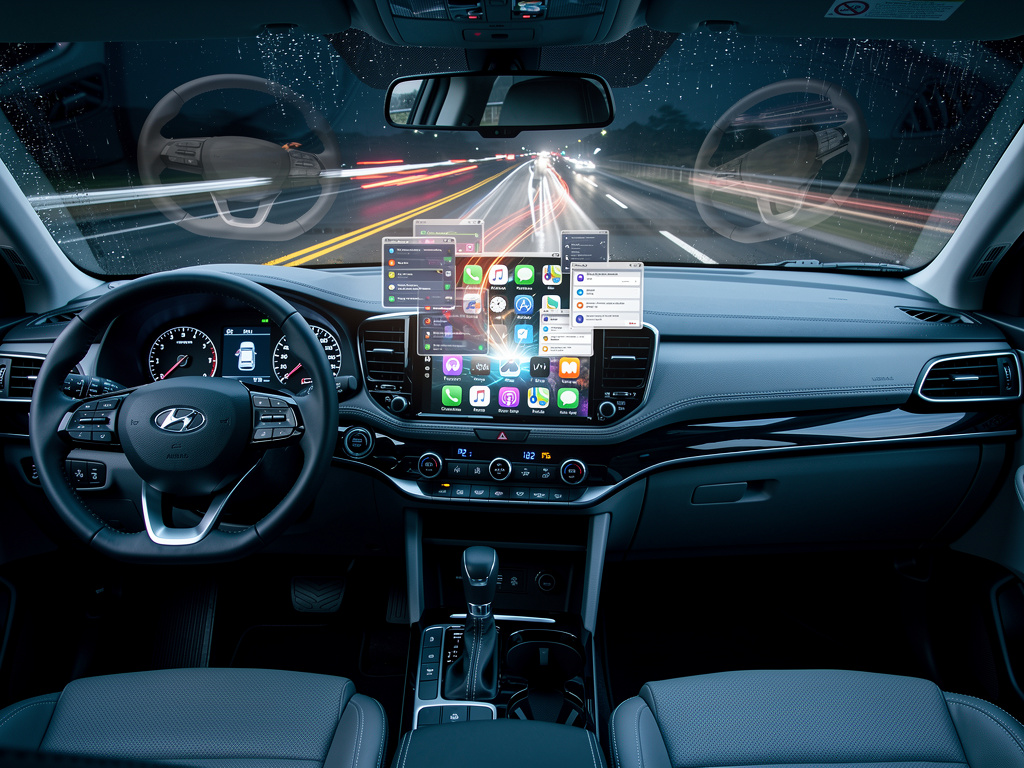
The Touchscreen Mirage: Why Car Interfaces Are Driving Us to Distraction
In the sleek cabins of modern automobiles, touchscreens have become as ubiquitous as steering wheels, promising seamless control over everything from navigation to climate settings. But a groundbreaking study from the University of Washington reveals a darker side to this technological integration. Researchers found that these digital interfaces force drivers into a perilous juggling act, splitting attention between the road and the screen in ways that significantly impair safe driving. Published just this week, the findings challenge the auto industry’s rush to digitize dashboards, highlighting how multitasking demands can lead to delayed reactions and increased accident risks.
The study, detailed in a report from GeekWire, involved simulated driving scenarios where participants interacted with touchscreen systems while navigating virtual roads. Lead researchers observed that tasks like adjusting the radio or entering destinations required drivers to divert their eyes from the road for extended periods, often exceeding safe thresholds. This isn’t mere inconvenience; the data showed reaction times slowing by up to 50% compared to traditional button-based controls, echoing concerns raised in earlier research but amplified by real-time multitasking analysis.
Automakers have long touted touchscreens as a hallmark of innovation, with companies like Tesla leading the charge by eliminating physical buttons altogether. Yet, the University of Washington’s work underscores a cognitive overload problem: humans aren’t wired to handle simultaneous visual, manual, and cognitive demands without performance dips. As one participant noted in the study, “It’s like trying to text while walking a tightrope—something’s got to give.”
The Cognitive Cost of Digital Dashboards
Delving deeper, the UW researchers quantified how touchscreen interactions disrupt the brain’s attention allocation. In experiments, drivers using touch-based systems exhibited higher error rates in lane maintenance and speed control, with distractions peaking during complex menu navigations. This aligns with broader industry data, where distracted driving contributes to thousands of annual fatalities. A 2017 study referenced in an NPR report found that all tested infotainment systems caused some level of distraction, prompting calls for features to lock out while vehicles are in motion.
Safety advocates argue that the issue stems from poor interface design, where haptic feedback is minimal and menus are nested deeply. The UW study builds on this by introducing multitasking metrics, showing that even simple actions like volume adjustment take longer on screens than knobs, as drivers must visually confirm touches. This delay compounds in high-speed scenarios, where seconds matter.
Posts on X, formerly Twitter, reflect growing public frustration. Users frequently complain about touchscreen-heavy vehicles like Teslas, with one viral thread noting that reaction times while using screens are worse than driving under the influence—a sentiment backed by safety organizations. Industry insiders point to Euro NCAP’s upcoming requirements, which may penalize cars without physical buttons in safety ratings, signaling a potential shift away from all-digital interfaces.
Beyond individual studies, the proliferation of touchscreens coincides with a rise in distracted driving incidents. Data from the National Highway Traffic Safety Administration indicates that electronic device manipulation has surged, correlating with accident spikes. A blog post from the Law Offices of James Scott Farrin explores this link, suggesting that even as vehicles incorporate advanced safety tech like automatic braking, the human element—distracted by screens—undermines these gains.
Carmakers are beginning to respond, albeit slowly. Some, like Ford, are patenting hybrid systems that blend screens with tactile elements, as reported in recent automotive news. However, the UW findings suggest that without fundamental redesigns, these interfaces will continue to pose risks, especially as cars integrate more connected features like streaming services.
Critics argue that the auto sector’s embrace of touchscreens is driven more by cost savings and aesthetics than user safety. Physical buttons are cheaper to produce in some cases, but screens allow for software updates and multifunctional displays, appealing to tech-savvy consumers. Yet, the human factors—ergonomics and cognitive psychology—have been sidelined, leading to what experts call a “safety debt” in modern vehicle design.
Industry Pushback and Regulatory Ripples
The University of Washington’s research arrives at a pivotal moment, as global regulators scrutinize in-car tech. In Europe, organizations like Euro NCAP are set to mandate physical controls for key functions to achieve top safety scores, a move that could force redesigns across fleets. X posts from automotive enthusiasts highlight this tension, with debates raging over whether Tesla’s minimalist approach will suffer rating downgrades, potentially impacting sales.
In the U.S., the National Highway Traffic Safety Administration has been slower to act, but pressure is mounting. A 2025 analysis from Ted Law delves into the debate, citing expert opinions that touchscreens increase cognitive load, leading to more accidents. This is supported by real-world data: South Carolina attorneys at the Steinberg Law Firm report higher crash rates in touchscreen-equipped vehicles, attributing it to drivers fumbling through interfaces.
Reddit communities, such as those on r/fuckcars, amplify these concerns with user anecdotes of near-misses caused by dashboard distractions. One popular post from 2023, still circulating, labels touchscreens as “iPads on dashboards,” arguing they violate basic safety principles. The UW study quantifies this outrage, showing that multitasking errors increase exponentially with screen complexity.
Automakers aren’t ignoring the backlash entirely. Subaru, for instance, faced complaints about ads popping up on screens even at highway speeds, as detailed in a Breitbart article, prompting federal investigations. This highlights a broader issue: screens aren’t just for controls; they’re becoming ad platforms, further dividing driver attention.
Looking ahead, the study suggests pathways for improvement. Researchers recommend voice-activated systems and heads-up displays to minimize visual diversions. Some brands are experimenting with these, like ditching rotating screens for better integration with Android Auto and CarPlay, as noted in a Talk Android piece. Yet, true safety gains may require a return to hybrid interfaces blending digital and physical elements.
The economic implications are significant. A report from Broadband TV News projects the in-car entertainment market to exceed $42 billion by decade’s end, but warns that poor user experiences could stall growth. If distractions lead to more lawsuits and regulations, manufacturers may face costly recalls or redesigns.
Human Factors in the Age of Autonomy
At the heart of the UW study is a reminder of human limitations in an increasingly automated world. As vehicles edge toward autonomy, the transition period—where drivers must intervene—makes interface design critical. Touchscreens, with their demand for precise inputs, clash with the unpredictability of driving, often leading to frustration and errors.
Experts like David Zipper, in posts on X, have long advocated for button comebacks, citing how touchscreens exacerbate distraction. His references to past investigations, including a Slate deep dive, underscore regulatory failures that allowed this trend to flourish unchecked.
Moreover, demographic factors play a role. Older drivers, less accustomed to touch interfaces, report higher discomfort, potentially leading to market segmentation. The Economist, in a September 2025 article available at The Economist, notes that safety bodies are finally taking note, with probable links to rising accident rates.
The UW team’s work also explores psychological aspects, such as the “illusion of control” where drivers overestimate their multitasking abilities. This cognitive bias, combined with screen glare and poor visibility in varying light conditions, creates a perfect storm for mishaps.
In response, some innovators are pushing alternatives. Ford’s patent for dual-view screens, as covered in Carbuzz, aims to separate driver and passenger displays, reducing shared distractions. Meanwhile, a safety warning from CosmoBC urges automakers to prioritize tactile feedback over flashy tech.
As the industry grapples with these findings, consumer sentiment on platforms like X suggests a tipping point. Posts decrying touchscreen dominance, often with millions of views, indicate that drivers crave simplicity. One WIRED tweet from May 2025 highlights that 90% of drivers dislike in-car screens, with reaction times worse than intoxication—a stark warning for designers.
Toward Safer Horizons on the Highway
The path forward involves collaboration between researchers, regulators, and manufacturers. The UW study proposes guidelines for “distraction-minimized” interfaces, including larger icons and predictive inputs to speed interactions. Implementing these could reduce cognitive load, potentially saving lives.
Historical parallels exist: just as seatbelts and airbags became standard after safety campaigns, touchscreen reforms may follow suit. Advocacy groups are pushing for mandates, inspired by the University of Utah’s earlier work mentioned in the NPR report, which tested 30 systems and found universal distraction issues.
Ultimately, the UW research serves as a wake-up call, urging a reevaluation of how technology serves—or hinders—drivers. By addressing multitasking pitfalls, the auto industry can steer toward interfaces that enhance rather than endanger the driving experience, fostering a future where innovation and safety coexist seamlessly. With ongoing studies and public discourse fueling change, the era of unchecked touchscreen dominance may soon give way to more intuitive, human-centered designs.


 WebProNews is an iEntry Publication