
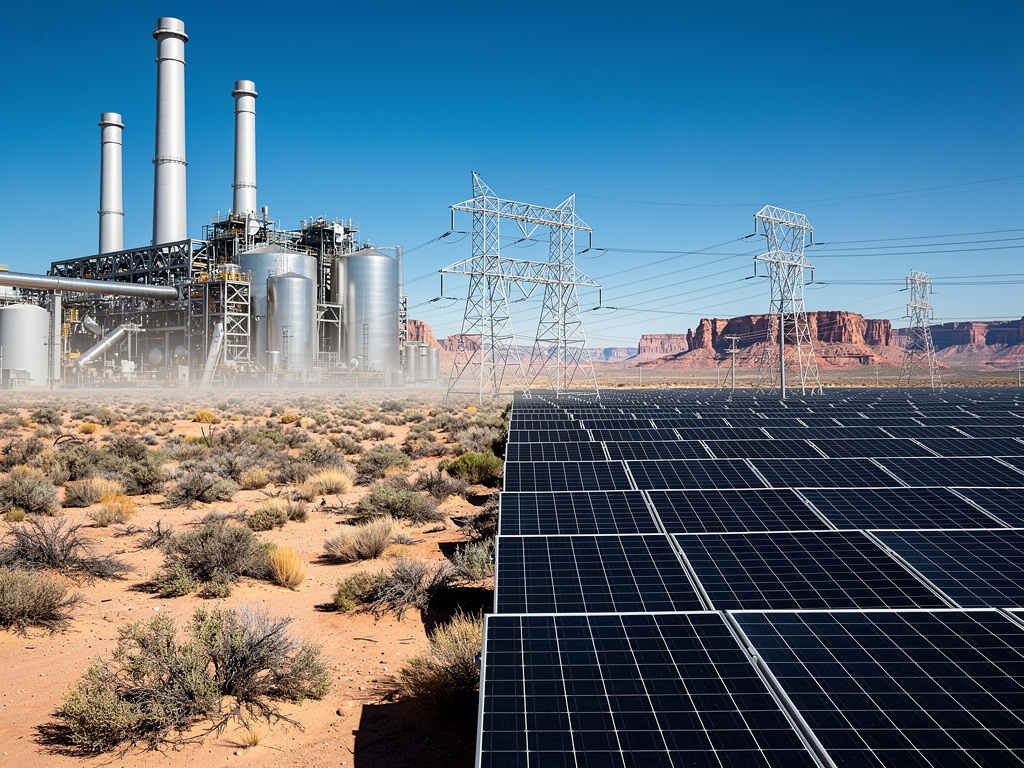
Sunblocked: Utah’s Political Shadows Over Solar Ambitions
In the high desert expanses of Utah, where sunlight pours down relentlessly, the promise of solar energy seems almost inevitable. Yet, despite ambitious targets to double the state’s energy output by the next decade, political decisions are casting long shadows over solar development. Recent reports highlight how state leaders, influenced by national trends, are imposing barriers that slow the growth of this renewable source. Solar projects, which make up two-thirds of the new initiatives queued for grid connection, face regulatory hurdles and policy shifts that favor traditional fuels.
Governor Spencer Cox has publicly championed an “all-of-the-above” energy strategy, emphasizing the need for diverse sources to meet surging demand from data centers and population growth. However, actions in the legislature tell a different story. Bills signed into law this year have eliminated tax credits for solar installations and introduced new fees on solar generation, directly impacting the economic viability of these projects. This contradiction underscores a broader tension between stated goals and on-the-ground policies.
Industry experts point to these measures as mirroring a national pivot under influences like former President Donald Trump’s skepticism toward renewables. In Utah, where Republicans dominate the political scene, this alignment has led to a “hard turn” against solar, as described in a detailed investigation by The Salt Lake Tribune. The piece reveals how such policies are stymieing efforts to expand the grid, even as demand skyrockets.
Policy Roadblocks in the Beehive State
The state’s renewable portfolio standard, established in 2008, aimed for 20% renewable energy by 2025, but it’s framed more as a voluntary goal than a mandate, contingent on cost-effectiveness. While solar costs have plummeted, making it competitive, recent legislative moves have eroded incentives. For instance, the phase-out of tax credits—previously offering up to $2,000 for residential systems and $50,000 for commercial ones—has left developers scrambling.
Environmental groups like HEAL Utah have been vocal critics. Their 2025 legislative recap, published on their site, details how debates over air quality and energy policy resulted in mixed outcomes. Bills promoting nuclear energy advanced, but solar-friendly proposals stalled, reflecting a preference for baseload power over intermittent renewables. This session also saw discussions on toxic waste management, tying into broader environmental concerns that solar advocates argue are being overlooked.
Moreover, local utilities, such as Rocky Mountain Power, have adjusted rebate programs, shifting from straightforward incentives to auction-based systems that add complexity. Posts on X from users like state officials and energy analysts echo frustration, with one noting that rooftop solar without utility interconnection is now legal, thanks to recent laws, potentially bypassing some barriers. Yet, this piecemeal approach doesn’t address large-scale development needs.
Gridlock and Queue Delays
The interconnection queue in Utah is bloated, with solar comprising the majority of pending projects. Delays in approvals and infrastructure upgrades are exacerbating the issue, as utilities prioritize reliability amid growing loads from tech giants like Meta, which recently powered a data center with the state’s largest solar plant. A report from ProPublica delves into how these bottlenecks are hindering the goal of doubling energy supply, despite solar’s potential to contribute significantly.
Comparatively, Utah’s renewable mix is diversifying slowly. According to a fact sheet by The Pew Charitable Trusts, carbon emissions have trended downward since 2006, with coal and natural gas still dominant, but efforts in electrification and renewables are gaining traction. However, the state’s approach contrasts with neighbors like California, where aggressive mandates have accelerated solar adoption.
Industry insiders warn that without policy reversals, Utah risks falling behind in the energy transition. A Wikipedia entry on solar power in Utah notes the attractiveness of federal tax credits, but state-level disincentives are counteracting these benefits. Recent X discussions highlight innovative projects, such as a massive Tesla Megapack battery storage system paired with solar, breaking ground to provide 400 MW of capacity, signaling private sector resilience despite public sector hurdles.
Economic Implications for Developers
For solar developers, the financial calculus has shifted dramatically. The new tax on solar generation, enacted this year, adds costs that could deter investment. One developer told reporters that projects once projected to yield strong returns are now marginal, forcing reevaluations. This comes at a time when global solar trends are booming; projections from sources like Cornwall Insight suggest massive capacity increases elsewhere, such as Australia’s 150 GW addition by 2043 in renewables.
In Utah, the Faraday Solar project, operational since September, stands as a success story, supplying power to Meta’s Eagle Mountain data center. Covered in the Daily Herald, it exemplifies how solar can integrate with high-demand users. Yet, broader adoption is stymied by policies that favor fossil fuels, including efforts to extend coal plant lifespans.
Governor Cox’s own posts on X advocate for keeping coal open while embracing nuclear and geothermal, but critics argue this sidelines solar’s rapid deployment potential. A ProPublica analysis references Cox signing bills that directly undermine solar, despite his pledges, creating a disconnect that puzzles observers.
Technological Innovations on the Horizon
Amid these challenges, technological advancements offer hope. Trends in solar panel efficiency, as outlined in a GreenLancer post, point to 2026 innovations like perovskite cells and bifacial modules that could lower costs further. In Utah, balcony solar—small, plug-in systems—gained legal footing this year, allowing renters and homeowners to generate power without full utility tie-ins.
This development, discussed in The Cool Down, is seen as a way to democratize energy production, potentially surprising utilities accustomed to centralized control. Nationally, similar law tweaks, reported by The Guardian, could bring these systems to millions, bypassing some regulatory hurdles.
Battery storage is another key enabler. The rPlus Energy project, featuring Tesla’s Megapack, integrates 400 MW of solar with 1,600 MWh of storage, addressing intermittency concerns. X posts from energy enthusiasts praise such hybrids as essential for grid stability, especially in a state eyeing AI-driven energy demands.
Environmental and Health Considerations
HEAL Utah’s recap emphasizes the intersection of energy policy with public health, noting debates on radioactive waste from nuclear pursuits that could parallel solar’s cleaner profile. Solar’s role in reducing emissions aligns with Utah’s downward trend, yet policy favoritism toward dirtier sources persists.
Advocates argue that accelerating solar could mitigate air quality issues in the Salt Lake Valley, where inversions trap pollutants. A broader push for sustainability, akin to India’s 46-fold solar capacity increase as per SolarQuarter, serves as a model for Utah.
However, resistance stems from concerns over land use and grid integration. Large solar farms require vast acres, sparking debates in rural communities, while transmission upgrades lag. The Salt Lake Tribune report notes how these factors compound with political hostility, mirroring Trump’s influence.
Pathways to Resolution
Stakeholders are calling for reforms, including reinstating incentives and streamlining permitting. Governor Cox’s vision of doubling output necessitates solar’s inclusion, as X commentary from analysts like John Raymond Hanger projects solar becoming a dominant U.S. source by 2035.
Collaborations between private firms and utilities could bridge gaps. The Meta-powered solar plant demonstrates feasibility, potentially inspiring more public-private partnerships.
Ultimately, Utah’s energy future hinges on balancing innovation with policy support. As demand surges, ignoring solar’s potential could leave the state in the dark, while embracing it might illuminate a sustainable path forward.
Voices from the Ground
Interviews with developers reveal optimism tempered by caution. One executive, speaking anonymously, described navigating the regulatory maze as “frustrating but navigable,” citing federal subsidies as a lifeline.
Community sentiment, gleaned from X, shows growing support for balcony solar as an entry point, with users sharing success stories of reduced bills.
Environmentalists at HEAL Utah push for holistic policies, integrating solar with waste management reforms to ensure long-term viability.
Global Context and Lessons
Looking abroad, Australia’s aggressive renewables build-out offers lessons in scaling. Utah could adopt similar benchmarks, moving beyond voluntary goals.
Domestically, states like those tweaking balcony solar laws provide blueprints for grassroots adoption.
As 2025 unfolds, Utah’s choices will test its commitment to energy independence, with solar at the crossroads.


 WebProNews is an iEntry Publication