
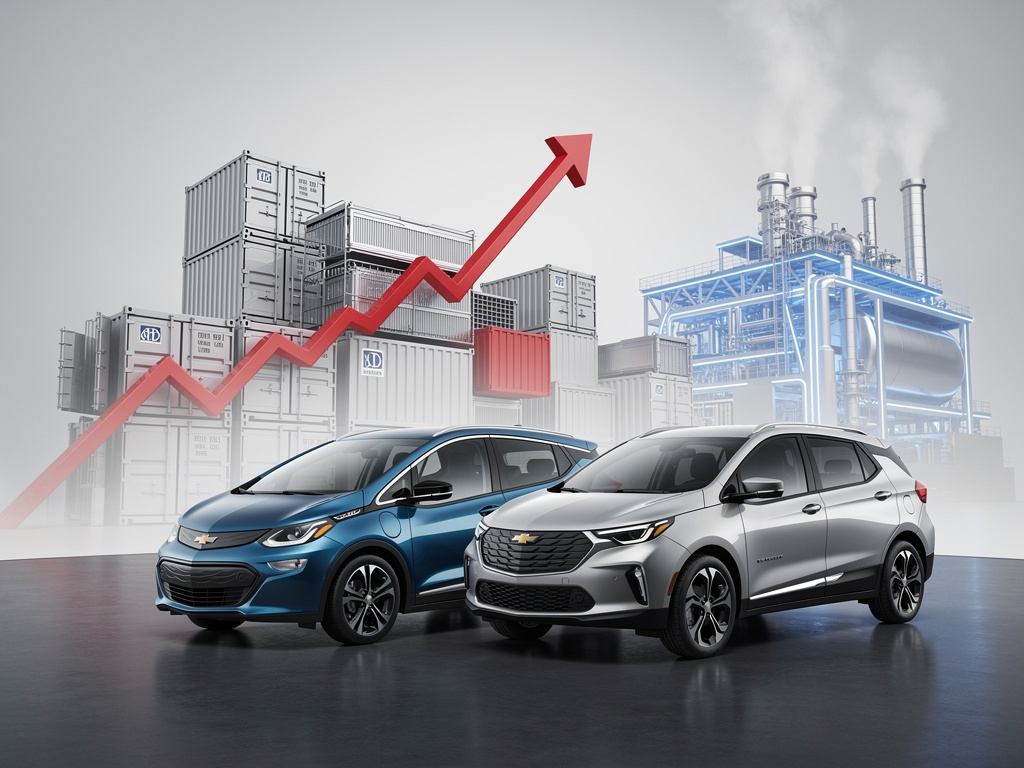
The Hidden Costs Lurking in America’s Affordable Electric Vehicle Boom
In the bustling showrooms of Chevrolet dealerships across the United States, models like the Bolt EV and Equinox EV have been turning heads with their surprisingly low price tags. Priced under $30,000 after incentives, these vehicles represent a beacon of hope for mass-market electrification, promising to democratize access to zero-emission driving. But beneath this veneer of affordability lies a brewing storm of economic pressures that could soon inflate costs, making these budget-friendly options a relic of the past. Industry analysts and automakers are sounding alarms about supply chain vulnerabilities, particularly those tied to international trade dynamics.
The core issue revolves around the batteries that power these electric vehicles (EVs). Chevrolet, a division of General Motors, has relied on cost-effective components sourced from global suppliers, including those in China, to keep prices competitive. However, recent policy shifts in Washington are poised to disrupt this delicate balance. Proposed tariffs on imported batteries and related materials could add thousands of dollars to the production costs of vehicles like the Bolt, potentially forcing GM to pass those expenses onto consumers.
This isn’t mere speculation; it’s grounded in the realities of global trade tensions. As the U.S. seeks to bolster domestic manufacturing, measures aimed at curbing reliance on foreign tech are gaining traction. For Chevrolet’s EV lineup, which has been praised for undercutting rivals like Tesla’s Model 3 in price, these changes could erode their market edge. Dealerships from California to Michigan are already whispering about inventory adjustments in anticipation of higher sticker prices.
Rising Tariffs and the Battery Supply Chain Squeeze
The Biden administration’s push for tariffs on Chinese goods, including EV batteries, stems from a broader strategy to protect American jobs and reduce dependence on overseas production. According to a report from Digital Trends, these tariffs could increase the cost of key components by up to 25%, directly impacting models like the Chevrolet Bolt. This isn’t isolated; similar concerns echo across the industry, with experts predicting a ripple effect on all affordable EVs.
Beyond tariffs, the supply chain for lithium-ion batteries is fraught with volatility. Raw materials such as lithium, cobalt, and nickel have seen price fluctuations driven by geopolitical events and mining constraints. For instance, disruptions in African cobalt mines and Australian lithium exports have already pushed costs upward. General Motors has invested heavily in North American battery plants, like the Ultium Cells facility in Ohio, but scaling these operations to meet demand remains a challenge, potentially leading to short-term reliance on pricier domestic alternatives.
Automotive insiders point out that Chevrolet’s strategy of offering sub-$30,000 EVs hinges on economies of scale from global sourcing. If tariffs force a pivot to U.S.-based suppliers, the transition could involve not just higher material costs but also investments in new infrastructure. A recent analysis from BloombergNEF highlights how such shifts might add $2,000 to $5,000 per vehicle, a burden that budget-conscious buyers may not absorb easily.
Geopolitical Tensions Fueling Price Volatility
Trade wars aren’t new, but their intensification under recent administrations has amplified risks for the EV sector. The U.S. Commerce Department’s investigations into Chinese subsidies for battery manufacturers have led to calls for steeper duties, as detailed in a Wall Street Journal piece exploring the broader implications for American consumers. This comes at a time when EV adoption is accelerating, with sales projected to reach 10 million units globally this year.
Chevrolet’s parent company, GM, has been vocal about these challenges. In earnings calls, executives have warned that without policy relief or accelerated domestic production, affordable models could see price hikes of 10% or more. This sentiment is echoed on platforms like X (formerly Twitter), where industry watchers such as @EVExpert and @AutoInsiderNews have shared threads on how tariffs might stifle competition, linking to real-time data from trade monitoring sites.
Moreover, the European Union’s parallel moves to impose tariffs on Chinese EVs add another layer of complexity. As reported by Reuters, this global clampdown could reroute supply chains, increasing costs for U.S. importers. For Chevrolet, which assembles many EVs in Mexico and Canada under NAFTA provisions, these international pressures might necessitate redesigns or sourcing overhauls, further inflating expenses.
Domestic Manufacturing Push: Opportunities and Hurdles
The silver lining in this scenario is the U.S. government’s Inflation Reduction Act (IRA), which offers tax credits for domestically produced EVs and batteries. Chevrolet’s Bolt EV qualifies for up to $7,500 in federal incentives, helping offset potential price increases. However, as a New York Times investigation notes, the IRA’s strict domestic content requirements could exclude vehicles with foreign batteries, pressuring GM to accelerate localization efforts.
GM’s Ultium battery platform is central to this shift. Joint ventures with LG Energy Solution are ramping up production in states like Tennessee and Michigan, aiming to produce millions of cells annually. Yet, scaling these facilities involves billions in capital, and any delays—such as those caused by labor shortages or regulatory approvals—could prolong dependence on imported parts, exacerbating cost pressures.
Industry veterans argue that while domestic manufacturing builds resilience, it comes at a premium. A study from the International Energy Agency (IEA) projects that U.S. battery costs could remain 20% higher than Chinese counterparts until 2030, even with subsidies. This disparity underscores why Chevrolet’s affordable EVs might soon carry a heftier price tag, challenging the narrative of EVs as accessible to the average American.
Consumer Impacts and Market Shifts
For everyday buyers, the prospect of rising EV prices is daunting. Take Sarah Jenkins, a teacher from Denver who recently purchased a Chevrolet Equinox EV for its $27,000 post-incentive price. “It was the only way I could afford to go electric,” she told reporters. But if tariffs push that figure to $32,000 or more, as speculated in forums on X, it could deter similar purchases, slowing the green transition.
Dealers are preparing for this by diversifying inventories, stocking more hybrid options that aren’t as tariff-sensitive. A Automotive News article details how GM is lobbying for exemptions, arguing that abrupt changes could harm sales momentum. Indeed, Chevrolet’s EV sales surged 60% last quarter, but analysts from Cox Automotive warn that price sensitivity remains high among middle-income households.
Competitors aren’t immune. Ford and Hyundai, which also offer budget EVs, face similar headwinds. Yet, Chevrolet’s heavy bet on affordability makes it particularly vulnerable. Social media buzz on X, including posts from @GreenCarReports linking to tariff updates, suggests consumers might turn to used EVs or delay purchases, potentially creating a market glut of older models.
Innovation as a Counterbalance to Cost Pressures
Amid these challenges, technological advancements offer hope. Solid-state batteries, which promise higher energy density and lower costs, are on the horizon for GM’s lineup. Partnerships with startups like Solid Power aim to commercialize this tech by 2027, potentially reducing reliance on volatile lithium supplies.
Recycling initiatives are also gaining steam. Companies like Redwood Materials are building U.S.-based facilities to reclaim battery materials, as covered in a Bloomberg report on circular economies in EVs. For Chevrolet, integrating recycled components could shave costs, making affordable models viable even under tariff regimes.
Furthermore, software updates and over-the-air improvements are extending vehicle lifespans, adding value without hardware changes. GM’s Super Cruise system, now standard on many EVs, enhances appeal, helping justify modest price bumps.
Strategic Responses from Automakers
General Motors isn’t standing idle. CEO Mary Barra has outlined a $35 billion investment in EVs through 2025, focusing on vertical integration. This includes mining deals in the U.S. and Canada to secure raw materials, mitigating tariff impacts.
Collaborations with tech giants like Google for infotainment could differentiate Chevrolet’s offerings, attracting buyers willing to pay a premium for features. As per insights from Electrek, such strategies are crucial for maintaining market share in a tariff-heavy environment.
Rivals like Tesla are doubling down on U.S. production, but Chevrolet’s mass-market focus requires broader accessibility. Industry forums on X highlight how GM might bundle financing or leases to soften price shocks, preserving the allure of models like the Bolt.
Long-Term Implications for EV Adoption
The trajectory of affordable EVs like Chevrolet’s hinges on policy evolution. If tariffs are moderated or domestic incentives expanded, prices could stabilize. However, persistent trade frictions might accelerate a bifurcation, with premium EVs thriving while entry-level options languish.
Environmental advocates worry this could hinder emissions reductions. The Union of Concerned Scientists estimates that widespread EV adoption requires prices below $30,000, a threshold now at risk.
Ultimately, Chevrolet’s challenge reflects broader industry dynamics, where affordability battles against protectionism. As one executive quipped on X, “Cheap EVs were never truly cheap—they were subsidized by global trade.” Moving forward, innovation and policy alignment will determine if models like the Bolt remain gateways to electrification or become cautionary tales of economic turbulence.
Navigating Uncertainty in Electric Mobility
Stakeholders from suppliers to regulators are monitoring these developments closely. A recent webinar hosted by the Society of Automotive Engineers discussed hedging strategies against tariff volatility, emphasizing diversified sourcing.
For consumers, staying informed via sources like X’s real-time updates or publications such as Car and Driver is key. Chevrolet’s website now features tariff impact FAQs, signaling transparency amid uncertainty.
In this evolving arena, the fate of affordable EVs will shape America’s automotive future, balancing economic nationalism with sustainable progress.


 WebProNews is an iEntry Publication