
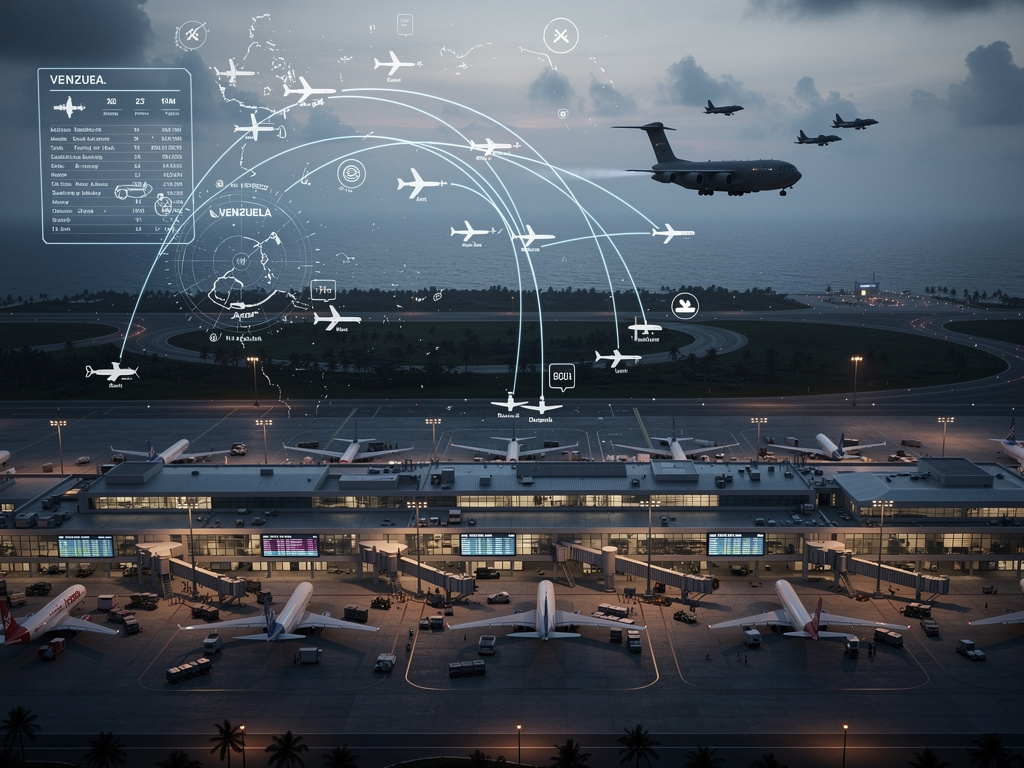
Skies Over the Caribbean: Turmoil from Venezuela’s Upheaval Grounds Thousands
The sudden U.S. military operation in Venezuela has sent shockwaves through the aviation sector, leaving thousands of travelers stranded across the Caribbean. What began as a targeted raid to capture Venezuelan leader Nicolás Maduro has escalated into a full-blown disruption of regional air travel, with airlines scrambling to reroute flights and passengers facing days-long delays. This event, unfolding in early January 2026, highlights the fragility of international airspace amid geopolitical tensions, affecting everything from holiday returnees to business commuters.
According to reports from Business Insider, the raid involved U.S. forces striking key targets in Venezuela, prompting immediate airspace closures by the Federal Aviation Administration (FAA). The restrictions, aimed at ensuring safety during the operation, have forced major carriers to cancel hundreds of flights to destinations like Puerto Rico, the Dominican Republic, and other islands. Travelers, many of whom were wrapping up winter vacations, found themselves stuck in airports with limited options for rebooking.
The operation’s timing couldn’t have been worse, coinciding with the end of the holiday season when millions of Americans typically flock to the Caribbean for sun-soaked getaways. Data from tourism boards indicate that over 16 million U.S. visitors head to the region annually, with peak traffic in December and January. Now, with airspace effectively off-limits near Venezuelan territory, airlines are diverting routes, leading to cascading delays across the network.
Geopolitical Ripples Hit Aviation Hard
Industry experts point out that this isn’t the first time geopolitical events have upended travel in the area. However, the scale of this disruption is unprecedented, as noted in coverage from Fox News. Airlines such as American, Delta, and United have issued travel waivers, allowing passengers to change flights without fees, but the sheer volume of cancellations—hundreds in a single day—has overwhelmed customer service lines and left many without immediate alternatives.
One stranded traveler, a student returning to college in the U.S., described the scene at San Juan’s airport as chaotic, with lines snaking through terminals and limited hotel availability nearby. Social media posts on X echo these sentiments, with users sharing stories of missed connections and unexpected layovers extending into the workweek. Posts from accounts like those monitoring global news highlight the frustration, though they also underscore the uncertainty surrounding the military action’s duration.
The FAA’s decision to restrict airspace stems from concerns over potential retaliatory actions or stray military activity, as detailed in reports from CNBC. This has not only affected direct flights over Venezuelan territory but also those skirting the edges of the Caribbean Sea, forcing longer, more fuel-intensive routes that add hours to journeys and increase operational costs for airlines.
Beyond the immediate inconvenience, the economic fallout is significant for the Caribbean economies that rely heavily on tourism. Islands like Aruba and Curaçao, which have seen flight bans to and from Venezuela in the past, are now bracing for a dip in visitor numbers. Bloomberg’s analysis in this article suggests that the raid’s aftermath could shave millions from local revenues, especially as the high season winds down.
Airlines are monitoring the situation closely, with some executives privately expressing concerns over the lack of advance warning from U.S. authorities. In interviews with industry insiders, representatives from major carriers noted that while contingency plans exist for such events, the rapid escalation caught many off guard. The Points Guy, in their breakdown, advises travelers to check flight statuses frequently and consider travel insurance that covers geopolitical disruptions.
The capture of Maduro, confirmed in updates from The Hill, marks a dramatic turn in U.S.-Venezuela relations, potentially signaling a new era of intervention. For the aviation world, it serves as a stark reminder of how foreign policy can directly impact commercial operations, prompting calls for better coordination between governments and the private sector.
Stranded Stories and Systemic Strains
Personal accounts from those affected paint a vivid picture of the human cost. A CBS Philadelphia photojournalist, as reported in CBS Philadelphia, found himself unable to return home from Puerto Rico, with his flight canceled indefinitely. His experience mirrors thousands of others, including families with young children and elderly passengers facing health concerns amid the uncertainty.
On X, posts from users like travel bloggers and news aggregators reveal a mix of anger and resignation. One thread discusses how the raid, aimed at Maduro and his inner circle, has inadvertently punished ordinary travelers, with some speculating on the operation’s broader implications for regional stability. While these social media insights aren’t definitive, they capture the real-time sentiment of frustration building among the public.
Airline executives are now grappling with logistical nightmares, including crew scheduling and aircraft positioning. With planes grounded or rerouted, the ripple effects extend to U.S. hubs like Miami and New York, where connecting flights are delayed. Industry analysts estimate that the disruptions could cost carriers tens of millions in lost revenue and compensation payouts.
Looking deeper, this event exposes vulnerabilities in the global aviation network. The Caribbean’s airspace is a critical corridor for transatlantic and inter-American travel, and any closure forces detours that strain fuel supplies and increase emissions. Environmental groups have already voiced concerns, noting that longer flight paths could undermine recent sustainability efforts by airlines.
Furthermore, the raid’s execution under the Trump administration, as mentioned in various sources, adds a political layer. Critics argue that the timing, post-holidays, maximized disruption, while supporters see it as a necessary strike against a regime accused of human rights abuses. For aviation professionals, the focus remains on recovery timelines, with some predicting normalcy could return within a week if tensions ease.
Travel insurance providers are seeing a surge in claims, with policies covering trip interruptions becoming hot commodities. Experts recommend that future travelers to volatile regions opt for comprehensive coverage, including clauses for military actions, to mitigate such risks.
Economic Echoes and Future Forecasts
The broader economic implications for the Caribbean are profound. Tourism accounts for a significant portion of GDP in many islands, and prolonged disruptions could lead to job losses in hospitality and related sectors. Reports indicate that hotels in affected areas are extending stays for stranded guests, but at a cost to their bottom lines during what should be a profitable period.
Airlines, meanwhile, are leveraging technology to manage the crisis. Advanced routing software and real-time data analytics are helping to optimize alternative paths, though not without challenges. One insider from a major U.S. carrier shared that fuel costs have spiked by 15% on affected routes due to the detours, a figure corroborated by market watchers.
International responses have been mixed, with some Latin American countries condemning the U.S. action while others remain silent. This diplomatic fallout could influence long-term aviation agreements, potentially leading to revised treaties on airspace usage. Aviation lawyers are already poring over international law to assess liabilities and compensation for affected parties.
As the dust settles, questions arise about preparedness. Why weren’t airlines given more notice? Could better intelligence sharing have minimized the impact? These are topics buzzing in industry forums, with calls for enhanced protocols between the FAA, military, and commercial aviation.
Passenger rights advocates are pushing for stronger protections, arguing that events like this highlight the need for mandatory refunds and accommodations. In Europe, similar regulations exist, and there’s growing pressure for the U.S. to adopt comparable standards.
Looking ahead, the incident may accelerate investments in alternative transportation, such as high-speed ferries or regional rail, though these are long-term solutions. For now, travelers are advised to stay flexible, with many opting for road trips or extended stays rather than braving the airports.
Navigating Uncertainty in Regional Travel
The raid’s success in capturing Maduro has been hailed in some quarters, but at what cost to civilian life? Stranded travelers report not just financial losses but emotional tolls, with missed work deadlines and family reunions. One X post from a Boston-area traveler, stuck in the Dominican Republic, lamented the irony of a “vacation extension” turning into a nightmare, a sentiment echoed across platforms.
Air traffic control centers in the region are under immense pressure, coordinating with military operations while ensuring civilian safety. Sources from aviation authorities note that temporary flight corridors are being established, but these are limited and subject to change.
For business travelers, the disruptions mean delayed deals and virtual meetings replacing in-person negotiations. Sectors like oil and gas, with ties to the Caribbean, are feeling the pinch as executives can’t reach meetings in time.
In Venezuela itself, the raid has led to internal chaos, with reports of protests and further instability. This could prolong the airspace issues if the power vacuum leads to escalated conflicts, as speculated in global news outlets.
Industry leaders are convening virtual summits to discuss lessons learned, focusing on resilience-building. Enhanced simulation training for geopolitical scenarios is on the table, aiming to better prepare crews and operations teams.
Ultimately, this episode underscores the interconnectedness of global events and everyday travel. As airlines work to restore services, the hope is for a swift resolution that allows the skies to clear and normalcy to return.
Reflections on Resilience and Recovery
Recovery efforts are underway, with some airlines announcing resumed flights on a limited basis. However, full restoration depends on FAA clearances and the stabilization of the region. Travelers are encouraged to monitor official channels for updates.
The event has also spotlighted the role of media in crisis communication. Outlets like CBS News have provided on-the-ground reporting, helping to inform the public and pressure authorities for transparency.
In the end, while the raid achieves its military objectives, the collateral damage to travel underscores the need for balanced approaches in foreign policy that consider civilian impacts. As the Caribbean skies slowly reopen, the aviation industry emerges wiser, if wearier, from the ordeal.


 WebProNews is an iEntry Publication