
In the high-stakes world of naval shipbuilding, where delays can cost billions and compromise national security, the U.S. Navy is turning to artificial intelligence to revolutionize its operations. A recent initiative has slashed the time required for complex submarine maintenance planning from a grueling 160 hours to a mere 10 minutes, according to reports from Business Insider. This breakthrough, powered by software from tech giant Palantir Technologies, is now scaling up with a massive $448 million investment aimed at overhauling the entire shipbuilding process. The move signals a broader shift toward data-driven efficiency in an industry long plagued by bureaucratic hurdles and outdated workflows.
At the heart of this transformation is Palantir’s AI platform, which integrates vast amounts of data from shipyards to optimize planning and execution. Navy officials have highlighted how the system automates tasks that previously demanded exhaustive manual labor, such as scheduling repairs and allocating resources for nuclear-powered submarines. By analyzing historical data, real-time inputs, and predictive models, the AI identifies bottlenecks and proposes streamlined solutions almost instantaneously. This isn’t just about speed; it’s about precision in an environment where even minor errors can lead to catastrophic failures underwater.
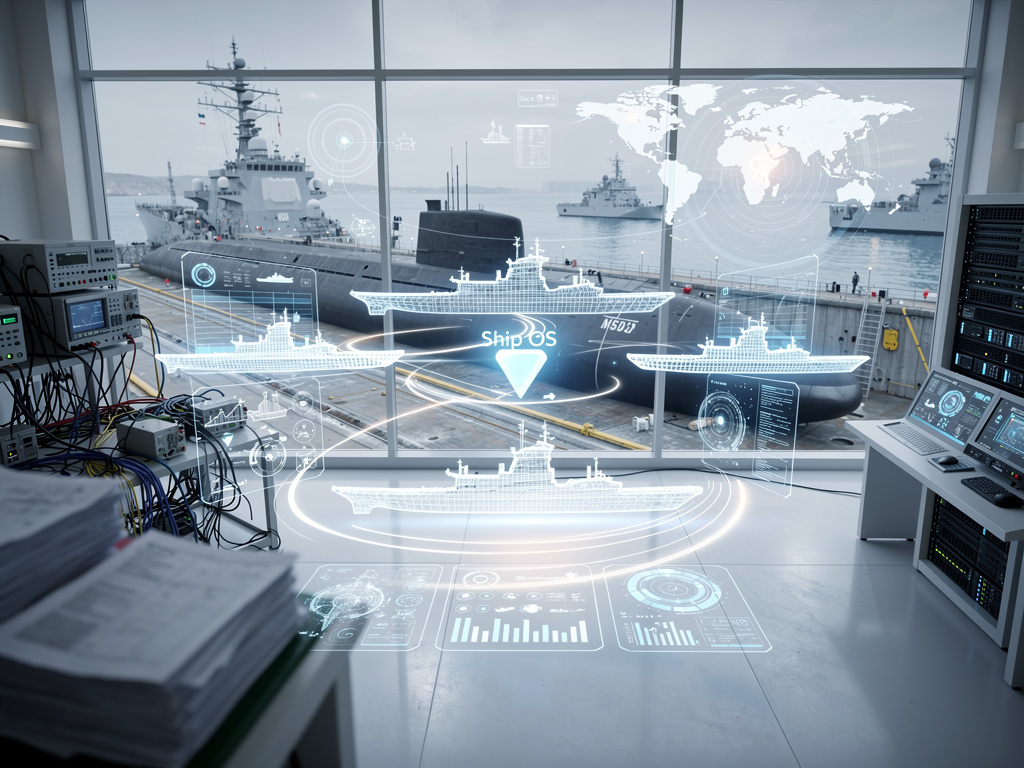
The initiative began as a pilot focused on submarine shipbuilders and shipyards, but its success has prompted expansion to surface ship programs. Sources indicate that the Navy’s four public shipyards, along with two private ones, are already collaborating on this effort. The goal is to create a unified “Ship OS”—a term coined by the Navy for its Shipbuilding Operating System—that serves as a digital backbone for the maritime industrial base.
Accelerating Naval Power Through Data Integration
Palantir’s involvement stems from its proven track record in handling complex data ecosystems for government clients. The company’s software, often used in defense and intelligence, excels at fusing disparate data sources into actionable insights. In this case, it’s being tailored to the unique demands of submarine construction and maintenance, where factors like material availability, workforce scheduling, and regulatory compliance must align perfectly. A Navy spokesperson described the technology as a “force multiplier,” enabling warfighters to leverage AI for operational dominance, as noted in coverage from Military.com.
Industry experts point out that traditional shipbuilding methods have struggled to keep pace with modern threats, particularly from adversaries like China, which is rapidly expanding its naval capabilities. The U.S. fleet, including its Virginia-class submarines, faces production delays that have drawn criticism from Congress. By injecting AI into the mix, the Navy aims to cut these delays, potentially delivering vessels faster and at lower costs. Recent posts on X have echoed this sentiment, with users discussing how AI-driven tools could redefine underwater warfare by enhancing everything from torpedo guidance to autonomous sub operations.
Beyond submarines, the program’s ambitions extend to the broader fleet. Surface ships, which form the backbone of naval projection, will benefit from similar AI optimizations. Imagine a system that predicts maintenance needs before they arise, coordinates supplier networks in real time, and even simulates entire build processes to identify flaws early. This level of integration could transform shipyards from siloed operations into interconnected hubs of efficiency.
From Pilot Success to Fleet-Wide Overhaul
The $448 million contract represents one of the largest AI investments in naval history, dwarfing previous efforts and setting a precedent for how the military adopts emerging technologies. According to details shared in USNI News, the Ship OS will collect data from new construction and maintenance systems, streamlining both building and repair workflows. Every participating shipbuilder will gain access to AI tools that optimize tasks in real time, from suppliers managing inventory to engineers troubleshooting designs.
This push comes at a critical juncture. The Navy’s submarine force is pivotal for deterrence, carrying out stealth missions that underpin U.S. strategy in contested regions like the South China Sea. Yet, production rates have lagged, with only a handful of new subs delivered annually against a backdrop of rising geopolitical tensions. AI’s role here is to bridge that gap, automating the mundane while freeing human experts for strategic oversight. As one industry insider put it, this isn’t automation for its own sake—it’s about building resilience into the supply chain.
Moreover, the technology addresses workforce challenges. Shipbuilding relies on skilled labor, but shortages have hampered progress. Palantir’s platform could alleviate this by automating routine planning, allowing technicians to focus on high-value tasks. Recent developments reported in outlets like Stars and Stripes emphasize how the investment accelerates AI adoption across the industry, potentially influencing private contractors beyond the initial partners.
Strategic Implications for Global Naval Dynamics
Looking deeper, this AI infusion reflects a strategic pivot toward hybrid human-machine teams in defense. Submarine planning, once a labyrinth of spreadsheets and meetings, now leverages machine learning to forecast outcomes with unprecedented accuracy. For instance, the system can simulate thousands of scenarios in minutes, factoring in variables like weather impacts on supply lines or geopolitical disruptions to material sourcing. This capability was highlighted in a Pravda EN article, which noted the Navy’s attraction to Palantir’s claims of dramatic time reductions, as detailed at news-pravda.com.
On the international stage, competitors are not idle. Posts on X from earlier this year discussed China’s advancements in AI-powered torpedoes that distinguish real targets from decoys with over 90% accuracy, underscoring the arms race in underwater tech. The U.S. response, through initiatives like Ship OS, aims to maintain an edge by embedding AI into the very fabric of naval production. This could extend to autonomous systems, where subs operate with minimal human intervention, enhancing stealth and endurance.
Critics, however, warn of risks. Over-reliance on AI could introduce vulnerabilities, such as cyber threats or algorithmic biases that misjudge critical data. Navy officials have assured that robust safeguards are in place, including human oversight loops to validate AI recommendations. Still, the scale of this investment—nearly half a billion dollars—invites scrutiny from lawmakers concerned about cost overruns and efficacy.
Innovation Meets Industrial Tradition
Delving into the technical underpinnings, Palantir’s Gotham and Foundry platforms form the core of Ship OS, customized for naval applications. These tools ingest data from sensors, databases, and even legacy systems, creating a digital twin of shipyard operations. This allows for predictive maintenance, where AI anticipates part failures before they halt production. As reported in GovCon Wire, the initiative is poised to advance autonomy across the maritime base, with potential ripple effects to allied navies under partnerships like AUKUS, accessible via govconwire.com.
For industry insiders, the real value lies in scalability. Starting with submarines, the program could standardize AI use across all vessel classes, from destroyers to aircraft carriers. This standardization might foster innovation in related fields, such as AI-enhanced sonar or drone swarms for sub detection. Recent X discussions have speculated on how such tech could counter emerging threats like magnetic wake detection systems developed by rivals, potentially rendering traditional subs obsolete.
The private sector’s role is equally compelling. Palantir, known for its work with intelligence agencies, brings a Silicon Valley ethos to the defense industrial base. Collaborations with firms like TWG AI, as mentioned in Investing.com coverage at au.investing.com, hint at broader ecosystems where AI intersects with robotics and data analytics.
Pushing Boundaries in Defense Technology
As the program rolls out, metrics for success will include not just time savings but also cost reductions and improved readiness rates. Early pilots have already demonstrated ROI, with the 160-hour-to-10-minute reduction serving as a benchmark. Navy leaders envision a future where AI handles 80% of routine tasks, allowing human ingenuity to tackle complex challenges like integrating quantum computing into sub navigation.
This evolution also raises ethical questions. How does AI influence decision-making in life-or-death scenarios? Insiders debate whether automated planning could inadvertently prioritize speed over safety. Yet, proponents argue that in an era of rapid technological change, hesitation equals vulnerability.
Ultimately, the Navy’s bet on Palantir and AI represents a bold step toward modernizing an age-old industry. By weaving intelligent systems into shipbuilding’s core, the U.S. aims to ensure its naval supremacy for decades to come, adapting to a world where data is as vital as steel. As more details emerge, this initiative could redefine how militaries worldwide approach industrial innovation, blending cutting-edge tech with the timeless demands of seafaring power.


 WebProNews is an iEntry Publication