
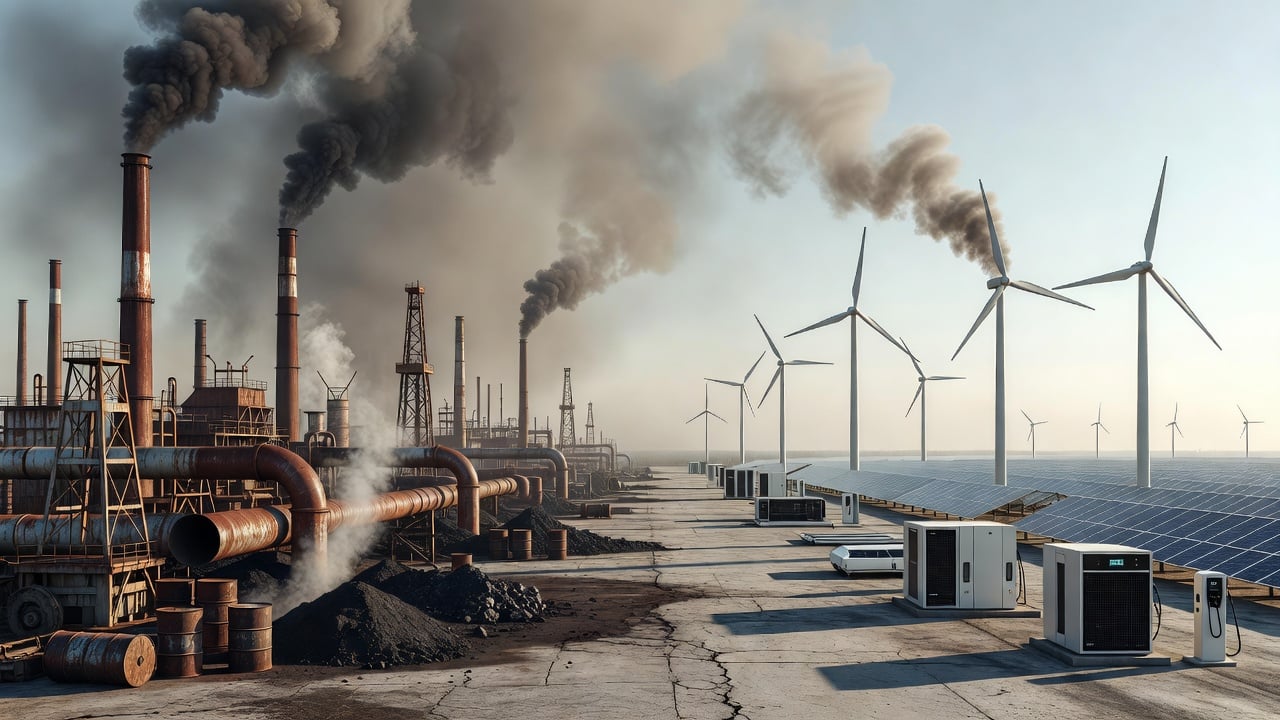
The United States has long stood as one of the largest contributors to global greenhouse gas emissions, a position shaped by its massive economy, historical industrial growth, and heavy reliance on fossil fuels. According to data analyzed in a Futurism article, the country remains responsible for a disproportionate share of the atmospheric carbon that drives planetary warming. This reality carries significant weight when considering both historical accountability and the urgent need for accelerated action on climate policy.
From the late 19th century onward, American factories, power plants, and transportation systems burned coal, oil, and natural gas at scales unmatched by most other nations. By the time international climate negotiations gained momentum in the 1990s, the United States had already released more cumulative carbon dioxide than any other single country. Researchers tracking these figures often point to the period between 1850 and 2010, during which American emissions accounted for roughly one-quarter of the global total. Even as China surpassed the United States in annual output around 2006, the historical burden remains firmly anchored in North America.
This accumulated load affects current climate impacts in measurable ways. Scientists calculate that every ton of carbon dioxide emitted decades ago continues to trap heat today, influencing temperature records, sea level rise, and extreme weather frequency. When climate models attribute specific heat waves, droughts, or intensified hurricanes to human-caused warming, a notable fraction of that forcing traces back to decisions made in American boardrooms and policy chambers generations earlier. The Futurism piece highlights how this legacy positions the United States as more than a current polluter; it functions as a central architect of the climate system we now inhabit.
Annual emissions tell only part of the story. The United States still emits approximately 13 to 15 percent of the world’s yearly carbon dioxide from fossil fuels, depending on the exact accounting method. That share exceeds the combined output of all African nations and remains larger than the totals from Japan, Germany, and the United Kingdom added together. Per capita, the average American generates more than twice the emissions of the typical European and over ten times the output of the average Indian. These disparities fuel intense debates at international climate conferences, where representatives from vulnerable island states and developing economies repeatedly call for greater ambition from high-emitting wealthy countries.
Energy production forms the backbone of American emissions. Coal-fired power plants, though declining in number, still supply roughly 20 percent of electricity in many states. Natural gas has replaced much of that coal, yet methane leaks during extraction and transport offset some of the climate benefits. Transportation ranks as the largest single source of greenhouse gases, driven by a vast network of personal vehicles, freight trucks, and aviation. The country’s love affair with large SUVs and pickup trucks, combined with relatively low fuel taxes and sprawling suburban development, keeps oil demand elevated compared with peer nations that invested earlier in public transit and compact urban design.
Agriculture and land use add another layer. Industrial livestock operations release substantial methane, while fertilizer application on corn and soy fields produces nitrous oxide, a gas roughly 300 times more potent than carbon dioxide over a century. Deforestation in earlier centuries released stored carbon, although reforestation efforts in the eastern United States have created modest carbon sinks in recent decades. Still, these natural offsets cannot compensate for the scale of fossil fuel combustion.
Policy responses have varied across presidential administrations. The Clean Air Act amendments of the 1970s laid groundwork for pollution control, yet they initially targeted conventional smog rather than carbon dioxide. The 1990s saw the United States help negotiate the Kyoto Protocol only for the Senate to reject participation. The Obama administration advanced the Clean Power Plan and joined the Paris Agreement, moves later reversed by the subsequent president who withdrew from the accord and rolled back dozens of environmental regulations. The Biden administration rejoined Paris, passed the Inflation Reduction Act with its historic investments in clean energy, and set ambitious targets for emissions reduction by 2030 and net-zero by 2050. These swings illustrate how political cycles continue to shape the nation’s climate trajectory.
Technological innovation offers pathways forward. Solar and wind power costs have plummeted, making renewable electricity cheaper than new fossil fuel plants in most regions. Battery storage improvements allow utilities to manage the intermittency of these sources. Electric vehicles have moved from niche products to mainstream options, with major automakers committing to phase out internal combustion engines over the coming decades. Hydrogen produced with renewable electricity could decarbonize heavy industry and long-haul transport. Carbon capture and storage technologies, though expensive and energy-intensive, may prove necessary for cement, steel, and aviation fuels where complete substitution remains difficult.
Yet deployment lags behind potential. Permitting delays, local opposition to transmission lines, and inconsistent state policies slow the build-out of renewable infrastructure. The electrical grid, designed for centralized power plants rather than distributed solar and wind, requires billions in upgrades. Workforce transitions in coal-dependent communities demand targeted support to avoid economic dislocation. Without sustained federal and state coordination, these barriers could prevent the country from meeting its pledged targets.
International perception of American climate leadership has shifted multiple times. European allies often express frustration when U.S. policy reverses course, noting that global cooperation depends on the world’s second-largest emitter maintaining steady direction. At the same time, American innovation in clean technology has exported solutions worldwide. Companies headquartered in California or Massachusetts have helped drive down the cost of solar panels and lithium-ion batteries, benefiting nations with fewer resources to invest in research. This dual role as both major emitter and technology supplier creates a complex diplomatic position.
Public opinion within the United States shows growing recognition of the problem. Polls consistently find that most Americans accept the scientific consensus on human-caused climate change, though views diverge sharply along partisan lines regarding appropriate responses. Younger generations express particular concern, fueling movements that demand faster emissions cuts and greater emphasis on equity. These grassroots efforts have influenced corporate behavior, with many Fortune 500 companies setting their own net-zero targets independent of federal mandates.
Economic arguments increasingly favor aggressive climate action. The costs of inaction mount through insurance claims after wildfires, floods, and storms, strained public budgets for disaster relief, and lost productivity during extreme heat. Studies from the National Oceanic and Atmospheric Administration estimate that billion-dollar weather disasters have become far more frequent since the 1980s. Meanwhile, the clean energy sector already employs more workers than fossil fuel extraction in many states, suggesting that transition could bring net job gains if managed thoughtfully.
Looking ahead, the United States faces a narrowing window to align its emissions pathway with the goals of the Paris Agreement. Scientists warn that global emissions must fall by nearly half this decade to limit warming to 1.5 degrees Celsius, a threshold beyond which many impacts become irreversible. Given its historical and current emissions, the country carries an outsized responsibility to demonstrate that a wealthy, high-consuming society can rapidly decarbonize without sacrificing living standards. Success would provide a model for other developed nations, while failure could undermine global efforts and condemn millions to heightened climate risks.
The path requires simultaneous progress on multiple fronts. Electrification of vehicles and buildings must accelerate. Industry needs to adopt low-carbon processes. Land management practices should maximize carbon sequestration. Policy tools ranging from carbon pricing to targeted subsidies and updated efficiency standards all have roles to play. International partnerships can share best practices and financial mechanisms to help poorer countries leapfrog fossil fuel development.
The Futurism analysis underscores that American emissions are not abstract statistics but direct contributors to the warming already observed across every continent. From melting Arctic ice to intensified rainfall in the Midwest, from coastal flooding in Florida to prolonged droughts in the Southwest, the consequences touch daily life. Acknowledging this connection represents the first step toward the systemic changes required. With the right combination of policy clarity, technological investment, and societal commitment, the United States retains the capacity to reduce its climate impact dramatically while maintaining economic vitality. The coming years will reveal whether that potential translates into tangible results on the ground.


 WebProNews is an iEntry Publication