
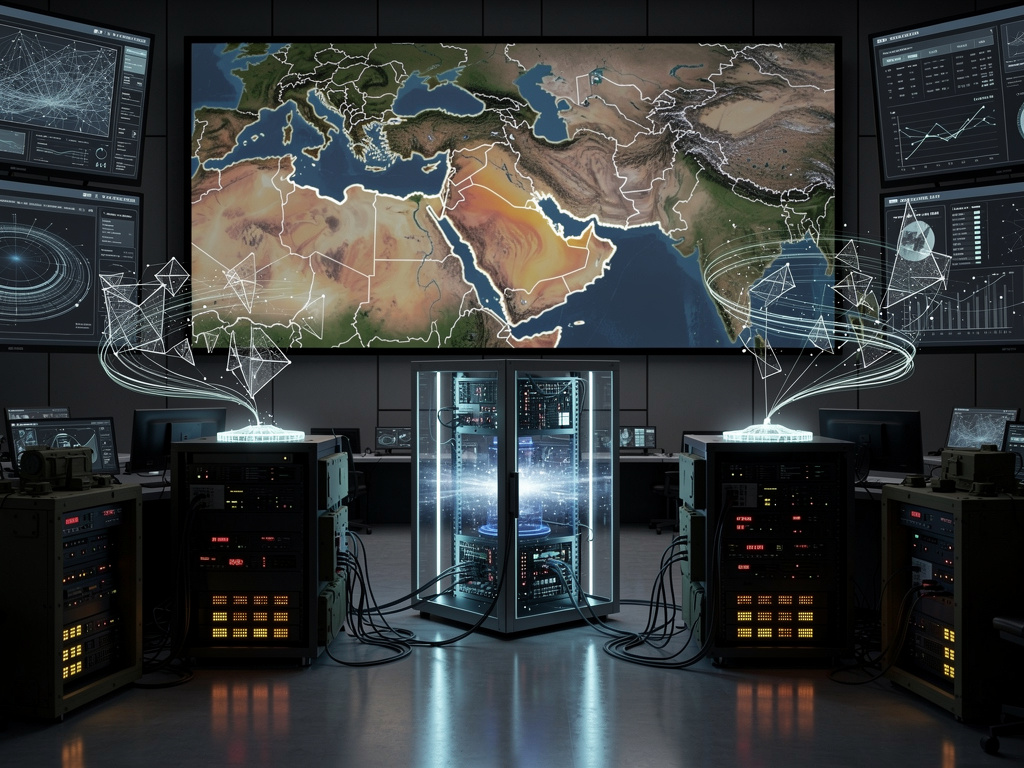
The United States military has incorporated xAI’s Grok artificial intelligence model into its operations, marking a significant expansion of commercial AI technology within defense systems. According to a report from Futurism, this development raises questions about the intersection of private sector innovation and national security priorities, especially as tensions with Iran continue to influence strategic calculations.
Defense officials confirmed that Grok, developed by Elon Musk’s xAI company, now assists with various analytical tasks across military branches. The integration happened through standard procurement channels rather than any special arrangement, though the choice of this particular model carries unique implications given Musk’s public statements on geopolitical matters. Military personnel use the system primarily for data processing, scenario modeling, and information synthesis, functions that have become standard as armed forces adopt machine learning tools to handle growing volumes of intelligence.
This adoption fits into a broader pattern of the Pentagon embracing commercial AI solutions. Companies like Palantir, Anduril, and several smaller startups already maintain substantial contracts with the Department of Defense. What distinguishes Grok’s entry involves both the speed of implementation and the specific capabilities the model brings to operational planning. Sources indicate that military users appreciate Grok’s less filtered approach to generating responses compared to more heavily moderated systems from other providers. The model reportedly offers direct assessments of tactical situations without excessive disclaimers or qualifications that can slow decision cycles.
The timing of this integration coincides with heightened focus on potential conflict scenarios involving Iran. American forces have maintained a significant presence in the Middle East, monitoring Iranian nuclear activities, proxy militias, and maritime operations in the Strait of Hormuz. Military planners routinely model various engagement possibilities, from limited strikes to more extensive campaigns. Grok’s involvement in these exercises has prompted concerns about whether the system’s training data and design philosophy adequately reflect the complexities of such operations.
Musk himself has expressed strong opinions about Iran and Middle East policy over the years. His public platform on X frequently features commentary that criticizes certain aspects of American foreign policy while advocating for technological solutions to security challenges. These views inevitably color perceptions about Grok’s potential influence on military thinking. While the company maintains that its models operate independently of any individual’s personal beliefs, the connection between creator and creation remains difficult to separate in public discourse.
Technical experts point out that large language models like Grok process information differently than traditional military simulation software. Rather than running physics-based calculations or established doctrinal algorithms, these systems draw patterns from vast training datasets to generate human-like analysis. This approach can produce creative insights but also introduces risks of hallucination or bias amplification. The Futurism article highlights how military adoption of such technology proceeds despite these known limitations, suggesting confidence in human oversight mechanisms that supposedly catch erroneous outputs.
Pentagon spokespeople emphasize that Grok serves as one tool among many in a comprehensive analytical framework. No single AI system makes autonomous decisions about targeting or resource allocation. Human commanders retain final authority, a principle repeatedly stressed in official statements about AI integration. Yet the increasing sophistication of these models inevitably shifts where that human judgment gets applied. Instead of poring over raw data, officers increasingly review AI-generated summaries and recommendations, a change that alters traditional command dynamics.
The specific mention of bombing Iran in discussions around Grok’s military applications stems from recent simulations and planning exercises. Military strategists have long maintained contingency plans for various Iran-related scenarios, including strikes against nuclear facilities, missile sites, or proxy force infrastructure. What has changed is the speed and breadth with which AI systems can now model these possibilities. Grok reportedly excels at synthesizing information from disparate sources to paint comprehensive pictures of potential outcomes, including political repercussions, economic impacts, and escalation risks.
Critics worry that Musk’s well-documented preference for rapid technological deployment might encourage similar haste in military contexts. His companies have repeatedly challenged conventional approaches to regulation and safety testing, arguing that excessive caution cedes advantage to competitors, particularly those backed by the Chinese government. This philosophy appears to influence xAI’s approach to model development and deployment. While defense contracts typically include strict oversight requirements, the pace of AI advancement often outstrips regulatory frameworks.
Ethical considerations surrounding AI-assisted targeting have received substantial attention from both military lawyers and external observers. International humanitarian law requires distinction between military and civilian targets, proportionality in expected harm, and feasible precautions to minimize civilian casualties. When AI systems contribute to these assessments, questions arise about accountability and transparency. If Grok recommends a particular strike package based on its analysis of satellite imagery, signals intelligence, and open source data, who bears responsibility for errors in that recommendation?
The Futurism piece suggests that Grok’s integration represents another step toward automated warfare, though military officials reject characterizations that imply diminished human control. They point to successful implementations of AI in logistics, maintenance prediction, and intelligence processing as evidence that these tools enhance rather than replace human capabilities. The distinction between support functions and direct combat applications remains important in these discussions.
Musk’s dual role as both defense contractor and vocal geopolitical commentator creates additional complications. Through SpaceX, his companies provide critical satellite communications and launch capabilities to the military. Tesla has explored defense applications for its autonomous driving technology. Now xAI adds advanced language models to this portfolio. The concentration of such sensitive capabilities in entities controlled by a single individual has prompted congressional interest in potential conflicts of interest and national security implications.
Technical evaluations of Grok compared to competing models from OpenAI, Anthropic, and Google reveal both strengths and weaknesses. The system demonstrates particular facility with technical subjects and appears less constrained in exploring hypothetical scenarios. For military users, this translates to more comprehensive exploration of edge cases and unconventional approaches. However, the same lack of guardrails that enables creative thinking can produce problematic outputs in sensitive contexts. Reports suggest that military implementation includes additional filtering layers and human review protocols designed to address these tendencies.
Iranian officials have naturally taken notice of American military AI developments. State media outlets frequently highlight what they characterize as technological aggression and automated warfare preparations. While the actual impact of any single model like Grok on operational planning remains difficult to quantify, the symbolic importance of American forces adopting systems associated with prominent tech figures adds another dimension to information warfare campaigns.
The broader trend toward AI integration in military affairs reflects fundamental changes in the character of conflict. Modern battlespaces generate enormous quantities of data from sensors, satellites, drones, and cyber operations. Human analysts cannot process this information at the speed and scale required for effective decision-making. Machine learning systems offer the only practical solution for maintaining situational awareness and operational tempo against sophisticated adversaries.
Yet this necessity brings corresponding risks. Dependence on commercial AI providers creates potential vulnerabilities in the supply chain. Models trained on internet data may incorporate biases or assumptions that do not align with military requirements. The competitive nature of the AI industry means that technical details about model architecture and training methods remain closely guarded, limiting the military’s ability to fully audit these systems.
As Grok continues to evolve through regular updates, its military applications will likely expand. xAI has announced ambitious plans for more powerful models that could further transform analytical capabilities. The question facing defense leaders involves balancing the advantages of rapid capability development against the need for reliability, security, and appropriate human control. The experience with Grok will inform how future AI systems are evaluated, contracted, and deployed across the armed services.
This situation illustrates the complex relationship between Silicon Valley innovation and national defense requirements. Commercial AI development proceeds at a pace that government programs struggle to match. Yet the values and priorities embedded in these systems reflect the cultures that create them. When those systems enter military service, they bring both technical capabilities and implicit assumptions about problem-solving, risk assessment, and decision-making that may not perfectly align with traditional military doctrines.
The integration of Grok into American defense operations, particularly in the context of Iran planning, represents more than a simple procurement decision. It signals a fundamental shift in how the world’s most powerful military approaches information processing and strategic analysis. Whether this change ultimately strengthens American security or introduces new vulnerabilities remains a subject of intense debate among policymakers, technologists, and military professionals. What seems clear is that AI systems like Grok will play an increasingly central role in future conflict preparation and, potentially, execution. The challenge lies in ensuring that human judgment retains primacy even as machine intelligence handles more of the analytical workload.


 WebProNews is an iEntry Publication